
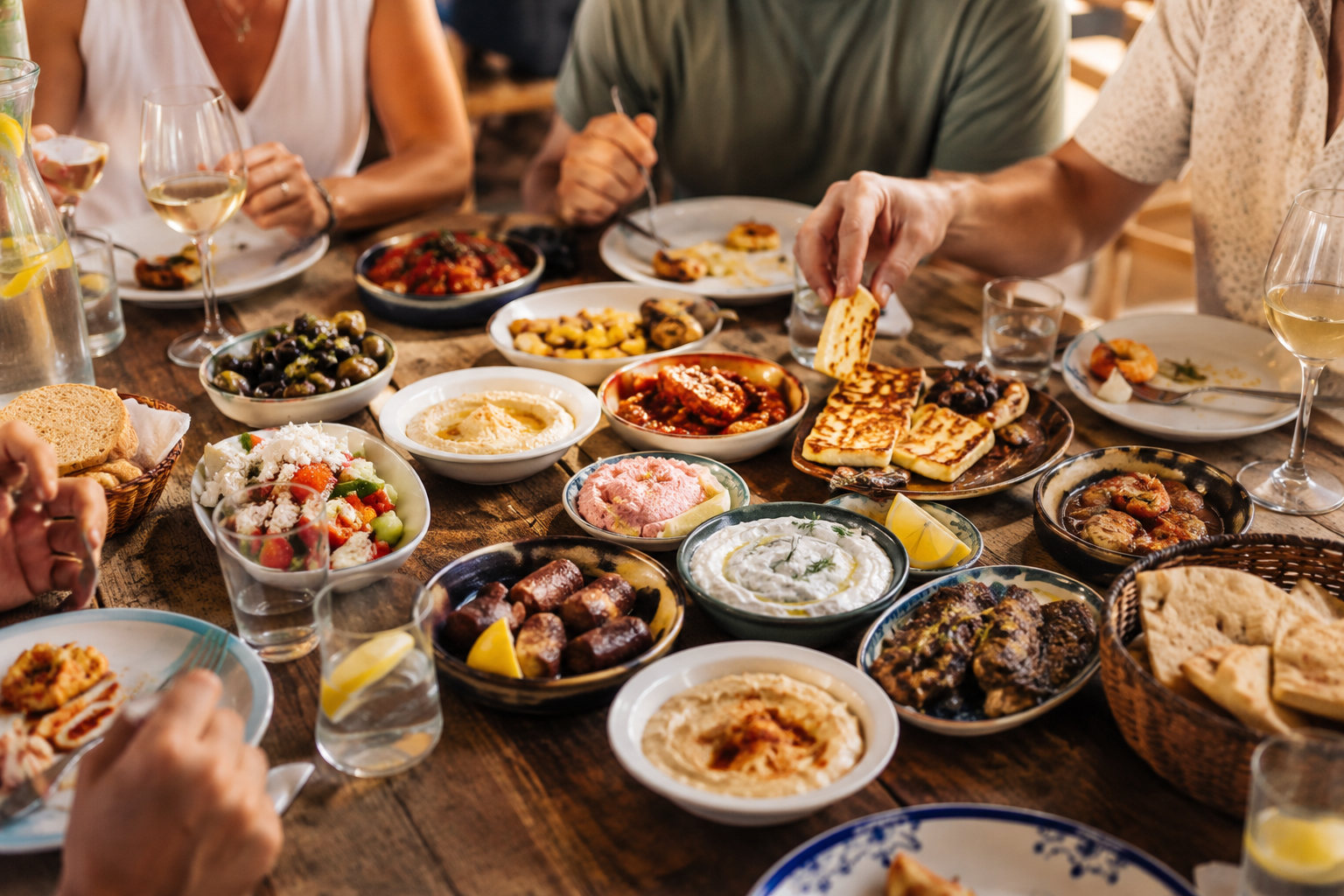
If there’s one food experience every visitor to Cyprus should try, it’s a Cypriot meze. But here’s the first thing to know: it’s almost certainly more food than you’re expecting.
A traditional Cyprus meze isn’t a single dish or even a starter. It’s a leisurely shared meal made up of numerous small plates served over several courses, often lasting two or three hours. Depending on the taverna, you could be served anywhere from 15 to more than 30 dishes.
For first-time visitors, the biggest mistake is ordering extra food before the meze arrives. Don’t. Meze is designed to be the meal, and by the time the final dishes appear, you’ll understand why it’s one of the highlights of Cypriot cuisine.
What is Cypriot meze?
Simply put, meze is Cyprus’ traditional style of shared dining. Rather than choosing individual main courses, everyone at the table enjoys a succession of small dishes prepared by the kitchen.
Unlike a fixed tasting menu, there is no single recipe for a traditional Cypriot meze. Every taverna has its own approach, with dishes varying according to the season, local ingredients and family recipes. The emphasis is on generosity, variety and taking your time.
Although it shares similarities with Greek meze and Spanish tapas, the Cypriot version is usually more substantial. It’s intended as a complete meal rather than a selection of appetisers or snacks.
To discover more about the island’s culinary traditions, see our guide to traditional Cypriot dishes:
https://cyprus-mail.com/2025/12/09/traditional-cypriot-dishes-a-guide-to-the-most-popular-foods-in-cyprus
What makes Cypriot meze different?
| Cypriot Meze | Greek Meze | Spanish Tapas |
|---|---|---|
| Full shared meal | Often starters with drinks | Ordered individually |
| Served in multiple courses | More flexible | Diners choose dishes |
| Built around hospitality | Sharing is common | Tapas can be a quick meal |
Perhaps the biggest difference is pace. A Cypriot meze isn’t rushed. Dishes arrive gradually allowing diners to enjoy conversation between courses rather than feeling pressured to finish everything at once.
What is included in a traditional Cypriot meze?
There is no fixed menu, but most meze dishes begin with cold starters before moving on to hot dishes.
Typical cold dishes include fresh village bread, green olives, tahini, hummus, tzatziki and seasonal salads.
Cheese such as halloumi often follow, alongside grilled vegetables and local sausages.
The main courses vary depending on whether you’ve ordered a meat or seafood meze. A meat meze may include keftedes (meatballs), souvlaki, sheftalia, grilled pork, lamb chops and, in some tavernas, kleftiko or souvla.
A fish meze could feature octopus, calamari, prawns, grilled fish and other seafood depending on the day’s catch.
Meals usually end simply with seasonal fruit or traditional sweets rather than elaborate desserts.
No two tavernas serve exactly the same meze, which is part of the experience.
Fish meze or meat meze?
One of the biggest decisions is choosing between seafood and meat.
| Fish Meze | Meat Meze |
| Best in coastal villages | Common across the island |
| Fresh fish, octopus, prawns, calamari | Sheftalia, souvlaki, sausages, grilled meats |
| More expensive | Often better value |
| Ideal for seafood lovers | Perfect for traditional village tavernas |
If you’re visiting fishing villages such as Latchi or Zygi, seafood is often the obvious choice. Inland tavernas, particularly in the Troodos villages, tend to specialise in meat cooked over charcoal using long-established family recipes.
Regional differences across Cyprus
One of the pleasures of exploring traditional food in Cyprus is discovering how meze changes from one region to another.
Coastal tavernas naturally focus on fresh seafood, while mountain villages often showcase locally produced cheeses, seasonal vegetables and slow-cooked meat dishes. Wine-producing villages may include homemade preserves, local wines and recipes passed down through generations.
For that reason, there is no single “authentic” meze. Every family-run taverna brings its own traditions to the table.
How many dishes are there?
This is one of the questions visitors ask most often.
A smaller meze might include around 15 dishes, while larger versions can easily exceed 25 or even 30 courses. That doesn’t mean 30 full plates of food. Many are tasting portions served gradually throughout the meal.
Even so, most visitors are surprised by just how generous the portions are.
Is meze enough for two people?
In almost every case, yes.
Meze is usually ordered per person, with a minimum of two persons, but shared by everyone at the table. Resist the temptation to order extra starters, or extra salads before your meal begins—you’ll almost certainly regret it.
Instead, pace yourself. The food keeps coming, and what appears to be a modest beginning is only the first course.
Meze etiquette
Part of the enjoyment comes from slowing down. Locals don’t treat meze as a quick lunch before moving on to the next attraction.
Share everything, try a little of each dish and don’t worry if you can’t finish every plate. It’s perfectly acceptable to leave some food if you’ve genuinely had enough.
If you have allergies or dietary requirements, let the staff know before ordering. Many tavernas can prepare vegetarian versions, although the selection will vary.
What should you drink with Cypriot Meze?
There is no single “correct” drink to enjoy with a Cypriot meze, and the choice often depends on the type of food being served. For a meat meze, many locals opt for a cold local beer or a bottle of Cypriot red or rosé wine, while a crisp white wine pairs well with fish meze.
For a more traditional experience, you may try zivania. Served in small (shot) glasses it can sipped slowly or in one gulp, preferably the former especially if it is the first time you are trying it.
Zivania is a grape spirit with a high alcohol content (40%-50%) Cyprus’ clear grape spirit. It is made by distilling the pomace (grape skins, pulp and seeds) left over after winemaking, similar in concept to Italian grappa or Greek tsipouro, but with its own distinctive character.
Whatever you choose, remember that meze is a long, leisurely meal, so drinks are best enjoyed at the same relaxed pace as the food.
Where should you try meze?
Rather than looking for the busiest restaurant in a tourist area, seek out a traditional taverna where local families gather, particularly at weekends.
Some of the island’s best meze is found in village tavernas, mountain communities and small coastal fishing villages, where recipes have often been passed down through generations. If the dining room is filled with Cypriot families that’s usually a good sign.
Tips for first-time visitors
- Arrive hungry.
- Allow at least two hours for the meal.
- Don’t order extra dishes before the meze starts.
- Share everything.
- Ask about vegetarian options if needed.
- Let staff know about allergies in advance.
- Take your time and enjoy the experience.
More than just a meal, Cypriot meze is an expression of the island’s hospitality. It’s about gathering around a table, sharing whatever arrives from the kitchen and enjoying good company as much as the food itself. You may not remember every individual dish, but you’ll almost certainly remember the experience—and you’ll almost certainly leave feeling very full.





Click here to change your cookie preferences