
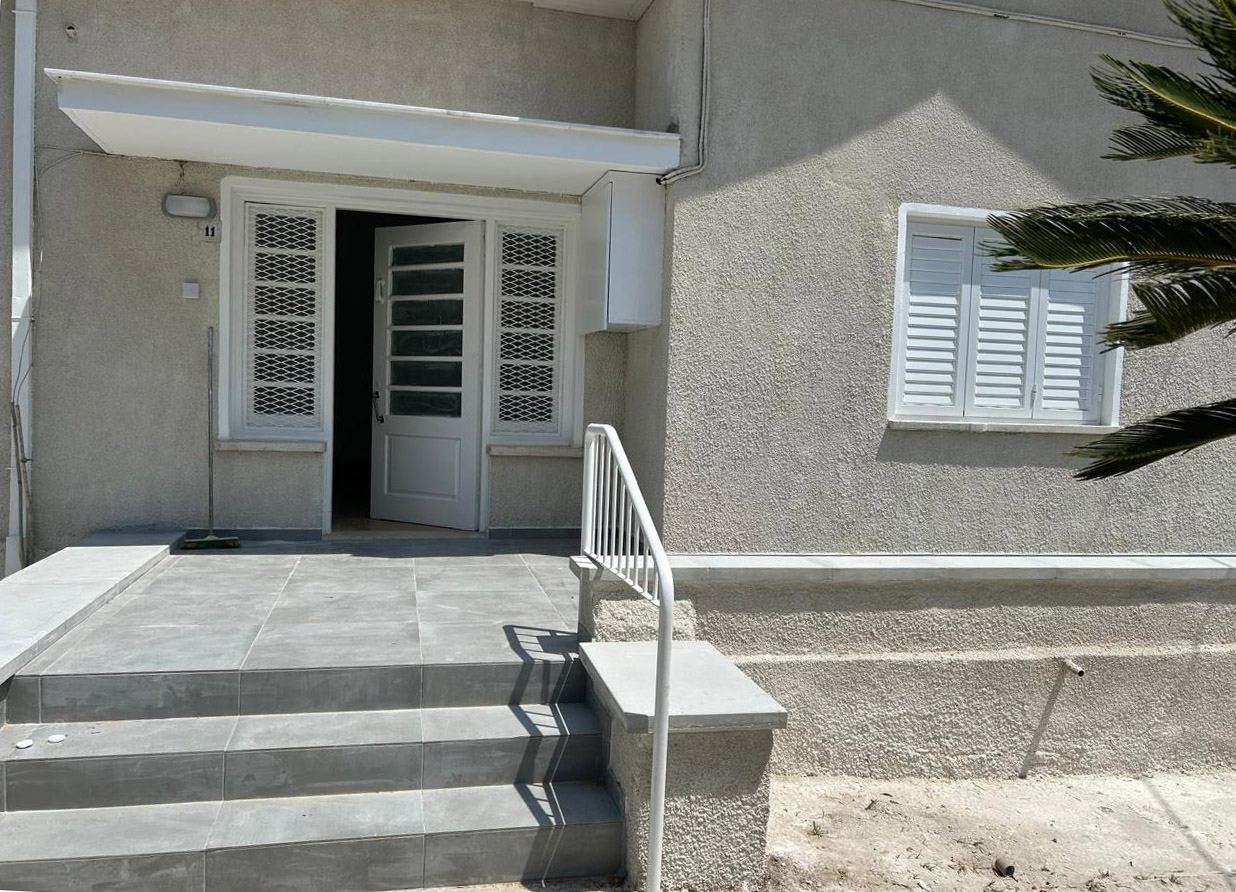
The Renovate-Rent programme promises cheaper homes and practically free renovations, but it’s struggling to attract applicants
It’s so rare for a government scheme to be an unqualified Good Thing that it feels downright ungrateful to criticise it.
Then again, even Interior Minister Constantinos Ioannou, speaking last February, admitted that the Renovate-Rent housing scheme was underperforming relative to expectations.
The hope was for 1,000 housing units to be placed on the market in two years (920 property owners registered on the platform when the scheme was announced in 2024) but there have been only 84 applications so far, including those that were rejected. According to Ioannou, the total subsidy has been €1.2 million, a small fraction of the €25 million budget.
Yet Renovate-Rent is a great idea, for a number of reasons.
The scheme targets available housing that’s not on the market. These are houses or flats, typically inherited, that remain vacant while the new owner figures out what to do with them, usually unwilling to spend money on renovations.
Saddest of all are the grand old houses – not listed buildings, but still beautiful – that are allowed to rot and become decrepit as the years pile up, then, inevitably, sold to developers who knock them down to build much less beautiful blocks of flats.
That’s a big environmental reason why the scheme is welcome. But there are practical reasons too.
Even as owners constrict supply by neglecting their properties, demand has skyrocketed – and rents have become prohibitive, especially in Limassol.
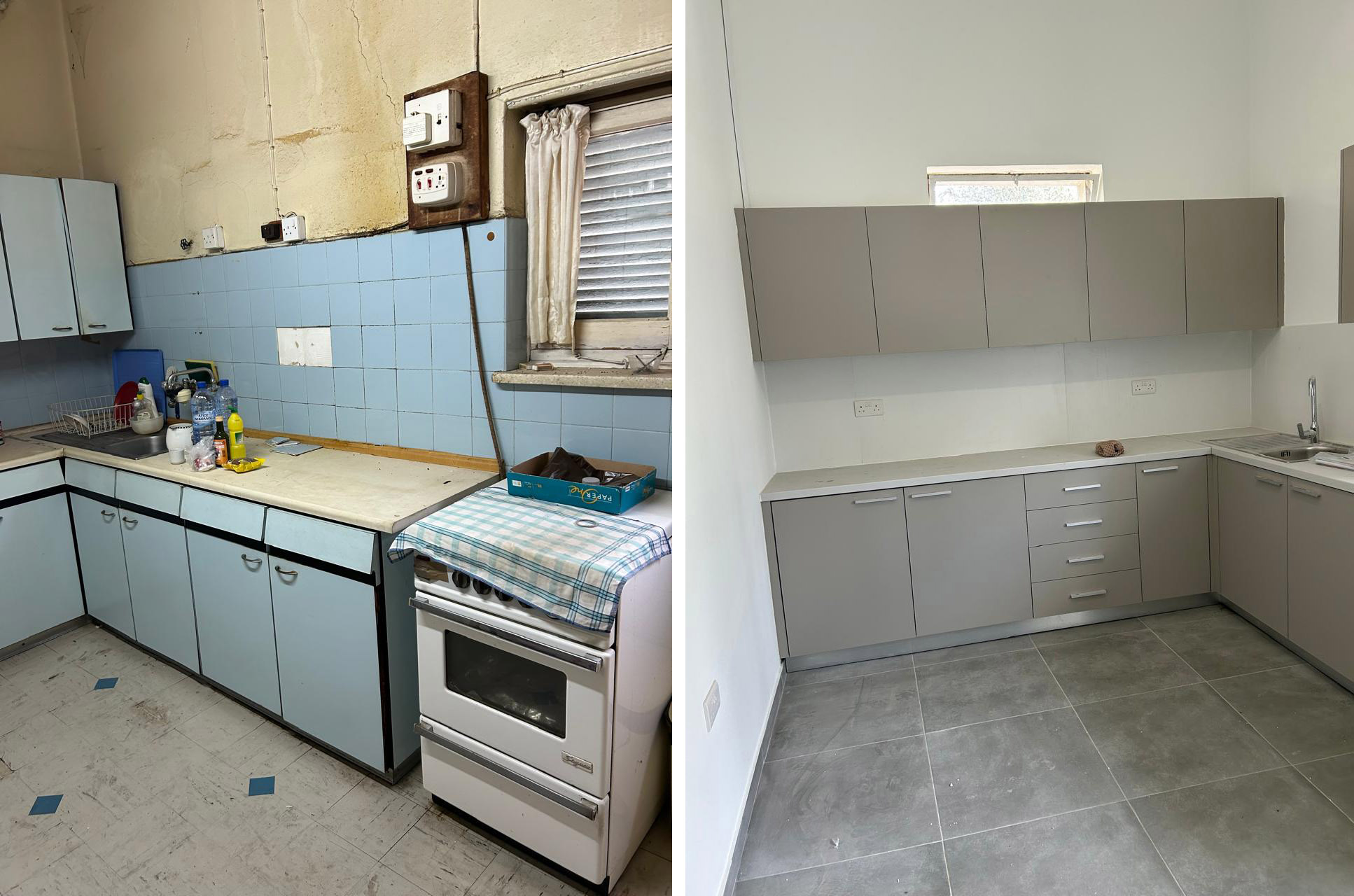
The scheme is a solution to both these problems. Renovate-Rent subsidises property owners, giving them money to renovate vacant properties – and, in return, they commit to renting them out at a cheaper rent (discounted by 30 per cent) for a period of four years.
Everybody wins. Eligible tenants – those earning below a certain threshold – get housing at affordable rents. Owners get a newly refurbished property at zero (or much-reduced) cost. And the government gets the satisfaction of having made everyone happy, for once.
So why has the scheme not worked out so far?
Stung by the setback, Ioannou announced changes to the second iteration of the scheme (now accepting applications till the end of 2027) – but nearly all the changes involve keeping the original framework, just making everything more generous.
Thus, for instance, all subsidies have been increased by €5,000: owners now get €20,000 to renovate a one-bedroom unit, €30,000 for two bedrooms and €40,000 for three. The criterion for what constitutes a vacant property – defined by power usage – has been relaxed: it used to be under 200kW a year, now it’s under 500kW.
Income criteria for prospective tenants have also been made more generous. A single person earning €30,000 a year (or less, obviously) is now eligible to apply, up from €25,000 – the thresholds rising to €70,000 a year for a family or single-parent household of five or more people.
Then again, it doesn’t seem like the problem with the scheme was that its terms weren’t generous enough.
All indications – borne out by participants we spoke to – point instead to two major stumbling blocks, which are also the ones often associated with government projects: poor communication (as in not promoting it enough), and stifling bureaucracy.
The first of those was perhaps not so bad, after all 920 people knew enough to join at the beginning. Then again, Christos Zavallis – who renovated a one-bedroom flat that had been vacant for about 15 years through Renovate-Rent – recalls looking for tenants when the work was complete, having to advertise himself on Bazaraki (the online platform was useless) and being inundated with calls by people who obviously had no idea what the scheme was.
“I got a call from an estate agent,” he told the Cyprus Mail, “who thought it was some kind of scam, a one-bedroom flat in Lykavitos [in the centre of Nicosia] for €400. He goes to me, ‘OK, what’s the scam?’. So people didn’t know. Even the professionals didn’t know about this scheme.”
The only ones who did know were probably those like Haris Haralambous, one of the very first applicants, who has a company specialising in renovations – and heard about the scheme because “I keep an eye out,” as he says.
He’s one of the (very) few readers of the Official Gazette, where details were published – and indeed he treated it as an investment, buying a vacant flat specifically for the purpose and spending up to the limit of the subsidy (€15,000 at the time). Nothing wrong with that – but it’s clearly not the typical case for which R-R was intended, those cases having presumably never heard of it.
Then there was the paperwork. “It takes a lot of running around,” Haralambous told the Cyprus Mail. “You need a second person just for that, beyond the actual renovation”. The work itself took about six months. “The bureaucracy took about a year”.
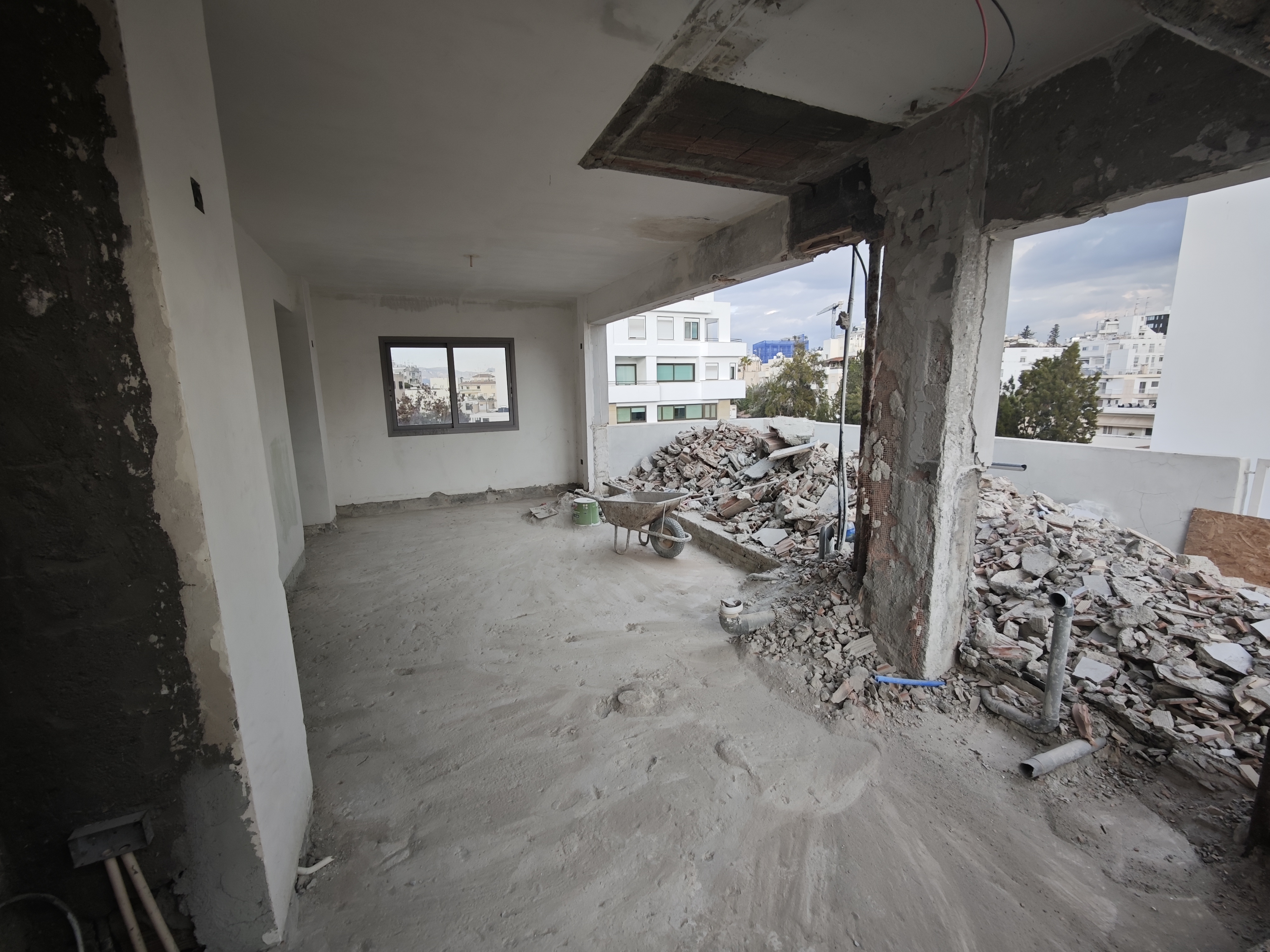
The flat he was renovating dated from the 1980s, Renovate-Rent being for older housing units (15 years and over) – yet they asked for architectural plans, for instance, a quest that involved an application to the EOA and a physical search for the plans. He finally found them, archived “in some old cardboard boxes,” he recalls wryly.
Admittedly he’d have been more likely to have the plans if he’d inherited the place from his parents, which is the usual scenario – but the list of documents is still a bit daunting. Building permit, Energy Performance Certificate, owner’s social security and certificate of clean criminal record – then, if and when you find a tenant, a Land Registry declaration that they own no other property, a certificate of good standing from the tax authorities, and more.
It’s not just the hassle, it’s the principle of the thing. “There were many things which, as the government, they could’ve found out at the touch of a button,” sighs Zavallis.
“Clean criminal record, for instance. How hard is it, with my ID card number, for the police to tell them I have a clean record?” Why the time-consuming process of having to apply electronically, then head out in person to police headquarters to pick up a piece of paper? What’s the purpose of the ‘digital governance’ we hear so much about, if everything is still made so complicated?
It’s an interesting point – because even now, with Renovate-Rent underachieving, the ministry’s automatic response is to assume it’s a money issue.
Bureaucracy has become so ingrained, it’s not even viewed as a possible culprit – yet Zavallis recalls prospective tenants backing out when they saw the daunting list, even though the flat was such a bargain.
It’d be a shame if such an excellent initiative ended up foundering through not being more user-friendly – but Renovate-Rent will surely take off once more people know about it, though it does mean accepting a reduced rent for a few years. Some landlords will always prefer the short-term option of keeping a property rundown and renting to migrants.
Zavallis feels it worked out for him, though – and he did eventually find a tenant in Kyriakos, who admits he’d never heard of Renovate-Rent (he just went on Bazaraki looking for a flat) but is delighted with the result.
“This is the nicest place I’ve rented in the past four or five years,” he raves. “And it’s cheaper than almost any place I’ve stayed in!” Like we said, everybody wins.





Click here to change your cookie preferences