
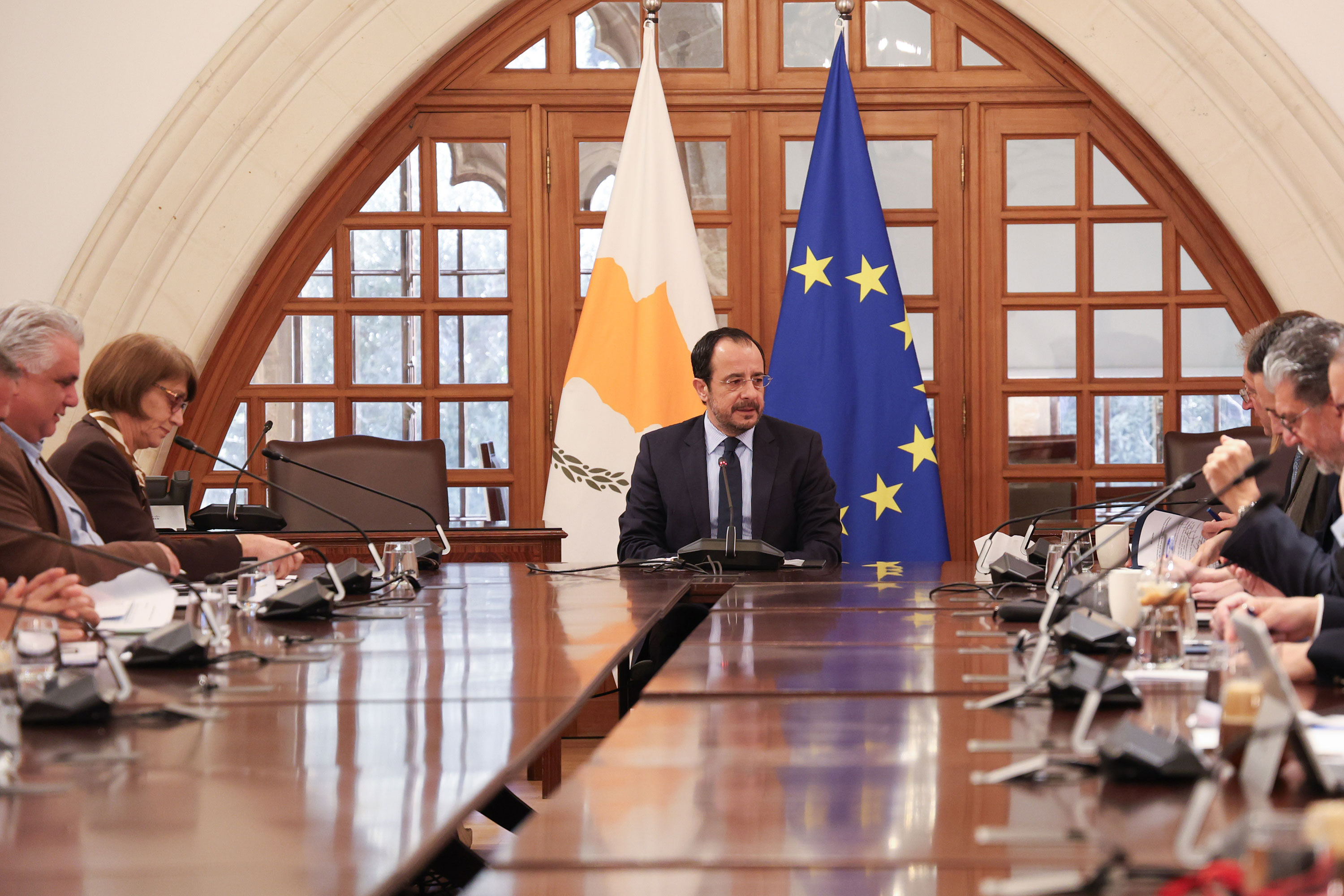
The government is against the idea of cutting pensions, even for the highest earners, Labour Minister Marinos Mousiouttas said on Wednesday.
He was speaking after a meeting of government officials and trade union leaders, and said that while an actuarial study into the matter of Cyprus’ pension bill had “given … the option” of reducing pensions by between two and five per cent for the highest five to ten per cent of earners, this is not in the government’s plans.
“Our own view is that this scenario should be set aside and we should remain within the bounds of scenarios in which no reduction of the acquired rights of any pensioner is envisaged. We will find ways to resolve this,” he said.
The trade union leaders, meanwhile, focused on those at the other end of the scale, with Peo leader Sotiroula Charalambous saying that “of course, we want to see an increase in the pensions of those on low-incomes, and the goal should be to have no pensioner with an income below the poverty line”.
She agreed with Mousiouttas’ position regarding those on high incomes, saying, “there cannot be redistribution among pensioners”, and said that instead, “we believe that there is a possibility of increasing pensions by allocating more resources from the state”.
Sek leader Andreas Matsas spoke more broadly on the prospect of pension reform, saying that his union is “ready to accept a gradual implementation” of planned reforms to the pension system “if this is deemed necessary and documented, provided that the planning Is comprehensive”.
However, he warned, “any fragmentary approach and view of the reform will lead to corresponding fragmentary results”.
At the same time, Deok leader Stelios Christodoulou said that pension reform is “not an easy undertaking”, and that as such, “we must allocate as much time as necessary so as to have the best result”.
He nonetheless said that he hopes for “the dialogue to be completed soon”, and said that as a next step, “we must look at the needs of the pensioners of the next generations, so that the best possible decisions can be made”.
Mousiouttas had said last month that the government aims to submit bills to parliament to reform the pension system by June, and called on the House labour committee to “find common ground and promote either legislative proposals or bills which aim to help people”.
He had said at the time that reforms would “contain” provisions regarding the low-income pensioners’ allowance, the social insurance fund’s investment policy, and the 12-per-cent pension “penalty”, as he described it, for people who take early retirement.
The matter of the 12-per-cent “penalty” refers to an offset, wherein those who take early retirement are paid 12 per cent less by the state as their pension than they would if they retired at the age of 65.
It was somewhat alleviated for early retirees in 2024, when the government reduced the drop in pension payments for those who retire before the age of 65 if they have completed 40 years of contributions.
At the time, the government said that the change would directly affect over 11,000 pensioners, who would all receive €800 per year extra as a result, as well as between 1,000 and 1,500 new retirees per year going forward.


Click here to change your cookie preferences