Bordeaux doesn’t suffer from a lack of beauty, culture, or culinary excellence. It suffers from being misunderstood.
For years, mainstream travel advice has framed the city as a place to pass through rather than settle into. Stephanie Bowers—a former U.S. diplomat turned luxury travel designer—sees that narrative as deeply incomplete. To her, Bordeaux is not a single destination. It’s a gateway to one of France’s richest regions, offering wine country, medieval villages, Atlantic coastline, and refined urban culture from a single base.
Her conviction comes from experience. After decades navigating relationship-driven cultures across Europe and beyond, Bowers now applies the same diplomatic principles—patience, cultural fluency, and trust-building—to crafting deeply personalized journeys for clients seeking more than surface-level travel.
Bordeaux is a region, not just a city
One of Bordeaux’s greatest strengths is how much it connects.
From the city center, travelers can reach multiple wine regions, UNESCO-protected medieval towns, and the Atlantic coast in under 90 minutes. Rather than moving hotels every few days, visitors can explore dramatically different landscapes while returning each evening to Bordeaux’s historic core.
Bowers often compares this to more fragmented French itineraries, where travelers bounce between Paris, the Loire Valley, Provence, and the coast—losing days to transportation logistics.
“People don’t realize how efficient Bordeaux is geographically,” she explains. “You can experience incredible diversity without constantly packing up and relocating.”
That efficiency matters, especially for travelers who value immersion over momentum.
Understanding Bordeaux wine without the jargon
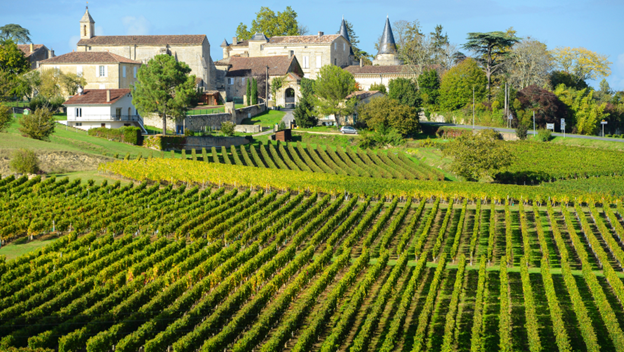
Bordeaux’s wine reputation can feel intimidating, but Bowers focuses on simplifying the experience for her clients.
Rather than leading with classifications or technical terminology, she introduces the region through contrast: structured Cabernet-based wines on one side of the river, softer Merlot-driven styles on the other. Each area offers a different cultural rhythm, landscape, and tasting experience.
But what surprises most visitors isn’t the wine itself—it’s how access works.
Unlike places designed for casual tourism, Bordeaux operates on relationships. Many estates don’t offer public tastings. Visits are private, planned far in advance, and often conducted in French.
“Most experiences in France are private,” Bowers explains. “It means planning far, far in advance… communicating with that winery in French… they’re just frankly not even going to give you the time of day if you’re communicating in another language.”
She also notes that Bordeaux’s historical wine system was never built around walk-in tourism.
“The notion that we should open up our winery doors and give individuals tours is just not a well-developed concept in Bordeaux,” she says.
This is where her diplomatic background becomes essential. Access isn’t transactional—it’s earned through cultural understanding and long-term relationships.
Coastal France and medieval villages—Just beyond the vineyards
Bordeaux’s reach extends well beyond wine.
To the west lies Arcachon Bay, where oyster villages line calm waters and locals gather at simple wooden shacks for fresh seafood and white wine. Nearby, towering sand dunes rise above pine forests and ocean views, offering a striking contrast to vineyard landscapes.
East of Bordeaux sits Saint-Émilion, a UNESCO-listed medieval town surrounded by rolling hills and historic estates. Cobblestone streets, Romanesque architecture, and hillside vistas create the kind of atmosphere travelers often associate with southern France—yet it’s less than an hour away.
Bowers regularly incorporates both into her itineraries, giving clients a mix of coastline, history, and wine culture without changing bases.
“It’s one of the most overlooked advantages of Bordeaux,” she says. “You don’t have to choose between experiences—you can have all of them.”
Food as cultural identity
While Bordeaux is best known for wine, Bowers approaches it first as a food city.
At Marché des Capucins, locals shop for seasonal produce, regional cheeses, duck confit, and canelés—small pastries rooted in Bordeaux’s winemaking history. Neighborhood bistros serve classic dishes like entrecôte à la bordelaise, while refined dining rooms reinterpret local ingredients with modern technique.
Rather than chasing Michelin stars alone, Bowers designs culinary experiences that balance market visits, casual lunches, and elevated dinners.
She views food as one of Bordeaux’s most honest expressions of place—shaped by centuries of trade, agriculture, and coastal influence.
Why Stephanie’s background matters
Bowers’ career in diplomacy taught her how complex systems function—and how access is earned within them.
Whether coordinating inter-agency operations or navigating European bureaucracies, she learned that meaningful entry points come from protocol, respect, and relationship-building. Bordeaux, she says, operates in much the same way.
Her fluency in French and familiarity with European business culture allow her to connect clients with winemakers, chefs, and local producers who rarely engage with mass tourism.
“Bordeaux is relationship-driven,” she explains. “It rewards people who take time to understand how things work.”
Experiencing Bordeaux at the right pace
Rather than rushing through multiple cities, Bowers encourages clients to stay put.
Over the course of a week, travelers might explore Bordeaux’s UNESCO-listed center, spend a day in nearby vineyards, venture to Arcachon Bay for seafood and ocean air, and wander Saint-Émilion’s medieval streets—all while returning each night to the same hotel.
The rhythm is intentional.
“People lose so much time moving from place to place,” she says. “Here, they actually get to experience where they are.”
As not everyone prefers city stays, she selects properties in the countryside tailored to client tastes, while still ensuring easy city access.
A Different Kind of French Journey
Rick Steves famously advised travelers to skip Bordeaux. Bowers sees that as a reflection of mass-market travel priorities, not the destination’s true value.
Bordeaux doesn’t cater to quick tourism. It doesn’t simplify itself for guidebooks. It offers depth—to travelers willing to engage.
For Bowers’ clients, that means quiet sophistication instead of spectacle, cultural immersion instead of checklists, and access shaped by relationships rather than online reservations.
Bordeaux may not announce itself loudly. But for those who understand how to experience it, Bowers believes it stands among France’s most rewarding destinations.




Click here to change your cookie preferences