
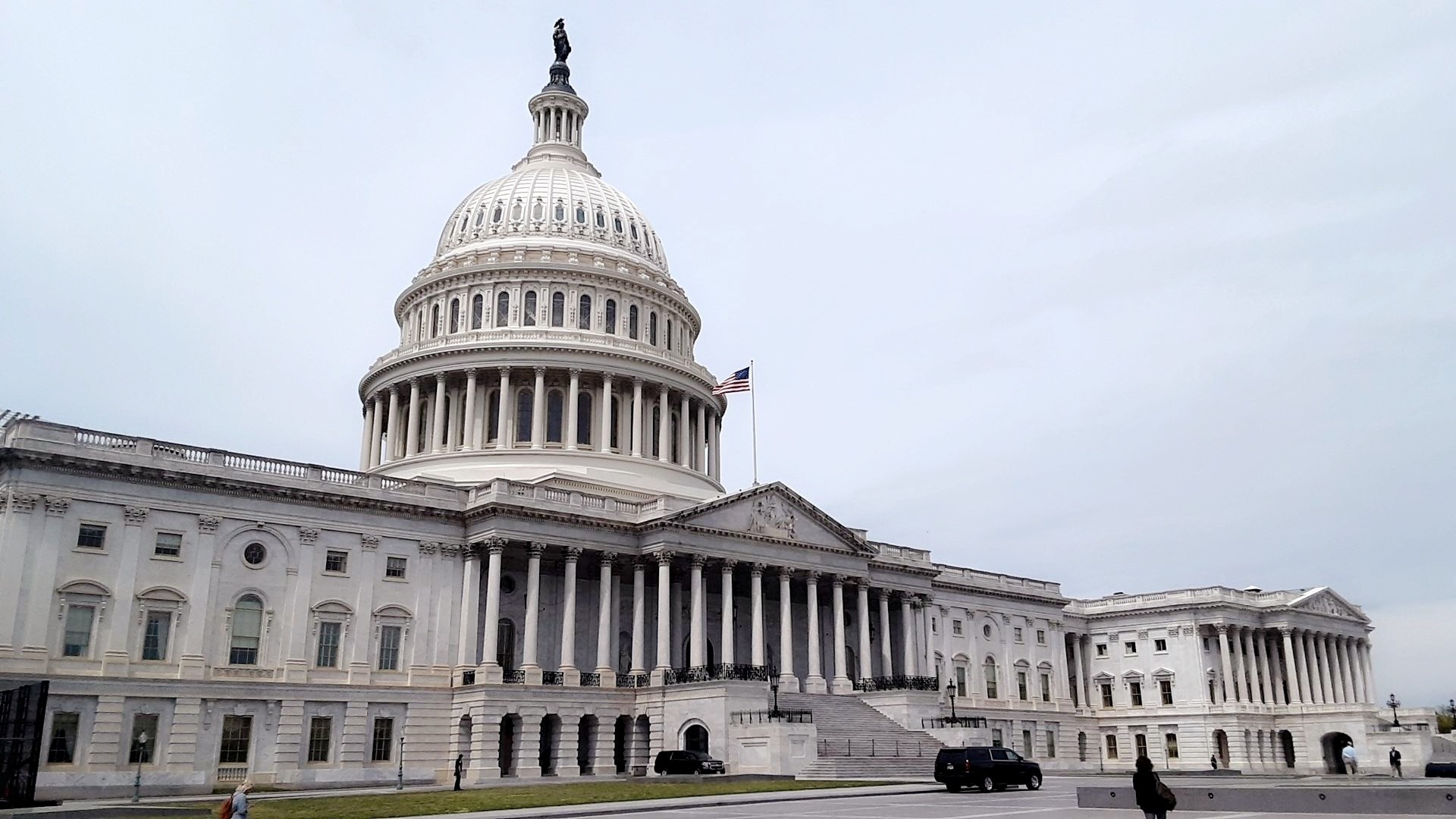
Two American foreign policy analysts urged the United States Congress on Tuesday to adopt a firmer approach towards Turkey’s policies in Cyprus, arguing that Washington should explicitly describe the northern part of the island as being “under Turkish occupation”.
The testimony was delivered before the Tom Lantos Human Rights Commission ahead of the Nato summit, with both witnesses arguing that Turkey’s military posture and continued presence in the north raise broader security concerns for the alliance and the Levant.
Michael Rubin, director of policy analysis at the Middle East Forum, told lawmakers that the United States should abandon what he described as “diplomatic evasions” and clearly recognise that the northern part of Cyprus “remains under Turkish occupation”.
Rubin argued that Turkey has consolidated its position through military reinforcement, settlement activity and economic development in the north.
He rejected Ankara’s perennial justification for its invasion in 1974, arguing that while the coup against Archbishop Makarios provided the initial pretext, the second phase of Operation Atilla amounted to “a clear land grab” after democracy had been restored in Greece.
He said “avoiding the term occupation does not contribute” to efforts to resolve the Cyprus issue but instead “rewards aggression” and reinforces the existing situation.
Rubin also expressed concern over demographic changes in the north, arguing that settlement from mainland Turkey has altered the population balance and affected the identity of the Turkish Cypriot community.
He further criticised development in Varosha, saying any redevelopment without the return of its lawful residents remains contrary to United Nations resolutions.
He also pointed to Turkey’s military build-up in the north, including the establishment of a drone base at Lefkoniko and the deployment of Turkish fighter aircraft, arguing these developments have altered the security balance across the Levant.
Rubin also alleged that the north has become a centre for money laundering and other illicit activity involving casinos and higher education institutions, though these claims have not been independently verified during the hearing.
Among his recommendations, Rubin called for Washington to officially refer to the north of Cyprus as being “Turkish occupied”, recognise Turkish Cypriots only through Cyprus passports, close offices representing the Turkish Cypriot ‘administration’ in the United States, as well as bolster he American military presence in Cyprus.
Appearing before the same hearing, Sinan Ciddi, director of the Turkey Programme at the Foundation for Defence of Democracies, argued that Cyprus has become central to Ankara’s wider regional strategy.
He described Turkey as “a revisionist force” that undermines Nato cohesion and stability in the Eastern Mediterranean and argued that “Cyprus is under illegal occupation”.
Ciddi told lawmakers that Turkey has maintained tens of thousands of troops alongside drones and missile systems in the north since 1974, while emphasising that the Republic remains the island’s only internationally recognised government.
He drew attention to the deployment of six Turkish F16 fighter aircraft to the north in March, describing it as a significant military escalation.
Ciddi argued that Congress should investigate whether “the use of American supplied aircraft in occupied territory” complies with the conditions governing United States military exports.
He also referred to an incident in June in which Turkish fighter aircraft harassed aircraft carrying the defence ministers of Greece, France and the Netherlands as they travelled to Cyprus for an informal European Union meeting.
Ciddi argued that Turkey’s “Blue Homeland” (Mavi Vatan) doctrine seeks to reshape the geopolitical balance in the Eastern Mediterranean and prevent Greece, Cyprus and Israel from fully exploiting regional energy resources.
He also warned that any future Turkish return to the F35 fighter programme would significantly alter the regional military balance.
He urged Congress to maintain sanctions imposed under the Countering America’s Adversaries Through Sanctions Act and continue restrictions preventing Turkey’s return to the F35 programme while Ankara retains the Russian S400 air defence system.
Among his recommendations were officially describing the north of Cyprus as occupied territory, strengthening strategic cooperation with Cyprus, Greece, France and Israel, as well as increasing pressure on Ankara over its alleged support for Muslim Brotherhood networks.
Concluding his testimony, Ciddi argued that “the image Turkey is trying to present as a loyal ally of the West does not correspond to reality” and called on the United States and its allies to confront Ankara “with clarity and not with wishful thinking”.




Click here to change your cookie preferences