
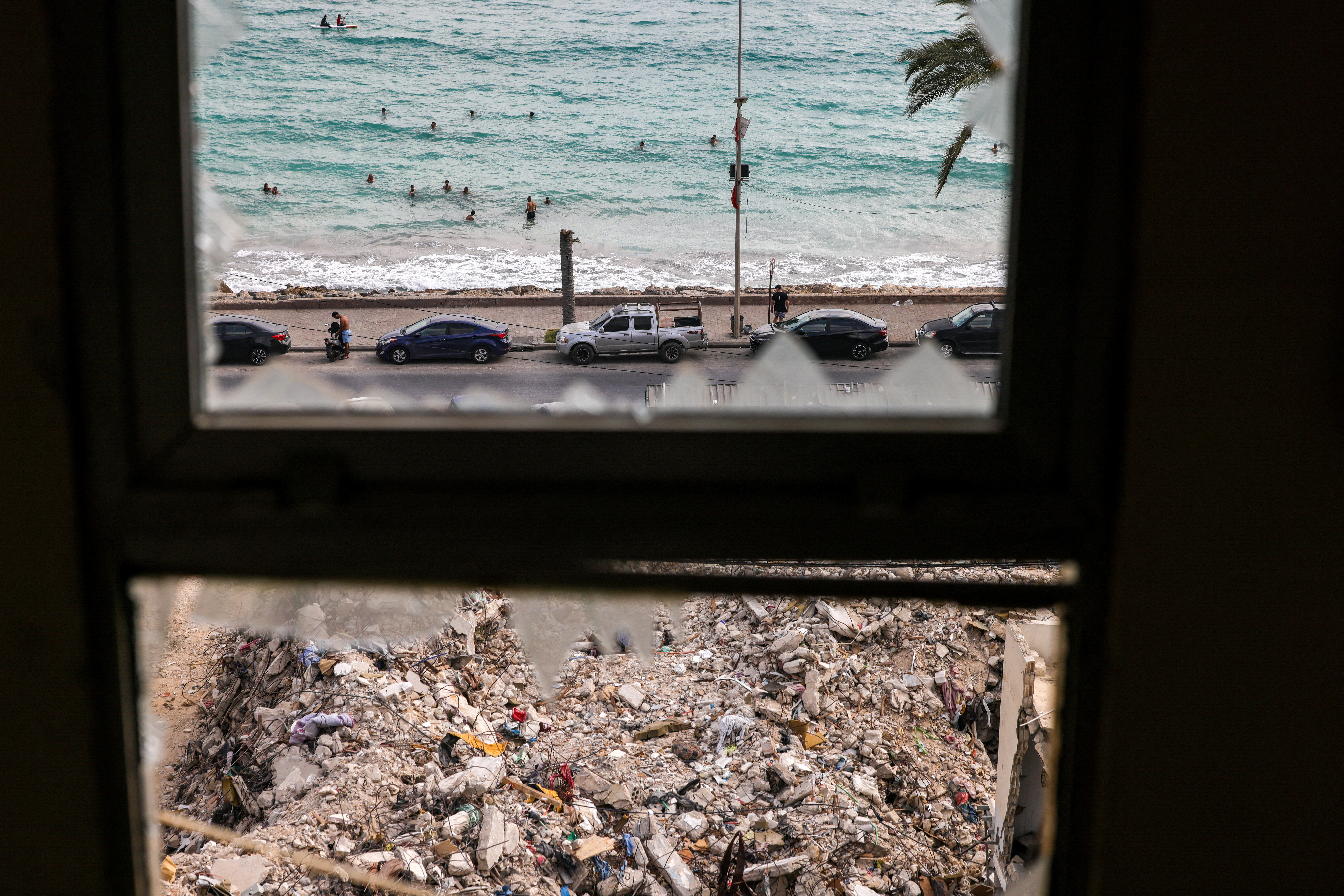
Lebanon and Israel resumed talks on Tuesday in the Italian capital, with Beirut hoping for progress towards securing an Israeli withdrawal from south Lebanon under a U.S.-brokered deal, although expectations for swift progress were low.
U.S.-led diplomacy has emerged since Hezbollah and Israel returned to war on March 2 amid the wider regional conflict, moving forward despite strong objections from the Iran-backed group, which believes only Iranian pressure on Washington can secure an end to the war and Israeli withdrawal.
Iran demanded an end to the war in Lebanon as part of its interim deal with Washington signed last month, but the agreement has been shaken over the last week by renewed U.S.-Iranian hostilities in the Gulf.
Israel’s military is occupying what it describes as a “buffer zone” about 10 km (6 miles) into Lebanon along the entire length of the Israeli border. Israeli officials say the zone is necessary to protect northern Israeli communities from attacks launched by Hezbollah.
A meeting in Washington on June 26 produced an agreement that called for an end to the Lebanon conflict, the disarmament of militant groups – an apparent reference to Hezbollah – as well as the deployment of Lebanese troops to the south and the progressive withdrawal of Israeli forces.
But deadly Israeli strikes have continued and Hezbollah has rejected the agreement as well as efforts to disarm it. Israel, meanwhile, has said its troops would remain in southern Lebanon as long as Hezbollah remained armed.
The talks, set to last two days at the U.S. embassy in Rome, will aim to set out how to implement the framework deal, Lebanese officials told Reuters. One of the officials said moving the talks to Italy would make it easier for both countries’ delegations to consult their governments for guidance as they negotiate.
PILOT ZONES ON THE TABLE
Israeli Foreign Minister Gideon Saar told reporters in Tel Aviv on Tuesday that implementing the framework agreement was “the only way forward” and said Israel would “demonstrate goodwill in Rome.”
He said Israel was ready to move forward in implementing two “pilot zones” — patches of territory in southern Lebanon where the agreement foresees Hezbollah’s disarmament, the withdrawal of Israeli forces and the deployment of Lebanese troops.
In comments published by his office on Monday night, Lebanese President Joseph Aoun said he had asked the Lebanese delegation to demand the “immediate start” of Israel’s withdrawal from the two pilot zones “before any other discussion.”
A U.S. official said last week that the first pilot zone would launch within “days”. The official said the U.S. military’s Central Command was coordinating with both Lebanon and Israel to launch the zones. A U.S. military delegation was in Lebanon at the weekend to discuss the plan in detail with Lebanon’s army, sources told Reuters.
The zone occupied by Israeli troops in southern Lebanon is off-limits to all Lebanese, including Lebanese army soldiers.
Israel’s military has forced the local Lebanese population from their homes and carried out controlled explosions of entire villages. It says it is destroying infrastructure, including underground tunnels, used by Hezbollah.
More than 4,000 Lebanese have been killed and more than a million displaced by Israel’s campaign in Lebanon since March, according to Lebanon’s health ministry. The toll does not say how many combatants may be among the dead and Hezbollah has not disclosed figures on its war dead. Reuters reported on May 3 that several thousand Hezbollah fighters had been killed.
At least 32 Israeli soldiers and four Israeli civilians have been killed by Hezbollah, most of them in southern Lebanon since the latest fighting erupted.





Click here to change your cookie preferences