
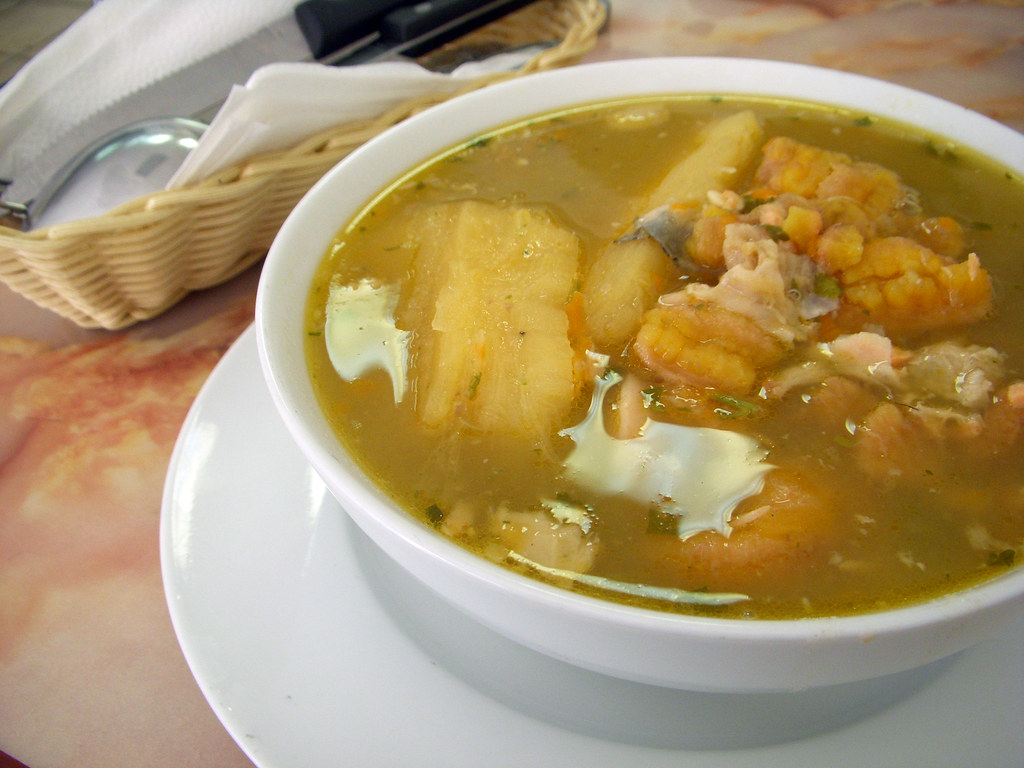
Panamanian sancocho is one of the country’s most enduring traditional dishes, a hearty chicken soup that reflects the blend of indigenous, African and Spanish culinary influences that have shaped Panama’s food culture over centuries.
Its origins are rooted in pre-Columbian indigenous broths, later enriched by colonial ingredients such as herbs, citrus and meats introduced through Spanish influence and the transatlantic exchange of food traditions. Over time, sancocho became a daily staple in Panamanian households, valued for its simplicity, nourishment and ability to bring families together around a shared pot.
It is commonly prepared with chicken, ñame, yuca, cilantro and maize, ingredients that vary slightly depending on region and availability, but always maintain the dish’s comforting and restorative character.
Across Panama, regional variations exist, with some coastal areas incorporating seafood, while inland versions tend to be richer in root vegetables and herbs.
Sancocho is associated with social gatherings, Sunday meals and celebrations, and is widely regarded as a restorative dish often prepared during times of illness or fatigue.
Its cultural importance has remained strong despite modernisation, with urban households adapting preparation methods while preserving its essential flavours and communal significance. In contemporary Panama, sancocho is enjoyed both in homes and at roadside eateries, where large pots simmer throughout the day, offering a constant reminder of shared heritage and comfort.
In Cyprus, similar slow cooked soups and stews made with chicken, lemon and herbs reflect a comparable appreciation for simple, nourishing dishes that adapt to seasonal ingredients and family traditions.
Sancocho is particularly valued during Panama’s rainy season, when warm soups provide comfort. Street vendors often prepare sancocho in large pots over open fires, serving workers, travellers and families throughout the day.
As Panamanian communities have migrated abroad, sancocho has travelled with them, becoming a culinary link to home and identity. It is frequently served at family gatherings and informal celebrations, reinforcing its role as both everyday nourishment and cultural symbol.
Each family may have its own variation, adjusting seasoning, thickness and ingredients according to tradition and personal taste.
Sancocho stands not only as food but also as memory, heritage and a reflection of Panama’s evolving cultural landscape. It continues to be prepared in kitchens across the nation, offering both nourishment and continuity between generations. Its enduring popularity reflects a broader appreciation for simple, hearty dishes that bring people together around shared tables.
Across Panama, it remains a comforting presence in daily life, bridging past and present through flavour, tradition and shared experience that continues to define the nation’s culinary identity in both rural and urban communities alike always.





Click here to change your cookie preferences