
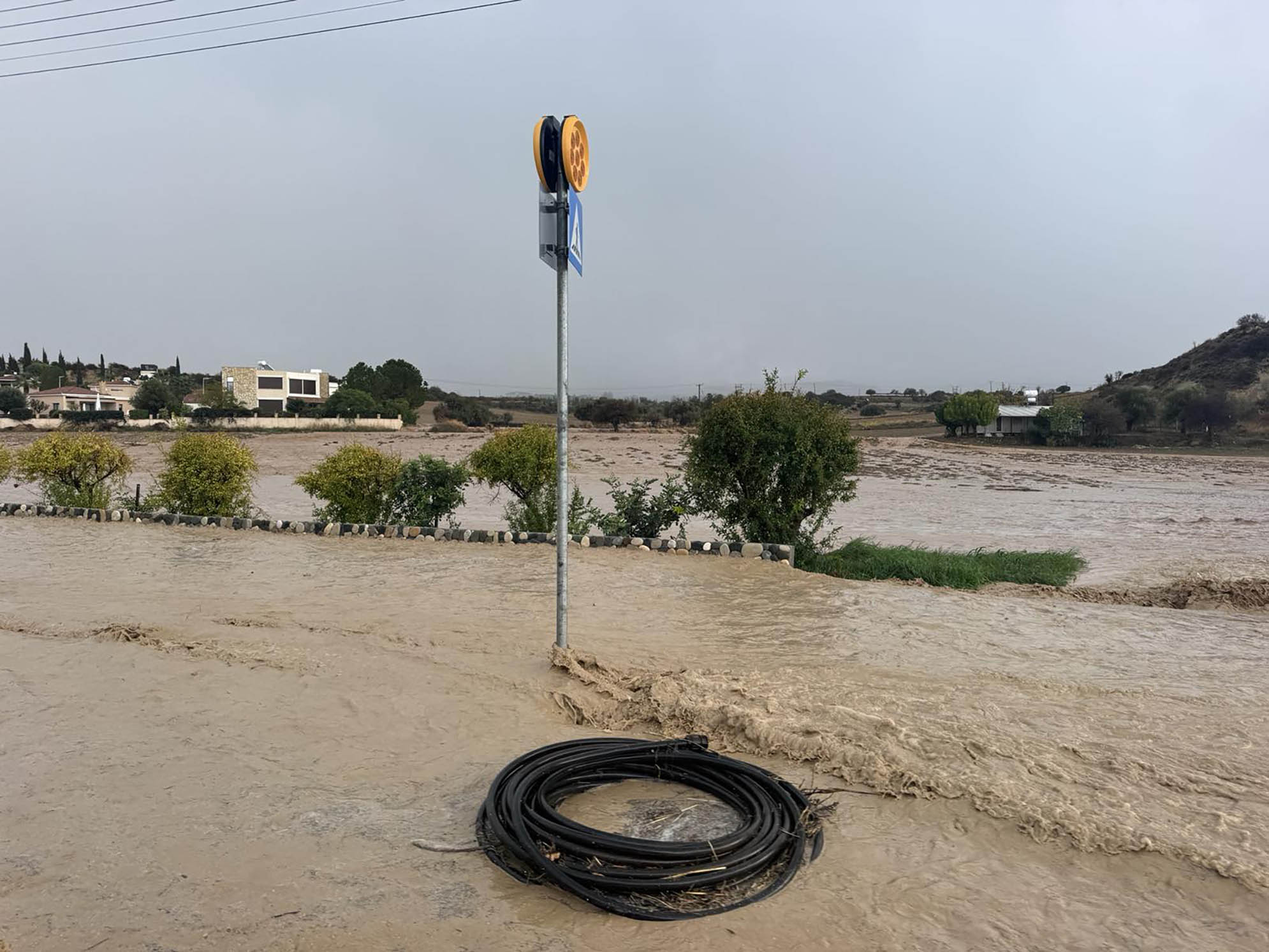
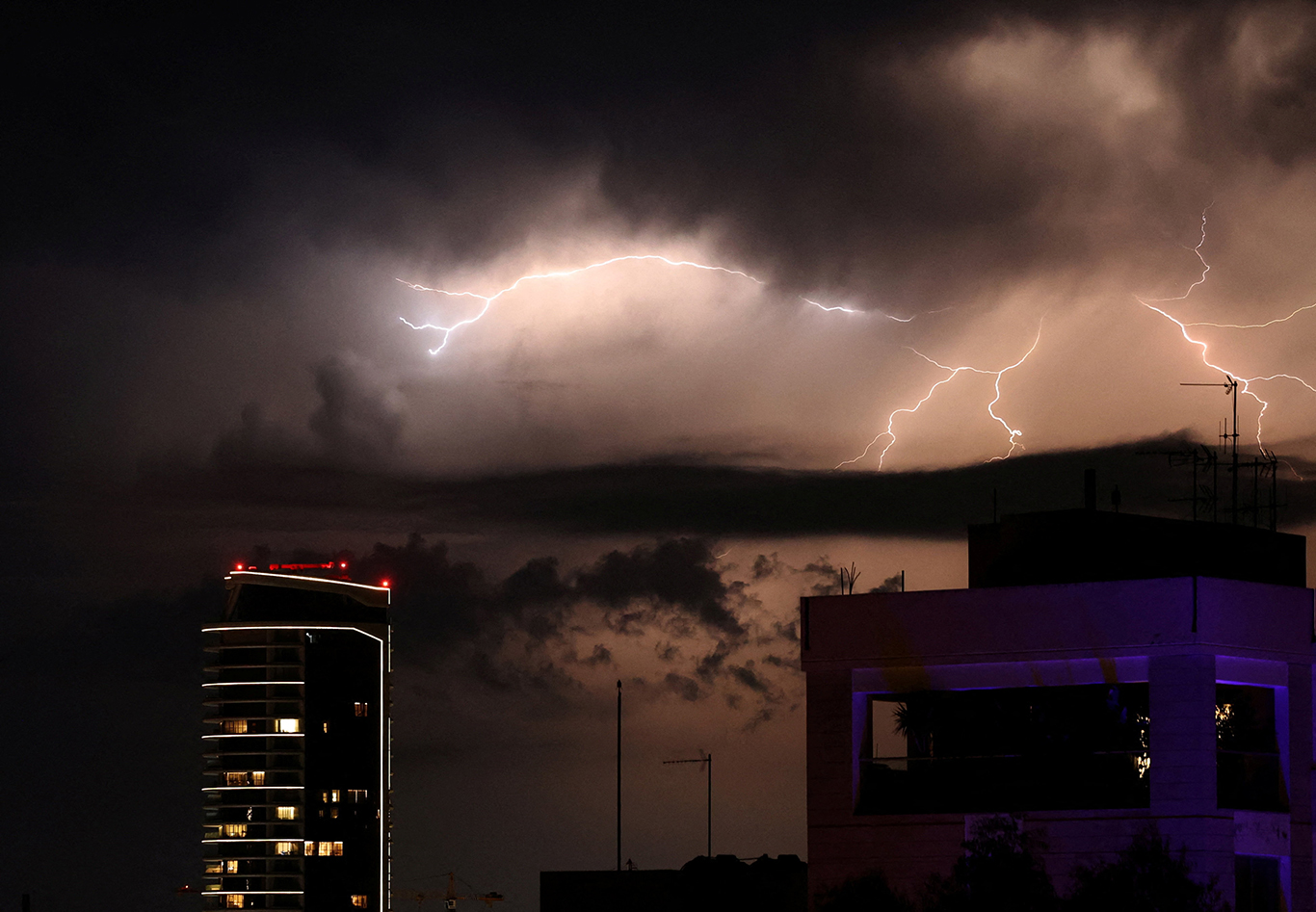
Despite recent storms, including some more on Thursday, overall rainfall in December remains below average, the met office has said.
From December 1 until December 11, recorded rain totals 64 per cent of the monthly norm, with just 67.2 millimetres compared to the typical 105.6 millimetres.
Since October 1, rainfall stands at only 54 per cent of the normal amount.
By region, Polis Chrysochous is the only area surpassing normal December rainfall at 128 per cent, followed by Stavros tis Psokas (93 per cent), Gefiri Panayias (93 per cent), and Athienou (92 per cent). Nicosia (Athalassa) is at 86 per cent, while Saittas and Paphos airport report the lowest rainfall at 31 per cent and 32 per cent, respectively.
With temperatures 3.8C above the 1991-2020 average, November 2025 was Cyprus’ second warmest on record, while dam inflows that month were just 18 per cent of the 2015-2025 average, marking a three-year decline in water reserves.
Over the past three years, reduced rainfall has cut irrigation water and worsened dry conditions.
The scale of the problem prompted the cabinet on Wednesday to approve €1 million in emergency aid to help farmers cope with soaring power costs linked to the prolonged drought.
Meanwhile despite the heavy rains of the past week, flow of water into the reservoirs has been scant.
According to a senior official at the Water Development Department (WDD), between last Friday and Sunday some 500,000 cubic metres of water flowed into the dams.
There followed an additional 70,000 cubic metres on Monday, 67,000 on Tuesday, and 106,000 on Wednesday.
The reason for the limited amounts ending up in dams is that the rainwater is still being absorbed by the parched subsoil.
“Unfortunately the rains until now were for the earth, to saturate the earth,” the official explained.
“We hope for more rain in the near future, so that we can have significant water flows into the dams.”
As of Thursday, total water storage in the island’s dams was at 9.5 per cent of capacity. This time last year, the reservoirs were 25.4 per cent full.
Currently the water in the reservoirs stands at 27.5 million cubic metres, compared to 290.8 million cubic metres of overall capacity.




Click here to change your cookie preferences