
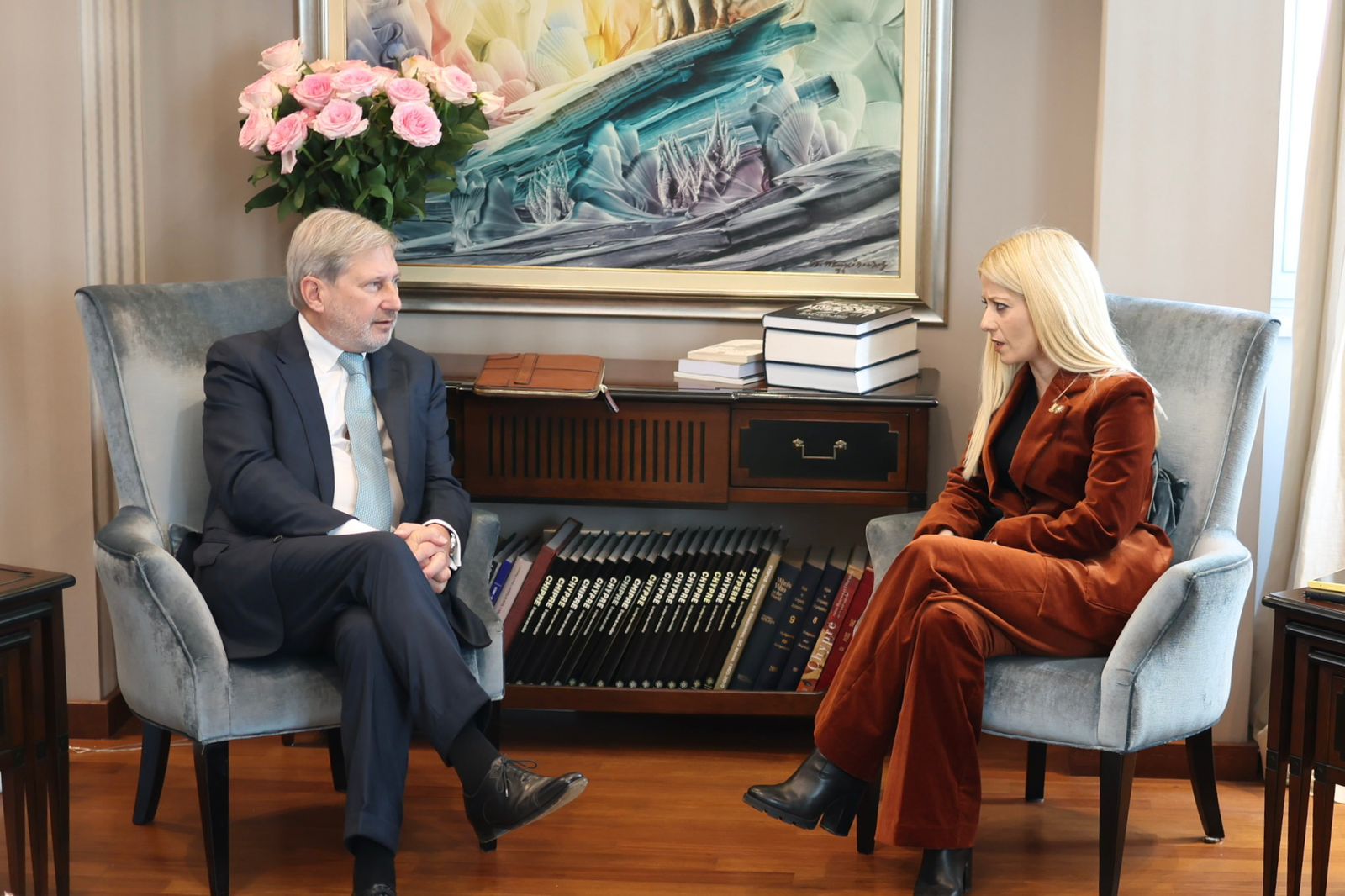
The EU must play a special and enhanced role in efforts to restart negotiations on the Cyprus problem, House President Annita Demetriou said during her meeting on Friday with the European Union envoy for the Cyprus problem, Johannes Hahn.
“We reaffirmed our shared expectation for real progress leading to negotiations towards a just and definitive solution,” Demetriou said.
She expressed satisfaction with the discussions held with the special envoy, stressing the need to “create the momentum to resume negotiations.”
“We emphasised our position that the EU must have a special and enhanced role in the process, demonstrating creativity with incentives that will maintain the momentum of efforts, but also rigour when the claims of the other side contradict international law and the accession protocol of the Republic of Cyprus,” she said.
Demetriou added that Cyprus’ upcoming EU Council presidency was an important opportunity to highlight the advantages of EU membership and to show what a free and reunited Cyprus could contribute to the bloc.
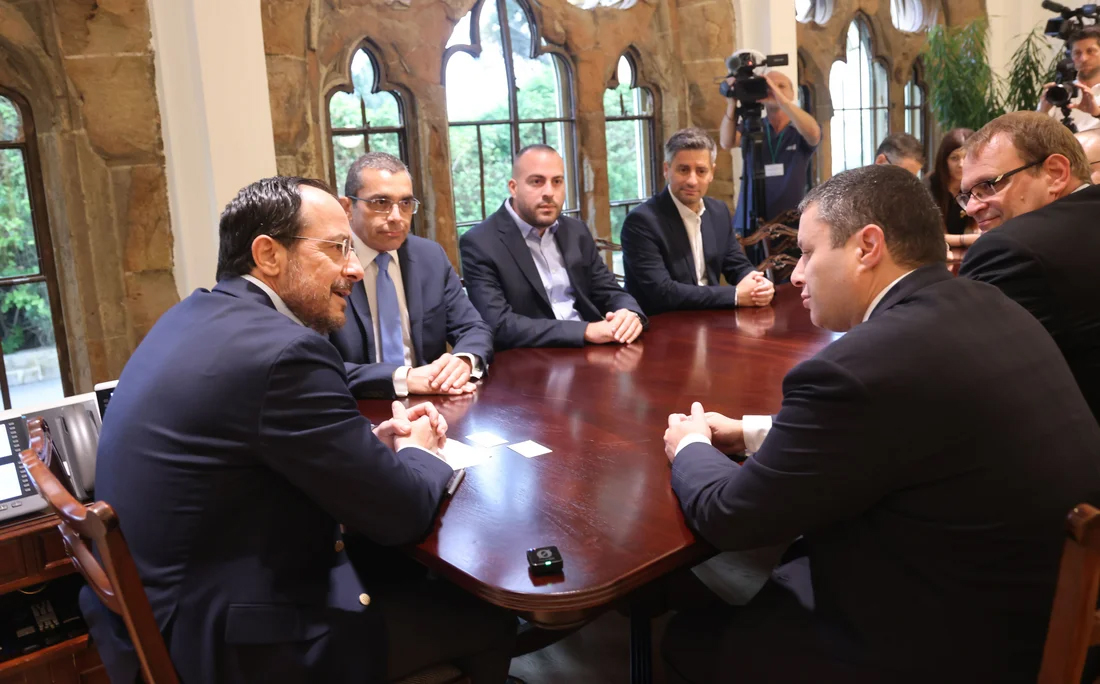
Hahn met President Nikos Christodoulides at the presidential palace on Thursday, with Christodoulides reiterating his aim to resume talks from where they were left in Crans-Montana in 2017.
“The EU’s involvement, your involvement, can help pave the way for the resumption of talks and, of course, for the solution of the Cyprus problem,” he said.
Hahn said the EU was relying on Christodoulides to “find a good relationship with the Turkish Cypriot leader,” to ensure effective talks that could lead to a “positive solution.”
Following the meeting, Christodoulides called Greek Prime Minister Kyriakos Mitsotakis, stressing that an expanded meeting on the Cyprus problem should be held as soon as possible.
Later on Thursday evening, Christodoulides and Turkish Cypriot leader Tufan Erhurman held a joint meeting with the UN secretary-general’s personal envoy for Cyprus, Maria Angela Holguin.
Erhurman later said the meeting “underscored the importance of political equality in achieving the envisaged solution” and formed part of the first step of the four-point plan he had presented to Holguin in their one-on-one meeting the previous week.
His four points call for the Greek Cypriot side to accept political equality, agree to time-limited negotiations, preserve all past agreements, and secure a UN guarantee that embargoes on Turkish Cypriots will be lifted if the Greek Cypriot side walks away from talks again.
He urged the Greek Cypriot side to agree to all four proposals, saying negotiations could not begin otherwise.
“Unless the remaining elements are accepted, the significance of the proposal is meaningless,” he said.
Erhurman said that while small steps were important for progress, “they are not sufficient on their own.”
“Our aim is to achieve tangible progress – such as on the crossing points – before entering the 5+1 meetings,” he said.
He added that Christodoulides had put forward his own proposals during the meeting and called for “meaningful changes” to create an environment conducive to negotiations.
“We are not approaching this process with the aim of simply sitting at the table in the hope of reaching a solution. We seek a negotiating table that genuinely leads to a solution. Political equality must be recognised and accepted from the outset and cannot be treated as a subject for negotiation,” he said.
Click here to change your cookie preferences