
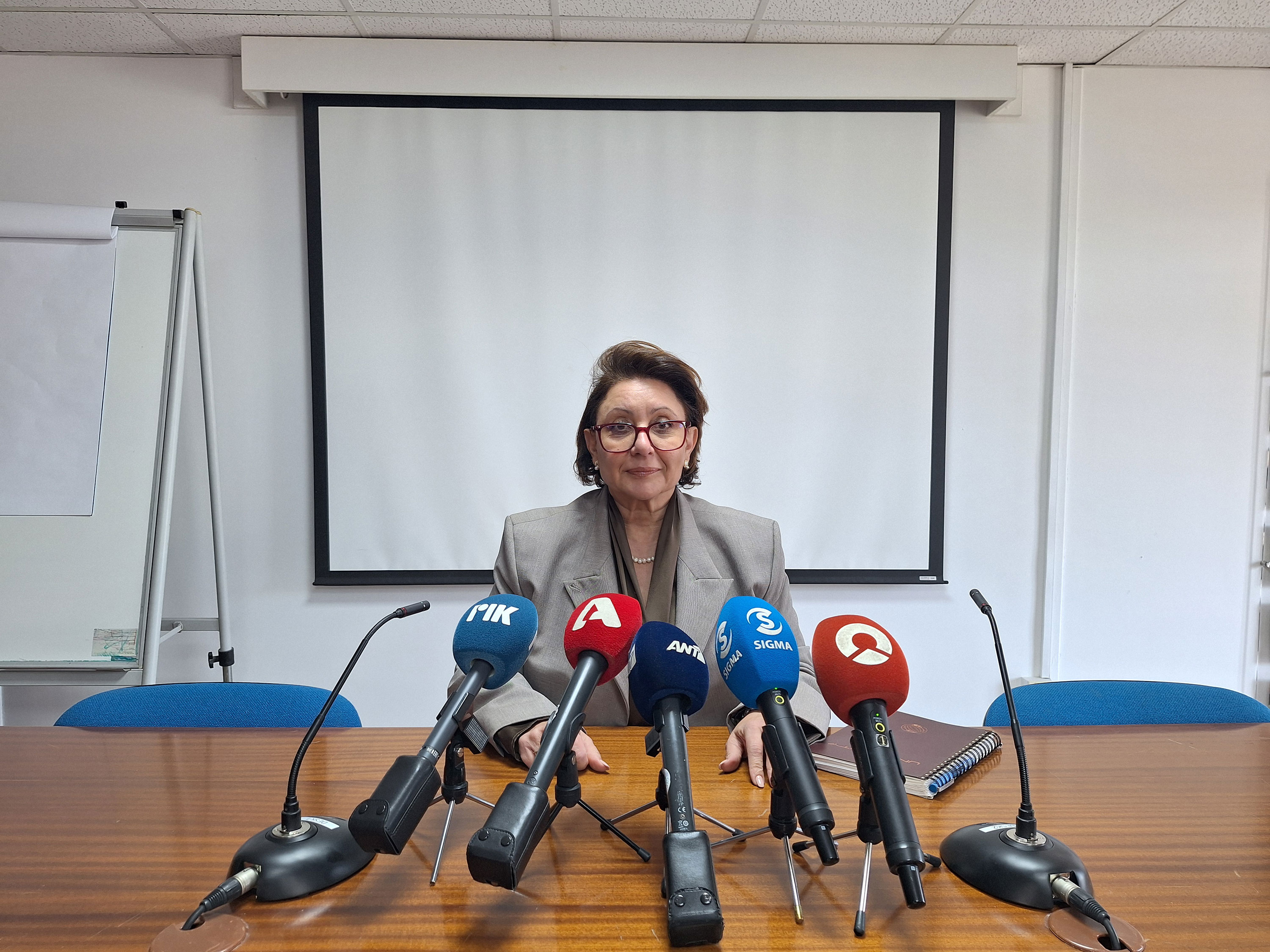
The culling of animals which have contracted foot and mouth disease is “necessary”, veterinary services department spokeswoman Sotiria Georgiadou said on Thursday.
Speaking at a press conference, she said the disease is “one of the most contagious viral infections which affect animals” and stressed that “its treatment is governed by European legislation”, which dictates that if one animal in a livestock unit is found to have the disease, the whole unit must be slaughtered.
“Due to the extremely high transmissibility of the virus, European legislation provides for specific measures, which included the mandatory culling of all animals on infected farms, restrictions on movement, and procedures for the burial or cremation of animals,” she said.
She did note that outside the European Union, some countries have employed a “strategy of preserving infected animals by vaccination”, but that “it has been shown that this can lead to a [further] spread of the virus and a significant reduction in animal productivity”.
To this end, she said that “the choice to keep asymptomatically infected animals [alive] has been shown to lead to a reduction in reproductive capacity and production by 25 to 50 per cent, while also causing serious impacts on trade”.
She then said that culling “aims to drastically reduce the viral load so as to stop the circulation of the virus”.
“Once the virus starts circulating, you cannot control it. It is transmitted from animal to animal, and there is a risk of it spreading throughout the island,” she said.
She added that animals which do not display symptoms can also transmit the virus, “which makes it necessary to kill them in infected units”.
Additionally, she said that “if these animals are preserved, in the long term, they will not be able to return to the production levels they had before, which will affect both the quantity and quality of milk and meat”.
“This must be weighed against the implications for trade and the economy,” she said, before returning to the necessity of culling.
“Vaccination alone cannot reduce the viral load. If the virus continues to circulate, then the country will be considered a third country living with foot and mouth disease, with all the consequences that this entails,” she said.
Farmers had earlier in the week staged a protest against the culling of animals in light of the outbreak, and had expressed hope that President Nikos Christodoulides will attempt to secure an exemption from European Union law regarding the disease, with European Animal Welfare Commissioner Oliver Varhelyi set to visit Cyprus on Friday.
However, the government has made clear that it has no intention of halting the culling, with Agriculture Minister Maria Panayiotou having said on Tuesday that the culling of animals in the case of an outbreak of foot and mouth disease is mandated by European Union law and is as such not negotiable.
Not following the regulations, Panayiotou said, could see Cyprus ejected from the European single market, and see tight restrictions placed on the movement of people, goods, and services between the island and Europe.
Thus far, more than 13,000 animals have been culled since the outbreak.





Click here to change your cookie preferences