
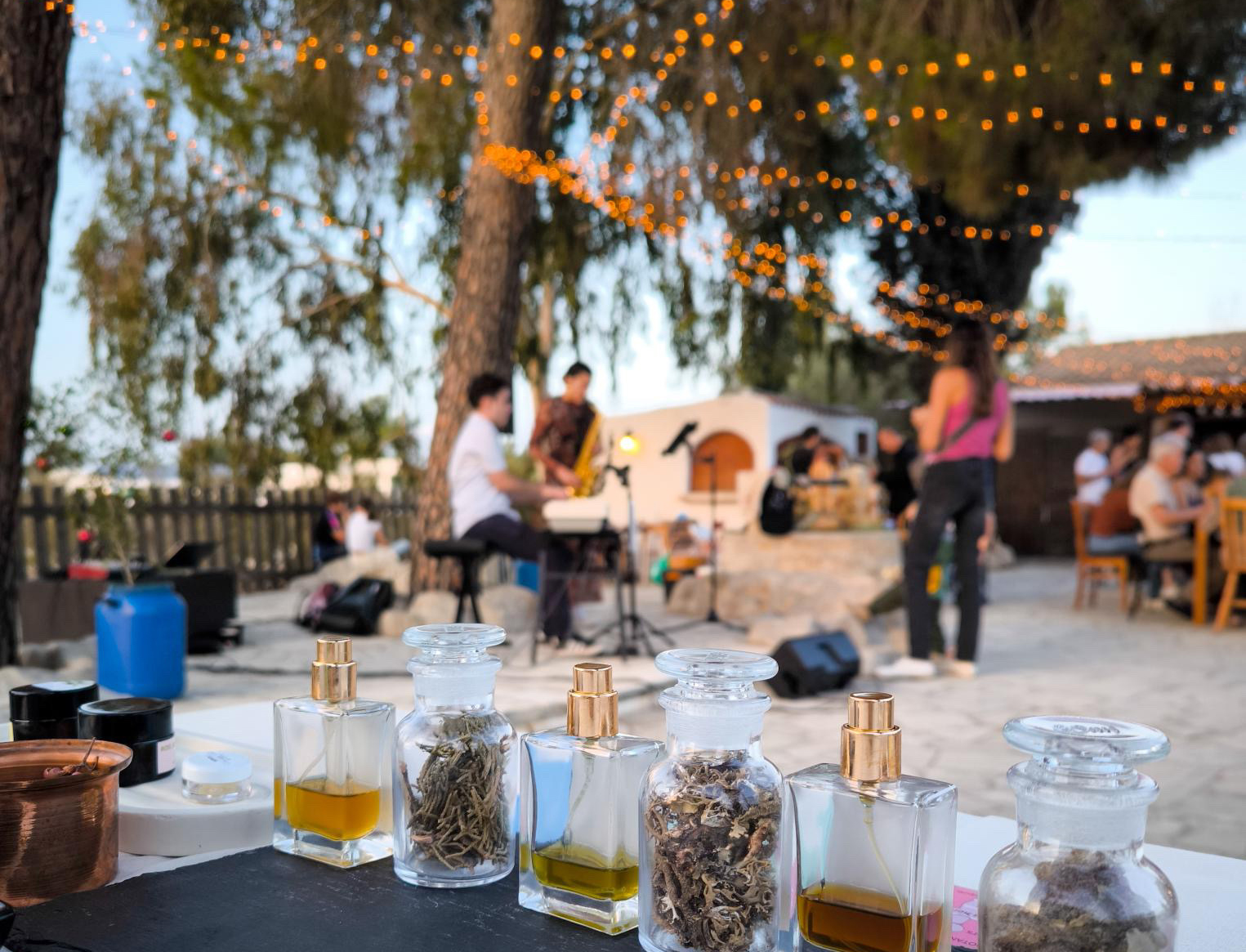
From synthetic to natural: the couple building a future with the flora that is around us
Some four thousand years ago, Cyprus was home to the oldest perfume factory in the Mediterranean, located in the village of Pyrgos, east of Limassol. Abandoned following an earthquake, one of the first distilling devices in the area was found among its ruins, indicating a tradition surrounding Cypriot botanical extracts that dates back to the Bronze Age, when aromas were extracted via distillation of plants and exported for trade throughout the Mediterranean.
For the couple behind all natural perfume brand Halkos Botanicals, their history does not stretch so far back. “Our own aromatic journey began four years ago, when we moved from England in search of a healthier, more fulfilling lifestyle,” says Bulgarian Doroteya Petrova, one of its founding members of Halkos Botanicals.
Doroteya and her partner, Anastasios Anastasiou, are both from a background of cosmetology and natural cosmetic formulation and creation. They owned a hair salon in London which initially worked with synthetic hair products, in an era that did not really question the use of chemicals and ingredients that dominated the industry. “Some of the products had absolutely nothing natural… and I realised that this meant a lot of disease, and when I say disease, I mean it with the meaning of ‘dis’ – ‘ease’ on the body, on the mind, on the spirit,” says Anastasiou, founder, and engineer behind Halkos Botanicals.
“It all started one evening when I was watching Doroteya moisterising at night, before going to bed… I could see it wasn’t doing any good, it wasn’t the solution. I explained how the skin regenerates and so on and asked her to go without anything for at least two weeks, to let the skin breath, let it regenerate and let her true skin come through,” he adds.
“That’s when we really gigged out,” adds Doroteya, “we started doing courses on natural cosmetics, how to formulate them and went deeper and deeper”.
By this point, the duo had already transformed their salon from using whatever hair products were on the market to using their own natural products, all produced under their own brand name Zenon Kition Natural Products. Becoming more aware and offering beauty solutions with wellbeing at their core, the couple decided to move to the island in search of a more meaningful lifestyle which would also accommodate the growth of their family. By 2021 and amid the pandemic, the couple had moved to the island, where, as a British Cypriot, Anastasiou already had roots.
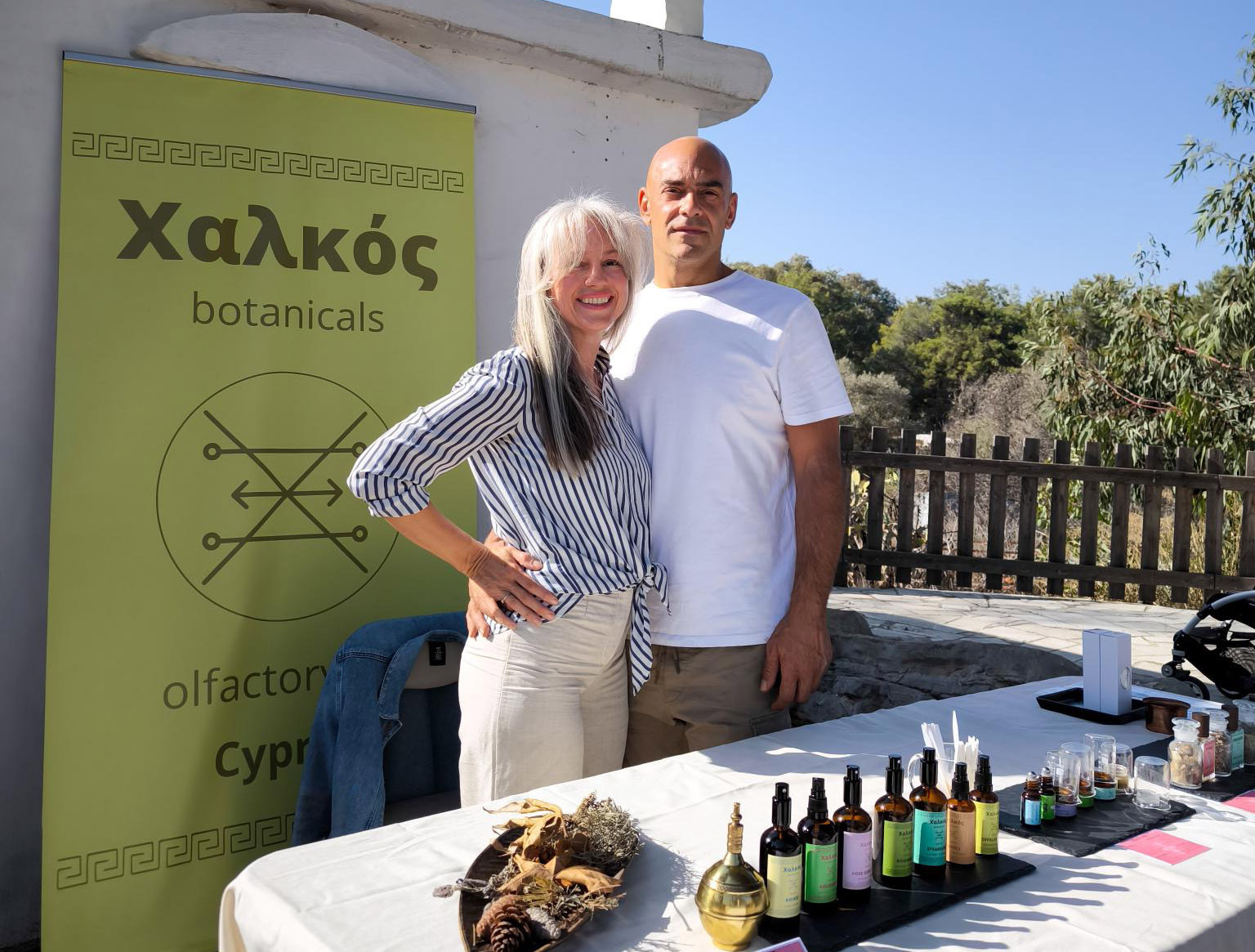
“It wasn’t very clear what we were going to do in Cyprus,” says Doroteya. “We wanted to distill but the exact purpose wasn’t clear.”
In Doroteya’s eyes, Cyprus is a perfume island, not just due to its history but also its nature. “Literally, everywhere you turn, everywhere you look, every plant you touch is aromatic, and medicinal in many cases,” she says.
And so, “the idea of natural, botanical aromas was born with the birth of our second child. During the long hours of nursing, I had time to think and be inspired. My mind was truly free to wander through time; experience, reality and dreams kind of all mixed together and started to become one. I became obsessed with learning the art of perfume making and spent endless hours reading and experimenting while taking care of a toddler and newborn at home. After moving to Cyprus to begin a new life, I had felt lost and reminisced about the natural products I used to create. I didn’t know how to go forward. But being at home with the kids and having this time to get into my head, and connect with myself, the idea took shape, Taso (Anastasios) and I spent long hours envisioning a future, which includes the aromatic flora around us,” explains Doroteya.
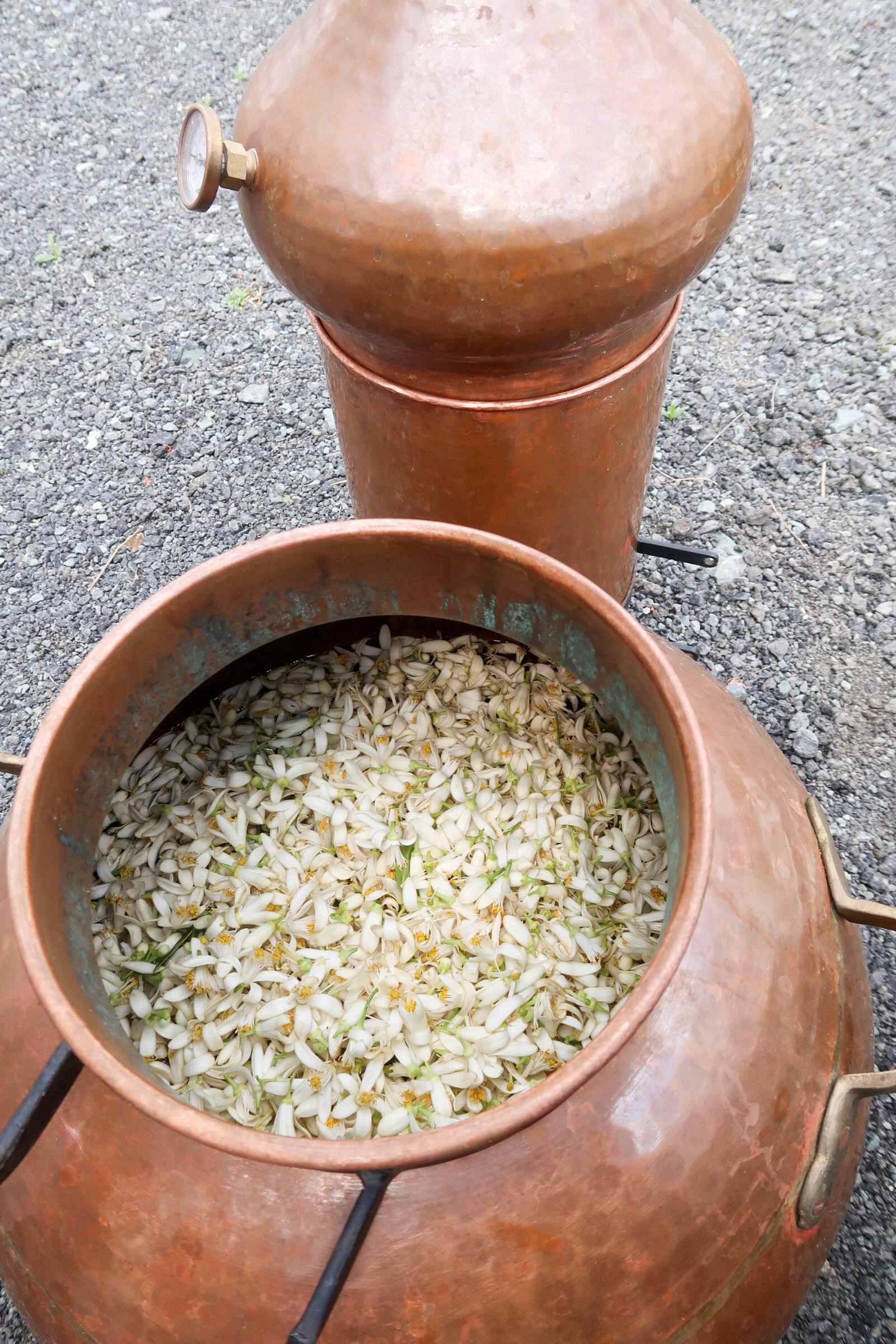
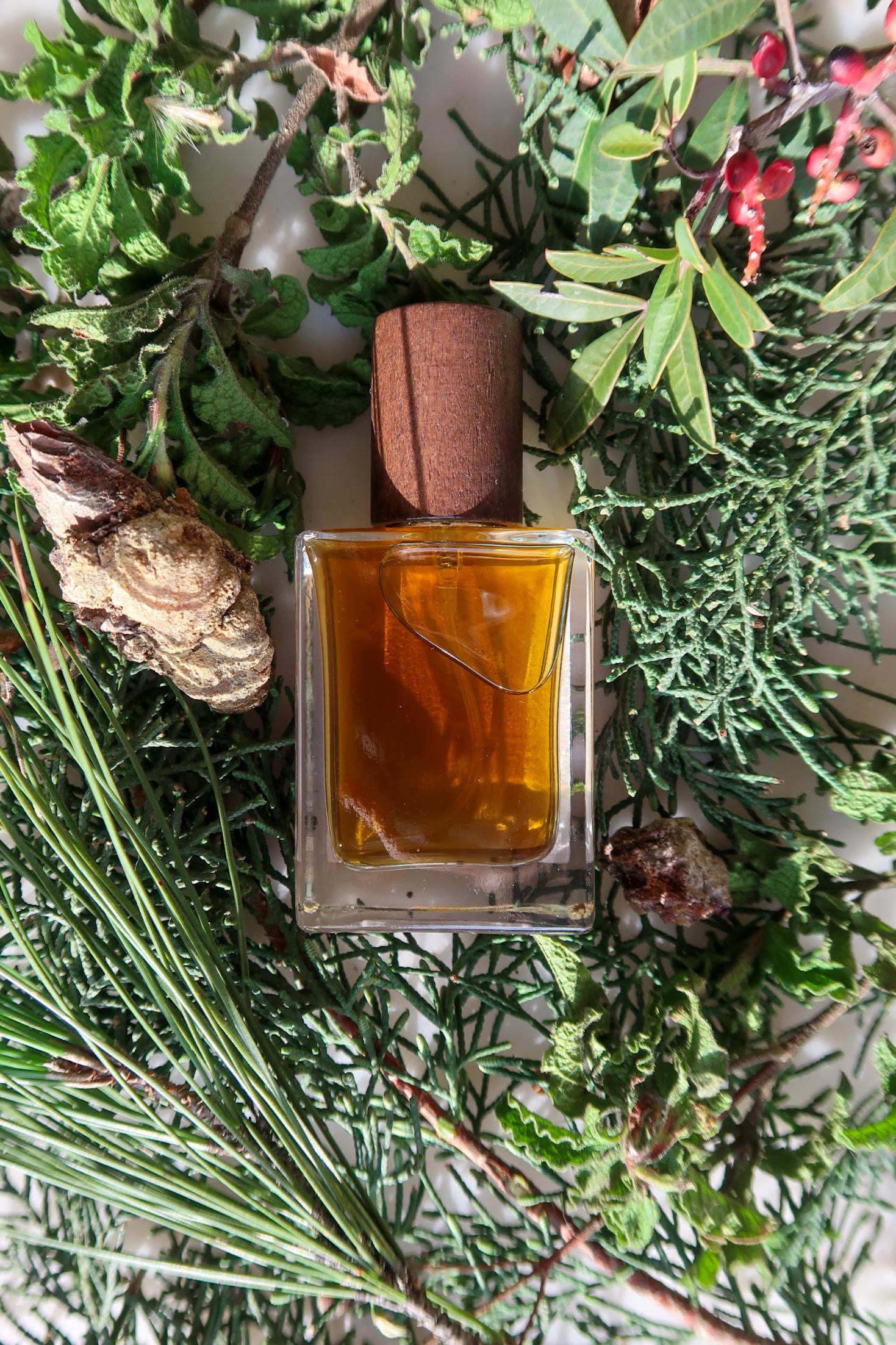
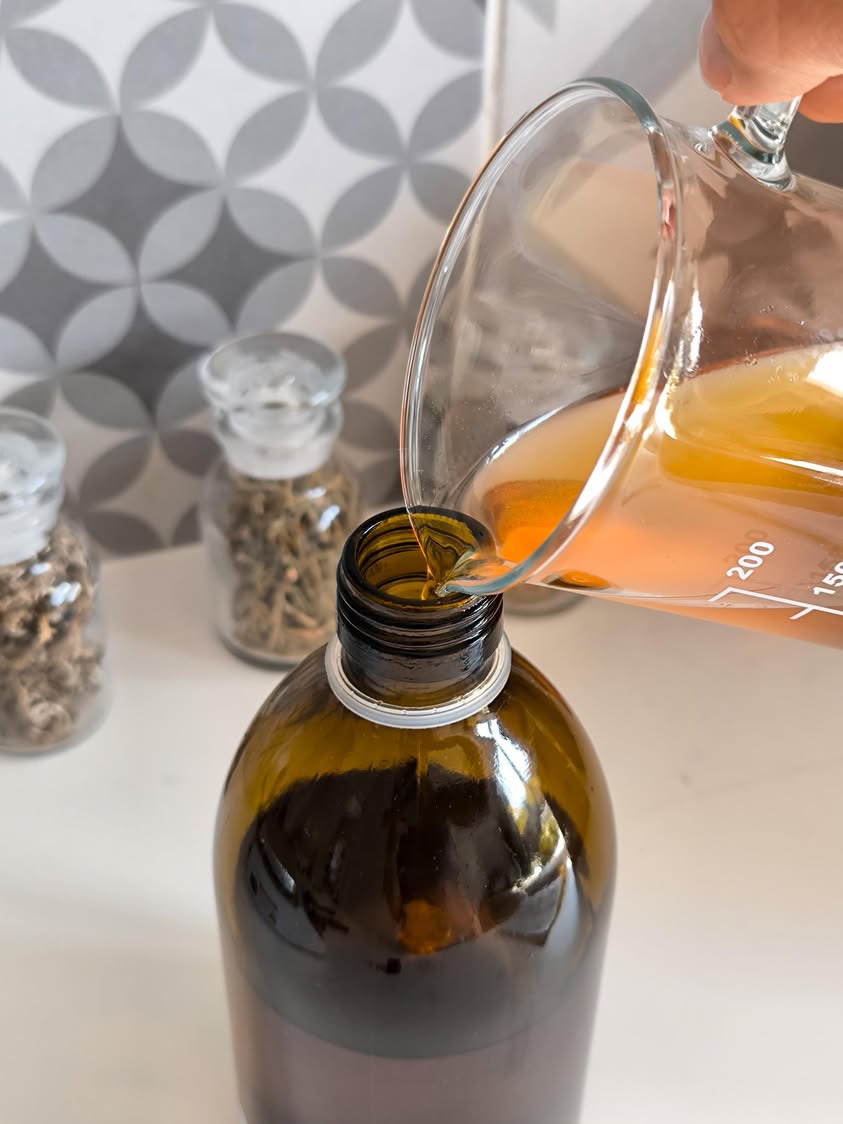
Having closed down their business in the UK and already equipped with a handcrafted copper alembic from Portugal, Halkos Botanicals, a name inspired by the Latin word for Cyprus (Cuprum), which means copper (Halkos in Greek), was born.
I met Doroteya and Anastasios at the Pyrga Viewing point in the Larnaca district. We walked up a nature trail leading us to the viewpoint as we indulged into what Halkos Botanicals is all about. From the tip of the hill, the couple pointed to their home, also the home of Halkos Botanicals, which is currently being renovated so the premises and its creations can be accessible to the wider public. As they described the small botanical gardens that will accompany the premises, Doroteya holds a small cutting of cistus creticus (pink rock rose) which she spotted on our way up and used to muse about their line of products.
“The idea behind the whole copper distillation apparatus that we bought from Portugal was to make distilled waters,” says Doroteya. “Our distilled waters are of superior quality because of the fact that we distill in copper and copper has an anti-microbial effect on the water, it charges it differently,” she adds.
Going back to the cistus creticus Doroteya was holding in her hands, and which she makes distilled water from, she explains that labdanum is extracted from it, an ingredient used in perfumery that’s very aromatic and is used medicinally for the respiratory system. “The wild vegetation on the island was a big factor why wanted to move here, you get that feel good factor…,” says Anastasios. We talk about all the aromas commonly used in the perfume industry and how many species, such as labdanum and oak moss for example, have been restricted under European law and replaced by synthetic versions. Minding their own production, Halkos Botanicals makes distilled water from cistus, lavender, rosemary, geranium and Helichrysum (curry plant) to name a few.
“The distilled waters are more penetrable, the molecules that get extracted into the water are not the same as molecules that are left in the oil; the heavier molecules are in the oils, the lighter are in the waters,” explains Doroteya.
As far as botanicals aromas are concerned, Halkos Botanicals offers varying products which can be used according to preference, both in essence as well as application.
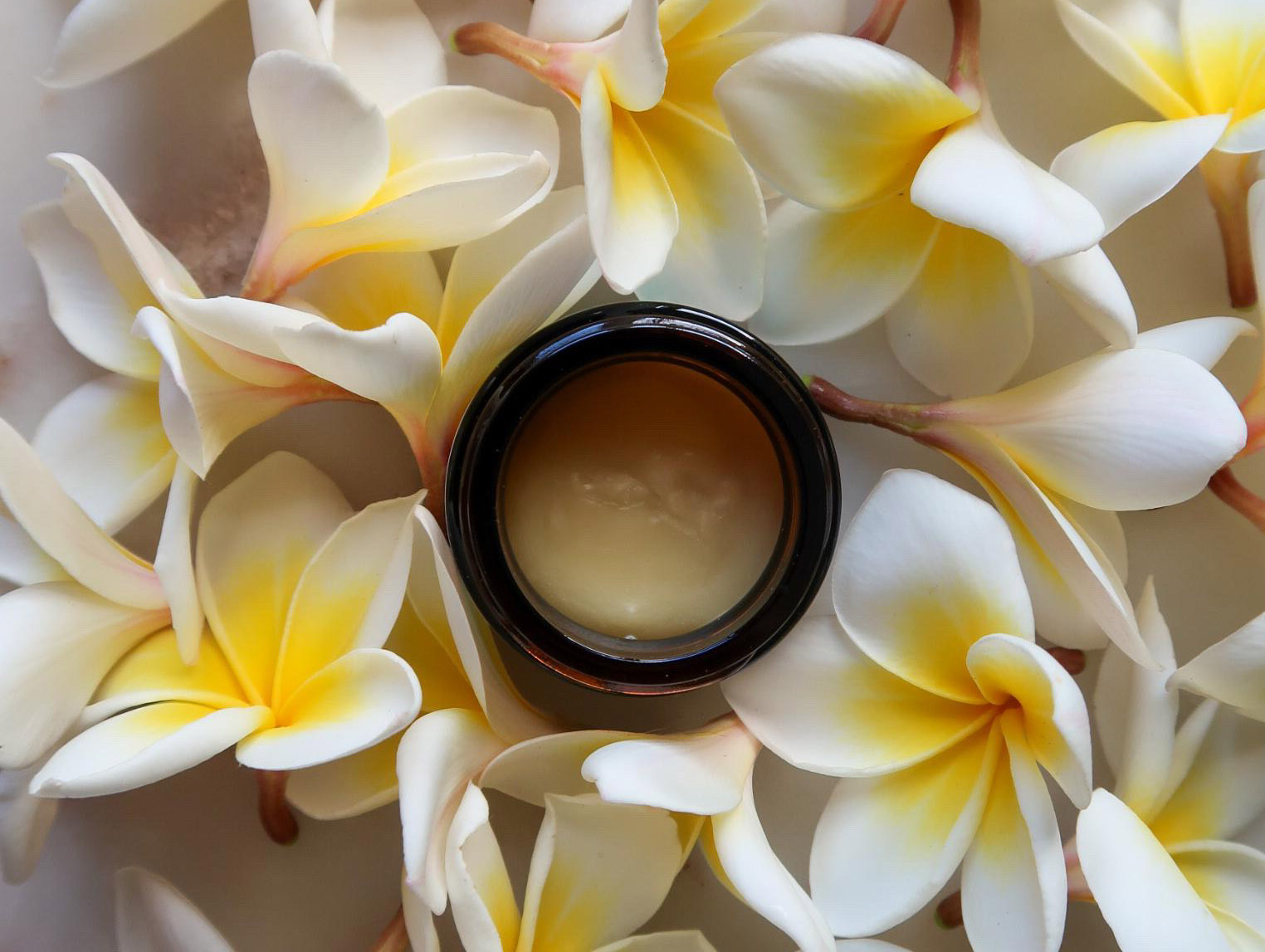
“I want people to indulge in the best way of applying perfume; depending on what the carrier is, whether it’s oil based or solid or alcohol based, it behaves differently,” explains Doroteya.
“People are used to the spray application nowadays, and there’s a certain beauty and ease to it, other people like the more intimate act of applying the oil to the skin, and other people prefer the solid way of applying – the solid and oil based are similar in application but the way the perfume behaves with the spray for example, is kind of lighter because the aromatic molecules are released into the air easier, whereas the solid one which has bee’s wax in it holds more molecules down on the skin for longer periods of time, so it’s longer lasting on the skin,” explains Doroteya. To this end, you have botanical aromas such as Paralia (meaning beach in Greek) in their product line which as Doroteya describes is all about bringing out a feeling of summer, available in both oil based and solid versions which uses citrus and bergamot as top notes, jasmine and plumeria as the floral heart and a tincture of cistus.
Pertova also introduces me to their Pyrga botanical aroma, inspired by Pyrga itself, a warm, caramelised smell induced with mastic, pine and cypress, as well as their Troodos botanical aroma that contains a special extract of plane tree, and includes extracts from cedar wood, juniper and geranium.
“We take great pleasure in distilling for aromas in our copper alembic and we use another centuries-old technique to capture the authentic aroma of flowers we find around us which is called enfleurage,” explains Doroteya. This technique, appears in their solid aromas and floral extracts among others, including their Neroli and Jasmine aromas, as well as their Meli aroma which Doroteya describes as an interpretation of Cyprus in the spring time, carrying a blend of chamomile, absolute, lavender and bees wax. “For the enfleurage, I charge a pomade with bee’s wax and oil every single day with fresh flowers for about a month until it becomes saturated with the aroma of the plant, and then I continue extracting the aroma by soaking the saturated pomade in alcohol and that’s how the alcohol draws the aroma out of the bee’s wax,” explains Doroteya.
And so, the couple introduces me to what they see on the fertile land that surrounds them and share the enchanting smells they detect. With no additives, their products are pure. “We’re sharing a small amount of what we do with the outside world because we know it’s healthy, it’s clean, it’s organic, it’s real, it’s alive,” says Anastasios. “It all began for personal use, and in a way it will remain that way, we wouldn’t make, sell and offer something that we wouldn’t use ourselves and there’s a limited amount on the island, you live with what you need,” he adds.
Part of their vision is also to bring awareness around what is available in nature. “A lot of people are unaware of what’s growing around them… The knowledge is fading, the practices are fading and this is another reason why I’m so fascinated with ancient techniques of extracting. Botanical perfumery has taught me so much, even about living if you will; what I do is very seasonal, I can’t just decide to make whatever, I have to wait for the season to come, to distill the lavender, to tincture it or whatever I need to do, in that season, then I need to wait for the aromatic extract to develop, because it changes over time, as they mature and they settle down, they deepen, they become more complex, it’s taught me so much patience,” says Doroteya.
For more information and a view at their shop visit https://halkosbotanicals.com/




Click here to change your cookie preferences