
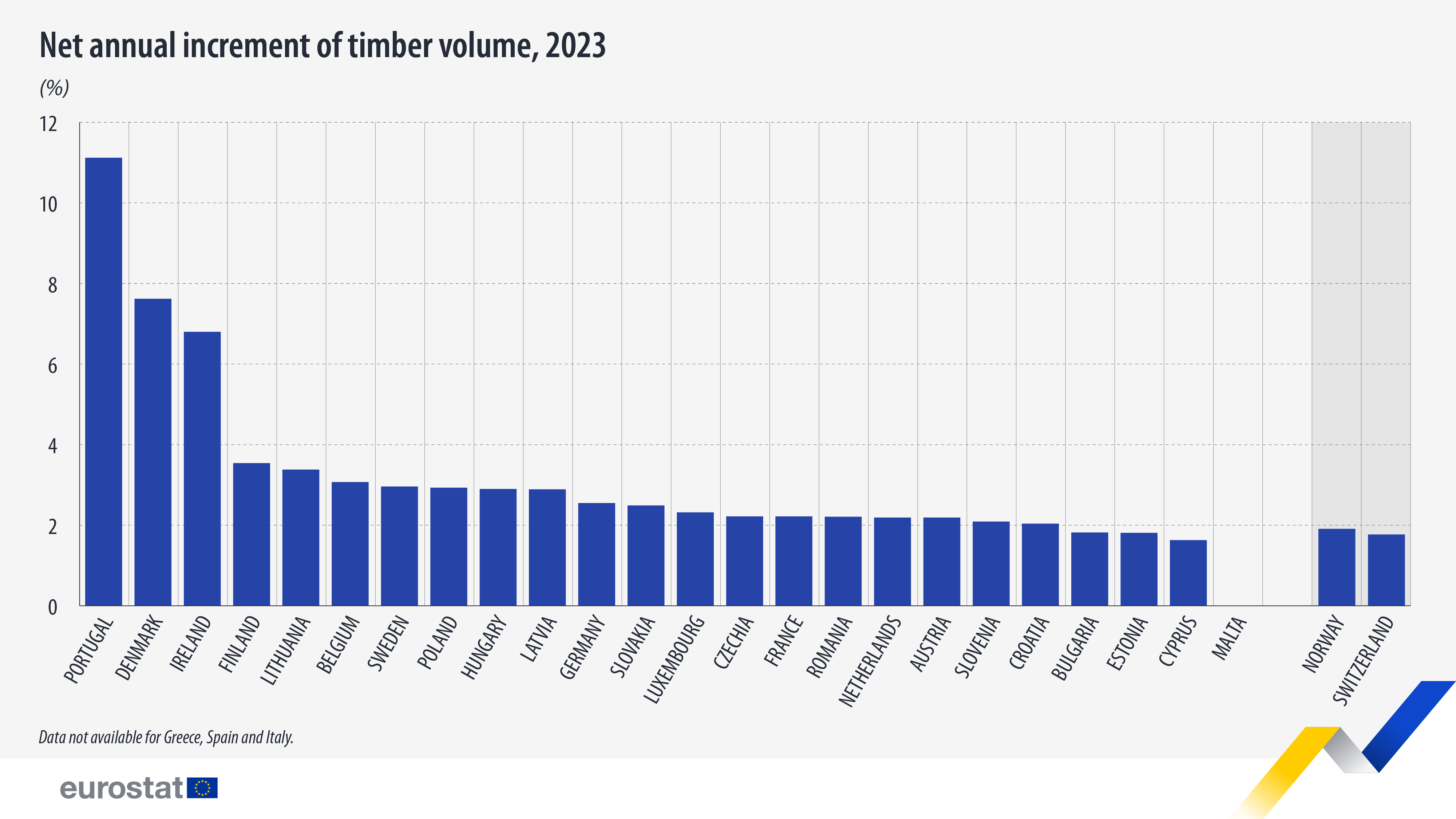
Cyprus recorded the lowest forest growth rate among EU member states in 2023, at just 1.6 per cent, according to data released on Friday by the EU’s statistical service, Eurostat.
State forest land covers around 18 per cent of the island’s total area and includes natural pine forests, reforested areas, grasslands and non-forested land such as dams and mining sites.
With this low growth rate, Cyprus ranks alongside Malta, which recorded zero forest growth, and Bulgaria and Estonia, both at 1.8 per cent.
At the opposite end of the scale, Portugal recorded the highest forest growth rate in the EU at 11.1 per cent, followed by Denmark with 7.6 per cent.
Eurostat data also show that Cyprus is among the member states with the lowest net growth of timber stock. By contrast, the highest net growth rates were recorded in countries such as Ireland and Latvia.
Forest growth plays a central role in the EU’s strategy to promote sustainable forest management, support the bioeconomy and meet climate targets.
Despite its comparatively modest timber growth, Cyprus relies heavily on timber imports from both EU member states and third countries.
In its 2025 timber market statement to the United Nations Economic Commission for Europe (UNECE), the forestry department said the Cypriot government manages forest resources with a focus on environmental protection, biodiversity conservation, recreation and environmental awareness, reflecting a shift away from timber production towards broader social and environmental benefits.
The department noted, however, that this approach has limited domestic timber production, leaving Cyprus dependent on imports to meet demand.




Click here to change your cookie preferences