
Akel and its allied trade union Peo on Tuesday called for the state to take on greater responsibility for social welfare.
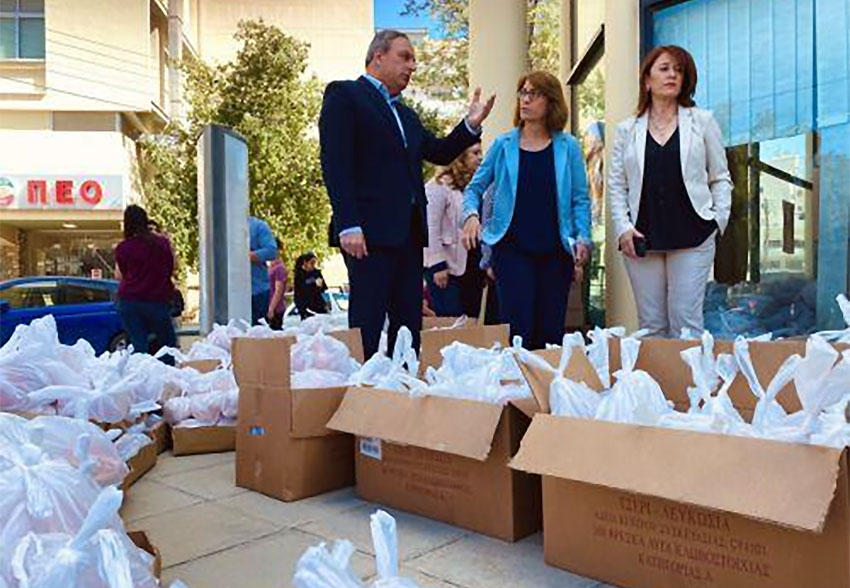
Akel leader Stefanos Stefanou and Peo’s general secretary Sotiroulla Charalambous, visited the social solidarity network on Tuesday to praise the work of charities supporting vulnerable households.
Stefanou acknowledged that the network has provided critical support for those facing hardship “for more than a decade”.
He commended organisers and volunteers for their efforts and remarked that such works demonstrate that solidarity “still prevails in times of selfish individualism.”
However, Stefanou acknowledged that the existence of voluntary initiatives highlights the shortcomings of the welfare state.
“Voluntary work is admirable, but it cannot replace comprehensive social policy delivered by the state,” he insisted
Referring to recently released figures, Stefanou said a sizeable portion of the population remains at risk of poverty or lives on a low incomes despite overall economic growth.
According to the data, nearly one in four Cypriots is in a low-income bracket and one in seven is at risk of poverty.
Stefanou said stagnating wages and persistent economic insecurity show that the current welfare state does not meet the needs of much of society.
He urged stronger social policies to support incomes, reduce inequality and reinforce the social safety net.
Charalambous reiterated his position, and congratulated Peo for playing a crucial role in raising the minimum wage, set to rise to €1,125.
Her celebration was cautioned though as Charalambous said the increase proposed is “very worrying” if it fails to provide meaningful income relief for the lowest paid.
She urged lawmakers to ensure that any minimum wage decision reflects the realities of rising living costs.
Speaking to reporters, both leaders stressed that Cyprus’ growing economy should translate into tangible improvements in living standards for all residents.
They argued that state-led social policy, backed by adequate funding and legislative action, is needed to ensure that economic growth benefits workers, pensioners and vulnerable households.
The social solidarity network has distributed hundreds of food packages and vouchers to families in need.
Volunteers said demand remains high as rising costs of housing, utilities and everyday goods continue to strain household budgets.



Click here to change your cookie preferences