
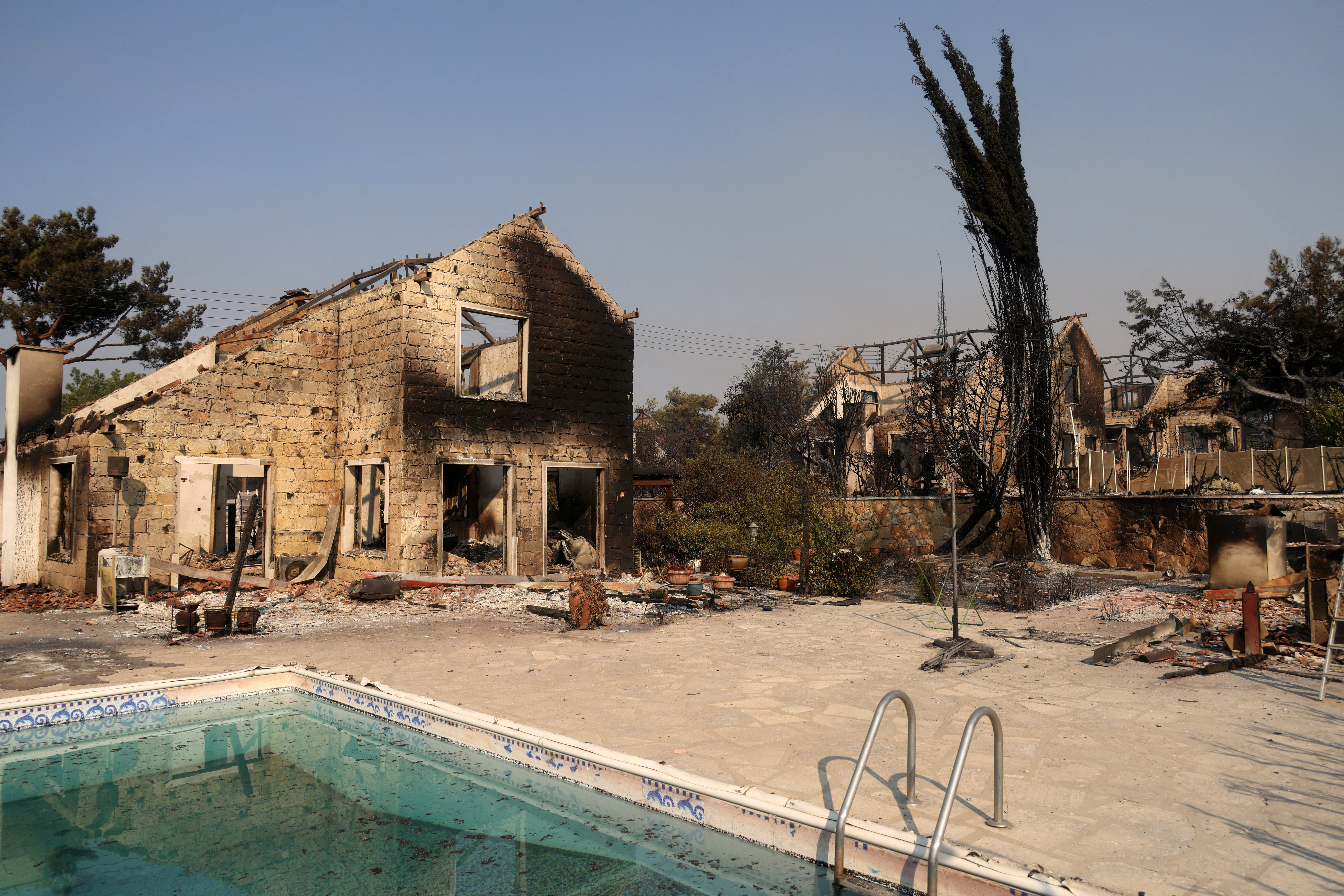
The response to the Limassol fire was an absolute travesty
There was a saying that wherever it rained in Cyprus, it would also rain in Kornos. And it did. Until a fire practically wiped the forest off the map.
I know this because I live just down the road. In the years following that fire over a decade ago, my trees have gradually been giving up, pine trees in the whole area are dying and acting as fire starters, fires are subsequently more frequent and spontaneous, and moss is now something you read about in books.
Sadly, the list goes on. Not so many birds chirp in the morning, I haven’t seen a hedgehog for ages and even the spiders seem to have moved to greener pastures.
I leave dog food and bowls of water on the veranda for the foxes. Bird seed and a bird bath for our winged friends. And welcome any stray that chooses our home as its sanctuary. And still there are fewer.
And no matter how much water I direct onto the land from the washing machine, it is not nearly enough to keep the trees alive, let alone produce a hard, juiceless lemon.
Although the Kornos fire was not of the extent of July’s devastating blaze in the Limassol district, its impact still resonates, and covering deadly inferno was heartbreaking.
Reporting in the weeks that followed on the government’s aid to those who lost their homes and livelihoods, I knew this was just the beginning.
The fact that it is still hardly raining as the new year approaches should be keeping us all awake at night.
Scientists have been warning of desertification in Cyprus for years. It is not something that happens overnight, but a gradual descent into hell and it is already happening.
While other countries are turning deserts into farmland, covering every inch of built-up areas with solar panels to spare the land, directing seawater to toilets and basically capitalising on what they have most of to produce what they have least of, Cyprus this year once again defended its champion status for producing hot air.
Just a month before the Limassol fire, government spokesman Konstantinos Letymbiotis assured everyone of Cyprus’ firefighting capability, saying that we were “at absolute operational readiness with strengthened forces, modern means and clear strategy”.
“Prevention, readiness and synergy constitute the three foundations on which the new policy of civil protection of the Republic of Cyprus is built,” he said.
Meanwhile, the authorities were too busy to activate a Public Warning System, in line with EU obligations, despite the fact that this obligation had been incorporated into national law three years earlier.
So, the church bells rang to warn people of imminent danger.
In the confusion that ensued and in the absence of official coordination, two elderly people trying to get away from the approaching blaze were caught in the inferno and burned to death in their car.
To add insult to injury, the justice minister said there had been no loss of life, apart from the two that died.
It was a fiasco of immense proportions.
What followed was a barrage of statements about how the government intended to compensate people for the loss of homes and businesses. Promises of the kind that are made all the way to Brussels, where ministers present not what has been achieved, but what must be done – most of the time.

It was also very unfortunate that the fire that raged for days happened slap bang in the middle of the tourist season, just a short drive from Limassol, a popular resort.
As a reminder, the Limassol wildfire started on July 23 and raged for three days. Two elderly people were burned alive and hundreds of homes and businesses were lost.
An area of 124 square kilometres was reduced to ashes. Seventeen communities in mountainous Limassol were affected, of which 13 suffered severe losses.
In those communities, 706 buildings succumbed to the flames – 335 were completely destroyed and 371 partially. Among them were 532 homes, 109 warehouses, 29 business establishments and 36 other constructions.
Over 775 farms also suffered total or partial loss of livestock and cultivations.
During the fire, rumours circulated about inadequate firefighting means, prioritisation was questioned, water for the fire engines was unavailable and the absence of coordination – a muck up of catastrophic proportions – was discussed across the island and beyond.
This brings us to another serious issue. It hasn’t rained much in years, reservoirs are almost empty, household water is being rationed, boreholes are drying up and inadequate irrigation means crops are suffering, which will inevitably lead to higher prices for substandard produce.
As if Cyprus is landlocked. We are surrounded by water yet desalination is in its toddler years. Not that desalination does not carry its own consequences.
At the risk of sounding quaint, I will say that one of the first things that should be done is reforestation. It is being done, but at a slower pace than the trees are being lost and often relies on private initiative.
National strategies, if not implemented, will not work. It’s like joining a gym without turning up. The promises abound, then comes the let-down.
It is ironic that burning trees, before you see the fire, sound like rain.





Click here to change your cookie preferences