
A simple solution promoting safety for the vulnerable remains only patchily enforced in Cyprus
The year is ending. Streets shimmer with fairy lights, their glow reflecting off wet pavements. Shop windows glow in gold and red.
Families stroll slowly, children clutching steaming cups of chocolate. Music drifts from cafes and squares, mingling with the scent of roasted chestnuts and cinnamon. Everything seems cheerful and safe.
Safety, however, is never guaranteed. Not for everyone.
I first encountered what I soon learnt was not actually a new safety system in Rome when I ducked into a bar.
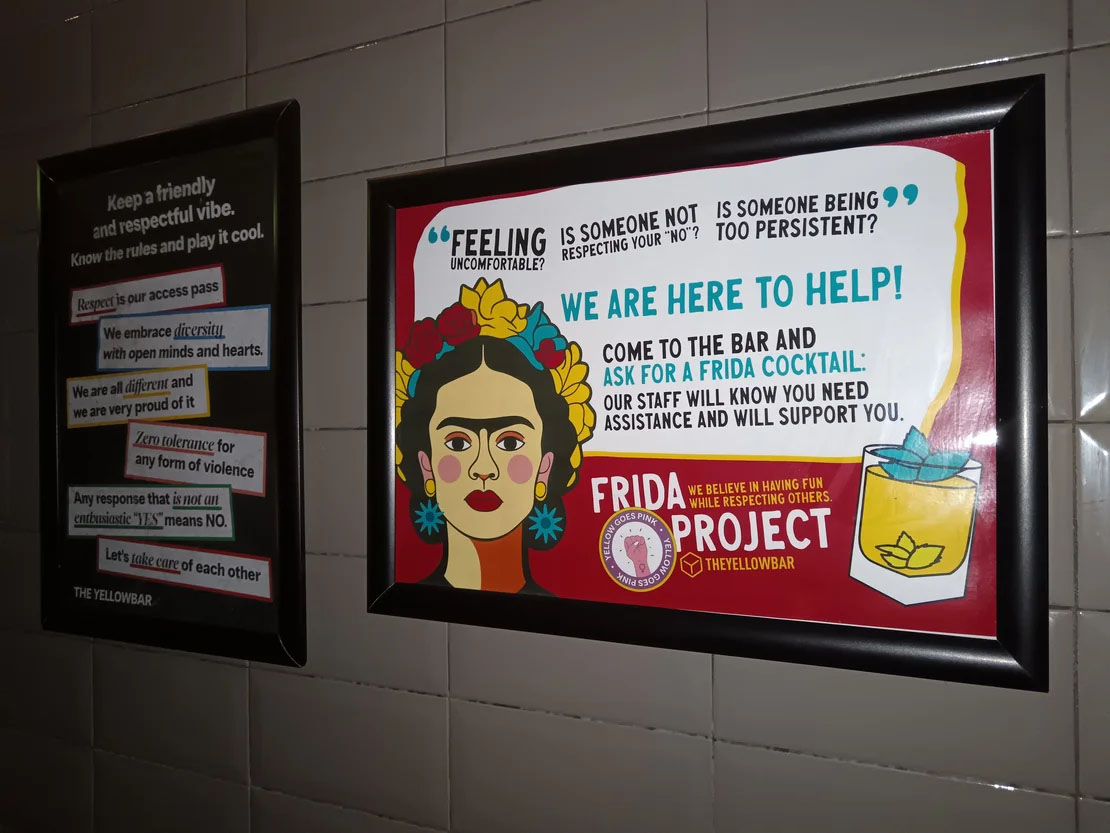
There, in the small, tiled toilet, I saw it. A poster. Simple words, discreet instructions: a safety scheme for anyone feeling unsafe. A code phrase, “Frida cocktail”. Quiet help. No confrontation.
Curiosity took over. I asked the staff, quietly, if they understood it. They did. Calmly, matter-of-factly, they explained the system, who responds, how it works, and what happens next.
If you ask the bar staff for a ‘Frida cocktail’, you are signalling you feel threatened in some way.
Its principle is simple: a quiet, reliable way for someone, often women or other vulnerable groups, to ask for help initially from bar staff in nightlife settings. And they will do their best.
No drama, no spectacle. Just readiness, quietly woven into the rhythm of the night. Later that evening, I emailed my editor in Cyprus. Is this worth exploring in Cyprus? Her reply was immediate, “definitely, that’s a brilliant idea!”
That moment stayed with me. It captured why I do this work. I want to speak for people whose safety, dignity and concerns are too often overlooked.
I researched the scheme properly. It began in the UK as “Ask for Angela”, then spread across Europe, the United States, and beyond, with different names.
So how does Cyprus fair? Cyprus joined the European Union in 2004. It markets itself as safe, democratic, and European.
Yet for years, it remained outside major nightlife safety initiatives, despite crowded bars, buzzing clubs, and a tourism economy built on carefree images. That absence became the backbone of the story.
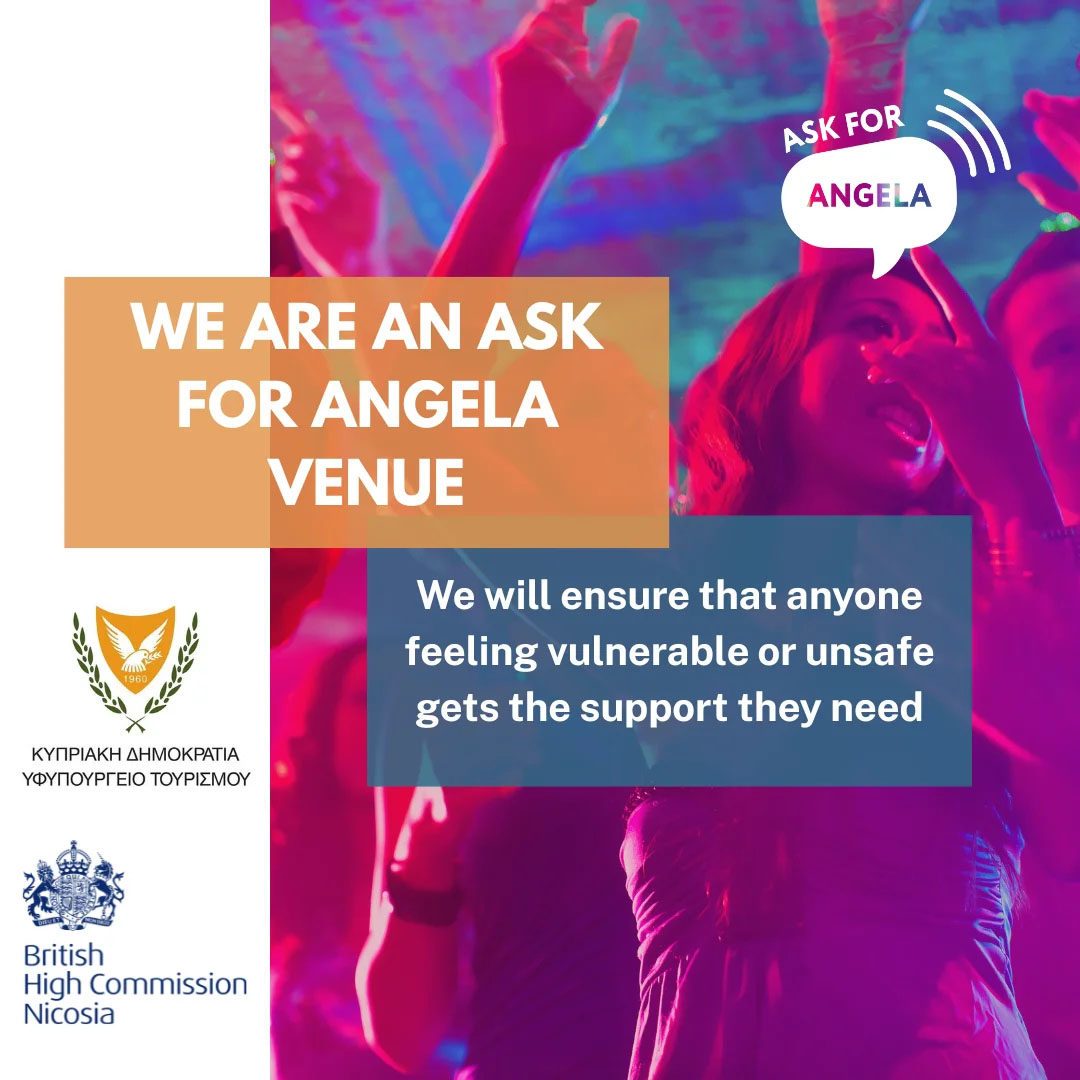
Reporting revealed a patchwork of responses. Police told us there was “no framework established so far”. The deputy tourism ministry acknowledged the importance of such schemes and said it was “ready to consult”.
Industry bodies offered workshops, posters and voluntary certificates. Foreign embassies nudged their nationals. Individually, reasonable. Together, fragmented.
Who responds when a coded request for help is made at a bar? Do police know what it means? Are they trained?
Does responsibility stop at the door, leaving staff to improvise in moments that may escalate in seconds?
I reached out to managers and owners of bars and clubs, trying to do the right thing. Some had quietly introduced systems of their own.
Others relied on intuition, floor staff, and “vibe control”. Several expressed interest in formal training. Their efforts were genuine. Goodwill, though, is not a system.
The improvisation itself spoke volumes: no standard, no shared protocol, no clear accountability. That uncertainty touches the people who matter most.
Women I spoke to described the delicate calculus, approaching security directly, the fear of escalation, and the relative safety of ordering a coded drink. Discretion only works if someone acts reliably.
The most shocking moments were quiet, almost invisible. One young woman described leaving a crowded bar, heart racing, palms sweaty, ordering a coded drink she had learned abroad.
Staff noticed, nodded, moved to intervene, but who would call the police? Who would take responsibility? That suspended danger is the story’s climax. It is understated, almost invisible, and terrifying.
The story ran in the heat of summer, when bars were full and tourists everywhere, nights thick with music and alcohol.
Cyprus has signalled it is catching up. That is welcome. But it raises a question: if something goes wrong now, delay is no longer an explanation. Responsibility must sit somewhere.
I chose this story because it sits at the intersection of image and reality. Cyprus promotes itself as safe, European, and welcoming. Those claims carry obligations. Safety cannot rest on goodwill or hope.
This was not a dramatic story. No single headline-grabbing incident. Instead, it is a story of the absence of framework, coordination and ownership. Those gaps are easy to ignore until someone needs help and is not sure who is listening.
Cyprus joined the EU nearly two decades ago, yet it is only now beginning to catch up. Reporting can push progress. It can ask why police are uninformed, why ministries are slow, and why responsibility is diffuse.
This story stayed with me all year, but the cost of delay is written in every uncertain moment, every hesitation.




Click here to change your cookie preferences