
Europe is increasingly hamstrung by its inability to reach consensus – often requiring unanimity – on major issues
On December 16, two contrasting articles appeared in the Financial Times that spoke volumes about the very different approaches to world trade currently at play. One was written by Peter Navarro, US President Donald Trump’s chief architect of the tariff war; the other by French President Emmanuel Macron, a passionate advocate of the existing multilateral world order.
Neither article appeared to receive much public attention. Ukraine, Venezuela and the Epstein files continue to jostle for the world’s attention. Yet what these articles revealed is that the trade war remains very much alive, shaping our daily lives in ways we may not fully appreciate.
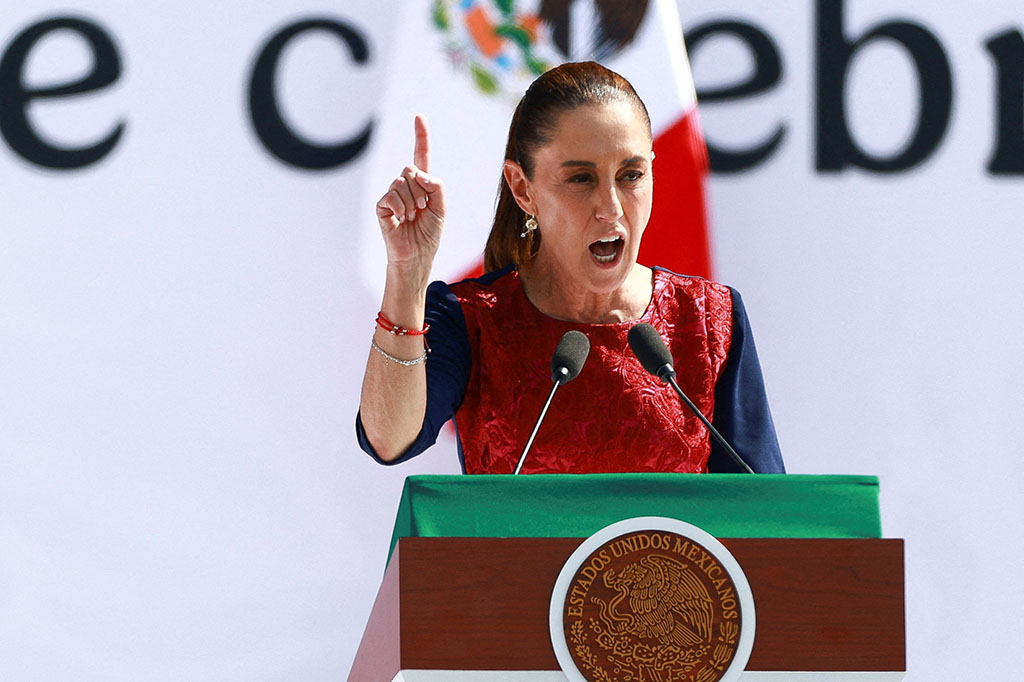
Navarro’s article hailed Mexico’s decision to impose tariffs of up to 50 per cent on Chinese imports as evidence that other countries are beginning to adopt US-style tariff policies, effectively splitting the world into two camps: one aligned with the United States and the other with China. Mexico’s president, Claudia Sheinbaum, is hardly a Trump supporter. Nevertheless, given Mexico’s geographic proximity to the US and its heavy economic dependence on it, choosing China over the United States is simply not a viable option.
Macron, on the other hand, sought to promote the value of cooperation among countries in forging trade arrangements that are mutually beneficial. This cooperative framework largely defined the global trading system prior to Trump’s presidency. Large trade imbalances existed long before China emerged as the principal target of criticism. In the 1970s and 1980s, Japan and Germany were seen as the rising economic powers, and the international community addressed these concerns through multilateral negotiations, most notably the Plaza Accord in 1985 and the Louvre Accord in 1987. The resulting realignment of exchange rates was intended to reduce the global imbalances that were causing economic strain at the time.
Macron’s article highlighted his recent visit to China, during which he challenged Beijing to do more to address current trade imbalances, while also acknowledging that Europe and other countries must do more to strengthen their own economies. The contrast between Macron’s cooperative approach and Navarro’s confrontational tone could hardly be starker. Although Macron made clear that more forceful measures remain an option should China refuse to engage constructively, he left little doubt about his preferred path.
Whether the European Union – and Europe more broadly – can rally behind Macron and develop a unified trade policy remains uncertain. Europe is increasingly hamstrung by its inability to reach consensus – often requiring unanimity – on major issues. A recent example is the long-awaited EU trade agreement with Mercosur, the South American trading bloc that includes Brazil, which was put on hold following objections from Italy over concerns about domestic farmers. Those same farmers, incidentally, have not hesitated to bring their tractors onto Europe’s streets.
The EU’s difficulty in decision-making is rooted in the fact that almost every policy choice affects some vested or national interest. This was evident again in the recent failure to agree on the use of frozen Russian assets to support Ukraine. Unfortunately, a concern I previously expressed (see Cyprus Mail, 14 December 2025) about the inadequacy of the EU’s collective leadership appears to have been borne out. While leaders attempted to present the agreement to extend a €90 billion loan to Ukraine as a major success, this was largely cosmetic. In reality, they failed to reach a significant breakthrough.
It is becoming increasingly clear that the EU’s decision-making framework must change. Unless member states are willing to rise above narrow national interests – including us here in Cyprus – we risk being left with no meaningful interests at all.
As we approach the end of 2025, I do not wish to conclude on a pessimistic note. This year, the word “bubble” has been used with growing frequency to describe the state of global financial markets. I will refrain from offering an opinion on whether we are indeed in a bubble. Frankly, I have no idea – and economists are notoriously poor at timing markets. Instead, I offer a small end-of-year gift: a humorous and instructive Financial Times article available to all, that recounts how some historical geniuses managed – or mismanaged – their investments.
Enjoy, and Happy 2026.





Click here to change your cookie preferences