
Diko leader Nicolas Papadopoulos on Tuesday intensified his criticism of the government over the planned power interconnection with Greece, accusing it of sending contradictory signals.
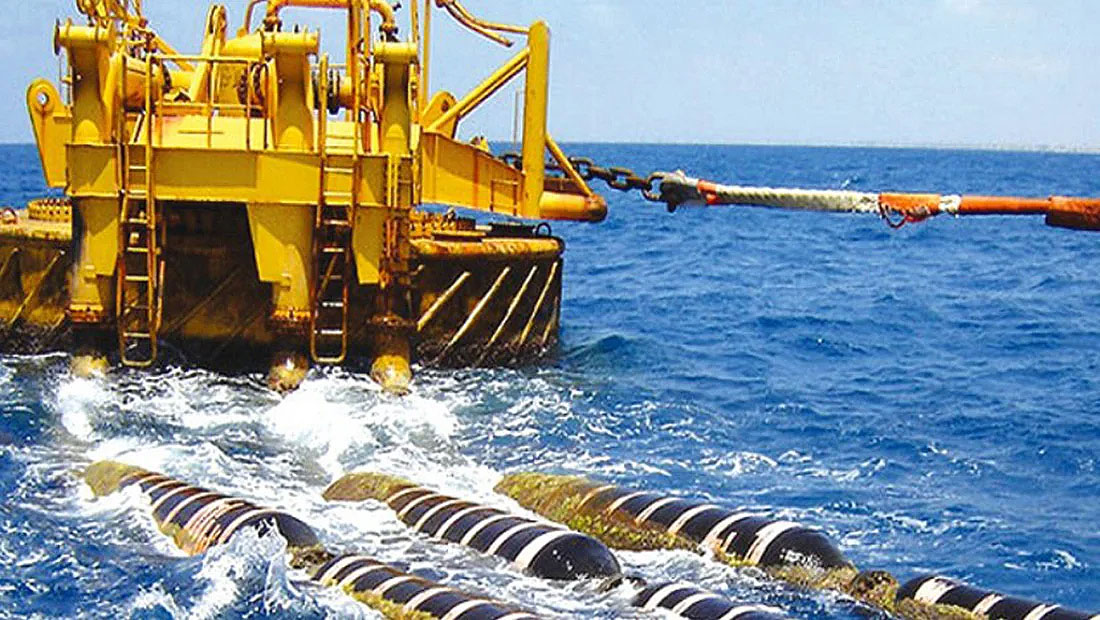
Speaking on CyBC radio, Papadopoulos warned against the collapse of the Great Sea Interconnector (GSI).
“If the project collapses, international agreements will still be implemented and the bill will be paid by Cypriot taxpayers, without us having the electrical interconnection that will bring multiple benefits,” he said.
He argued that repeated references by government officials to changing geopolitical conditions amount to a veiled rejection of the project.
“If the viability study is updated by a company that has already publicly stated that the project should not be carried out, this means that the government’s actions show that it does not want the project to proceed,” he said.
Turning once again to Finance Minister Makis Keravnos, Papadopoulos said he should stop publicly casting doubt on the project’s feasibility.
“Either we pay the €125 million, €25 million over five years, as the government pledged, or let us say clearly that we do not want the project to go ahead,” he said.
He accused the government of failing to respond to formal requests for clarification.
“We are publicly asking the government to clarify its position regarding the GSI, but unfortunately we are not receiving any response to our written questions,” he said.
Papadopoulos stressed that Cyprus is bound by international agreements governing the payment of the first €25 million tranche and warned that these obligations would apply regardless of whether the interconnector is delivered.
Commenting on Papadopoulos’ statements, President Nikos Christodoulides said the government’s position on the electricity interconnection is “clear” and based on action rather than rhetoric.
He stressed that the island views the project as one of geostrategic importance and said there is constant coordination with Greece at the highest level.
“We are in daily contact with the Greek prime minister, and this specific issue was among those discussed,” Christodoulides said.
Asked whether Diko might leave the government over the dispute, Papadopoulos avoided a direct answer, saying only that “we will make public any decisions we make”.
Commenting more broadly on tensions with Diko, Christodoulides said cooperation with the party was “exemplary”, stressing that this assessment was grounded in tangible results rather than political language.
He said Diko’s contribution, alongside that of other supporting parties, had been decisive in major reforms and policy outcomes achieved during the government’s term.
He cited joint successes including tax reform after more than two decades, changes to the evaluation of teachers following decades of stagnation, and the strengthening of Cyprus’ international standing.
His remarks followed a statement issued on Monday by Dipa, which although admitting the interconnection is of major geostrategic value, stressed that it must be sustainable and not place public finances at risk.
Dipa said Papadopoulos’ insistence on the state’s ongoing commitment, despite a joint decision by both the Greek and Cypriot government to update the data to attract strategic investors, raises reasonable questions.
The party also criticised the “style and intensity” of Papadopoulos’ attacks on President Nikos Christodoulides and Keravnos.
It further questioned whether Diko vice president Michalis Damianos, now energy minister, is fully aligned with government policy or party strategy.
The dispute comes amid wider criticism of Papadopoulos’ stance from within Diko and the governing camp.
Labour minister Marinos Mousiouttas and Diko MP Christos Orphanides lambasted him for political manoeuvring and ignoring party procedures.
Also on Tuesday, the president was asked about recent speculation over a possible re-jigging of the project, with the Israel-Cyprus section of the cable being laid first, to get around problems with the Cyprus-Greece segment where Turkey has caused depth surveys to cease.
Journalists asked about information that the European Commission has ostensibly given the thumbs-down to the idea of the Israel-Cyprus segment proceeding first but Christodoulides said Brussels has made no such remarks.
“These are matters we are discussing and they are relevant to the need for an updated study which would include the entirety of the project,” he said.
He was also asked whether he has had any briefing on the talks between Israeli Prime Minister Benjamin Netanyahu and US President Donald Trump in Washington – given that the Israeli leader had earlier said he would speak to Trump about the GSI and its role in the envisioned India-Middle East-Europe Economic Corridor (IMEC).
“We have had an initial briefing regarding the results [of the Trump-Netanyahu meeting], and on Mr Netanyahu’s return to Israel we will be fully briefed about what was discussed,” Christodoulides said.





Click here to change your cookie preferences