
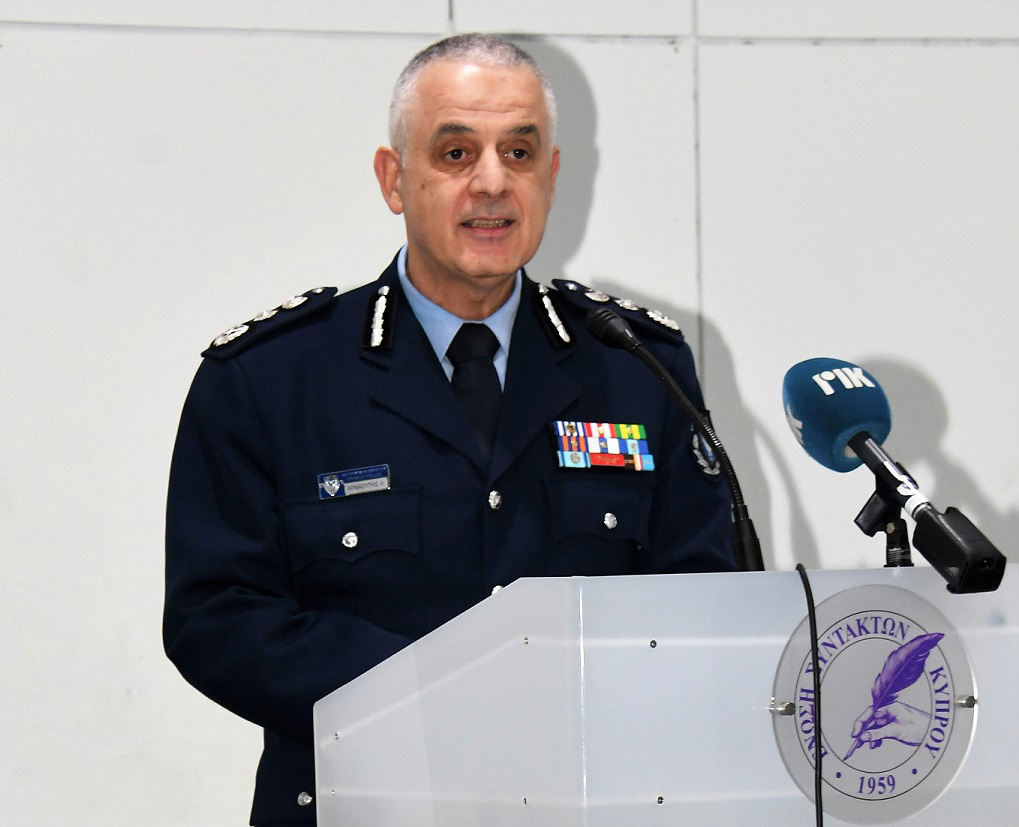
A police reform plan presented by the force’s chief Themistos Arnaoutis on Tuesday will see improved operational capacity, better use of staff, and major technological upgrades by 2030.
Arnaoutis said the aim is for the police to operate as a modern European force.
He said it would be flexible and focused on strengthening public and social safety.
The current policing model, he added, is outdated as it is based on structures developed after independence, with some elements carried over from the colonial period.
A key priority is the creation of a modern coordination centre, for which the police is close to signing a contract with a private company for its development.
The centre will operate as a command, control and communication system. It will receive and manage emergency calls through the 112 number.
Arnaoutis said residents expect the police to answer calls and respond when help is needed.
He acknowledged that the current performance in this area is not satisfactory.
More information will be shared after briefing the justice minister.
The police are also preparing to issue tenders to strengthen intelligence-led policing. Arnaoutis stressed the importance of strategic and operational analysis.
He said senior Europol officials are expected to visit Cyprus in January. One of the main topics of discussion will be improving analysis capabilities.
Technological upgrading is another central pillar of the plan. Arnaoutis said new digital tools and applications will be introduced to improve communication and operations.
He added that, cooperation with the deputy innovation ministry is underway to improve the handling of cyberattacks.
The goal is faster and more effective responses to digital threats.
Arnaoutis also announced progress towards the creation of a dedicated directorate to tackle organised crime. While it cannot be eliminated, it can be managed more effectively, he said.
The structure of the new directorate is based on models from other countries, including Greece, Europol and the US Federal Bureau of Investigation.
Another key focus is the better use of human resources within the force.
Arnaoutis referred to the reduction of weekly working hours for police officers in 2019, from 40 to 37.5 hours.
He said this change was applied only to office-based staff. Under the new approach, all officers will work the agreed hours and not more.
An internal review carried out following remarks from the finance ministry found that proper application of working hours and limiting overtime would increase daily police presence.
Arnaoutis said operational capacity will not be reduced. He said it will instead be strengthened by better workforce management.
He also said all vacant posts have now been filled. The police currently has more than 5,000 members.
He said longer working hours were previously justified by staff shortages, which no longer exist.
Asked about possible reactions to the changes, Arnaoutis said no objections are expected.
He said the measures are based on existing agreements and aim to improve the force’s overall effectiveness.





Click here to change your cookie preferences