
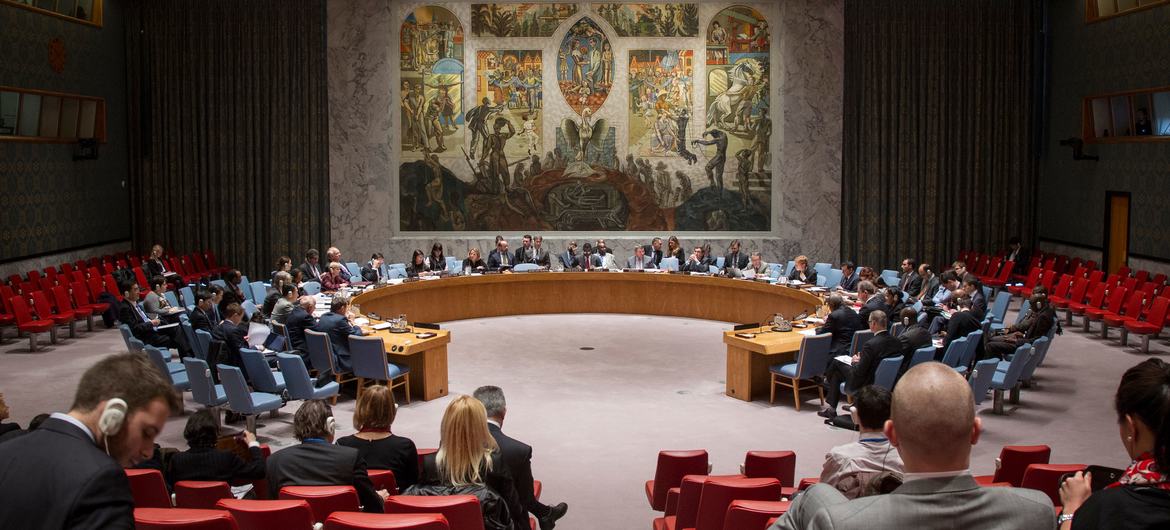
No problems are foreseen regarding the United Nations security council’s renewal of the UN peacekeeping force in Cyprus (Unficyp)’s mandate for another year, Somalian permanent representative to the UN Abukar Dahir Osman said on Saturday, as the country took over its rotating presidency this month.
“I do not think there will be any problem. The security council continues to support the secretary-general [Antonio Guterres]’ good offices and remains committed to an approach based on dialogue and de-escalation,” he told the Cyprus News Agency.
He added that the security council “has consistently called for dialogue, restraint and a peaceful, negotiated settlement within the framework of the United Nations”.
Additionally, he stressed the importance of “respecting the existing regime in the buffer zone” which separates Cyprus’ two sides and described Unficyp’s role to this end as “stabilising”.
He also called for “de-escalation initiatives” and “confidence-building measures which reduce tensions”.
Looking ahead to the security council’s next steps regarding Cyprus, he said members will be informed of Guterres’ forthcoming six-monthly reports regarding both Unficyp and the good offices before deciding “how we can move forward and contribute” to efforts towards peace in Cyprus.
Guterres’ reports are expected to be submitted to security council members by Monday, while UN special representative Khassim Diagne is set to brief the security council regarding the state of affairs in Cyprus on January 13.
The briefing will be Diagne’s first since taking office last year, replacing retired Canadian diplomat Colin Stewart, who had six months ago told the security council of a “deep distrust” between the island’s two sides, which constituted “an obstacle to any agreement”.
Unficyp has a rolling one-year mandate which was most recently extended on January 31 last year, with all 15 security council members at the time, including guarantor powers Greece and the United Kingdom, voting in favour of the motion, which also took stock of the state of the Cyprus problem.
It stressed the security council’s “full support” for Guterres’ efforts to find common ground, and said it “reiterates the importance of openness, flexibility and compromise in finding common ground with the goal of returning to formal negotiations”.
Additionally, it said the security council “urges the sides to renew their efforts to achieve an enduring, comprehensive, and just settlement based on a bicommunal, bizonal federation with political equality”.
That endeavour will likely be aided by the fact that Tufan Erhurman has replaced Ersin Tatar as Turkish Cypriot leader in the intervening year.
Erhurman was elected in a landslide victory in October, and favours a federal solution to the Cyprus problem, with his election marking a departure from a five-year period in which Tatar and Turkey had advocated for a two-state solution.
Guterres’ most recent report on the state of Unficyp was published in July last year, and stated that a trend of fewer issues between the island’s two sides “has been observed over the years in which periods of greater dialogue and activity in the peace process also see a parallel restraint from unilateral actions that threaten the security situation”.
The report stressed that “no significant crisis was observed in and along the buffer zone” over the last six months, though “military violations on both sides” were recorded “with concerning frequency”.
Even so, he wrote, this frequency was “somewhat lower than the previous period”, though he did stress that “the worrying long-term trends of the eroding integrity of the buffer zone and continued indifference towards the UN’s mandated authority persisted on both sides”.
There was also positive news over the matter of buffer zone violations, too, with Guterres writing that “a decrease in the occurrence of moves forward and overmanning violations” had been recorded in the first half of the year.
He wrote that in part, “this was due to the increased senior-level military engagement between Unficyp and the sides” which “specifically targeted such violations”.




Click here to change your cookie preferences