
Why protections against discrimination and institutional design matter
As Cyprus cautiously revisits the idea of a bicommunal, bizonal federation – which I often describe as BBF 2.0 – it might be tempting to rely on the familiar pillars of security and governance. For those of us who grew up navigating bicommunal spaces in daily life, it’s often clear that a federation’s true durability is tested less by constitutional diagrams than by how it handles disagreement, identity and the boundary between speech and conduct. Few issues illuminate this challenge more clearly than antisemitism – not because Cyprus faces a major crisis in this regard today, but because the issue fundamentally sits at the intersection of historical memory, geopolitics, protection and free expression.
Much of the current international debate involves the International Holocaust Remembrance Alliance working definition of antisemitism, which every Cypriot should be familiar with. It defines antisemitism as hostility, prejudice or discrimination against Jews specifically because they are Jews. It includes examples, some of which relate to discourse. Notably, the definition itself states that criticism of Israel, like criticism of any other country, is not antisemitic, and it explicitly emphasises that it is non-legally binding: a guide for understanding rather than a law.
Why does this matter for Cyprus? Because experience elsewhere shows that definitions of identity can become politically volatile when turned into tools of governance rather than mere aids to judgment.
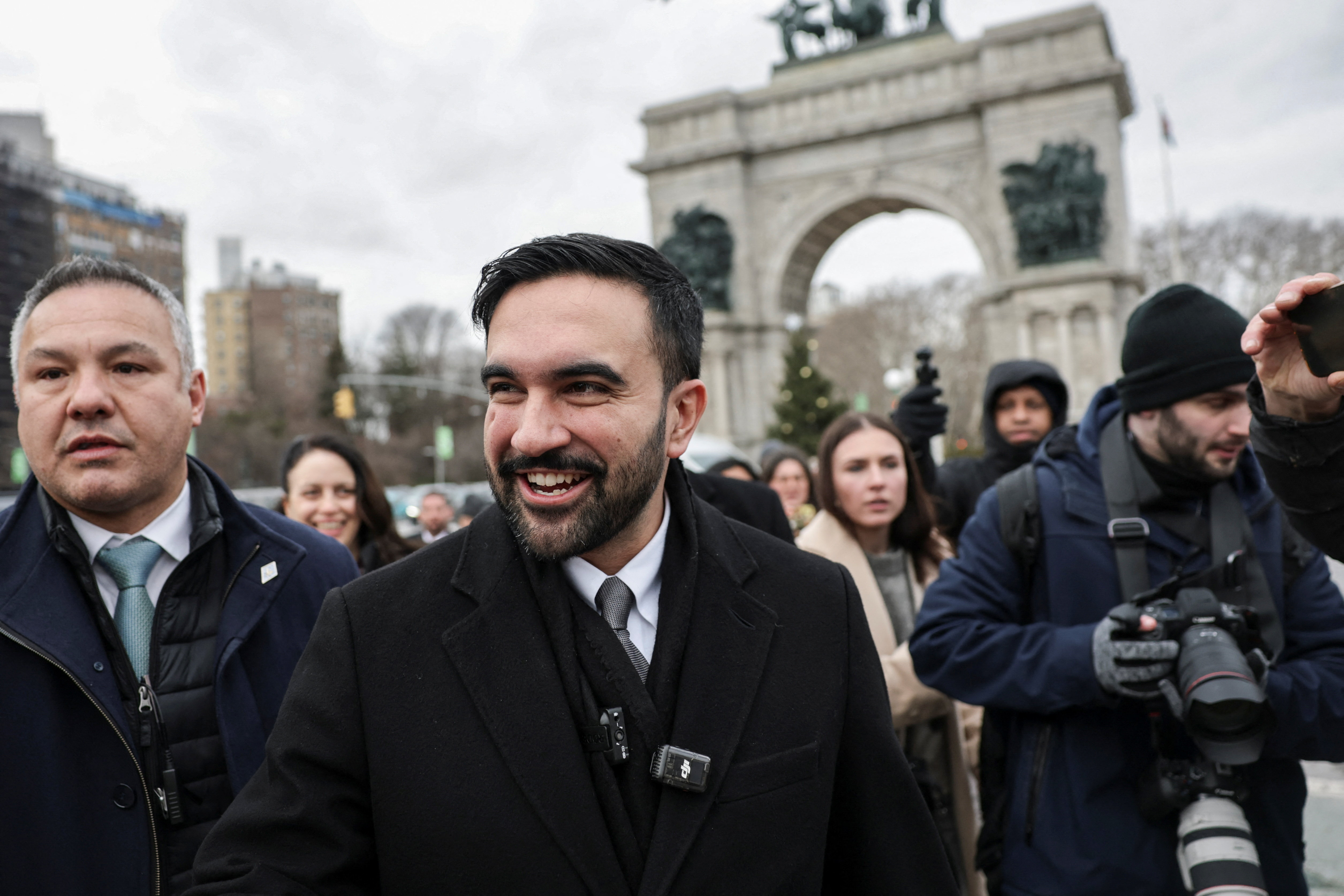
A recent illustration comes from New York City, where former mayor Eric Adams adopted the IHRA definition through an executive order, instructing city agencies to implement it; critics warned it could suppress legitimate political speech about Israel. New mayor Zohran Mamdani has repealed the order and reignited the debate. The lesson is not that one side is right and the other wrong but that turning a contested definition into daily administration can quickly turn a protective goal into a politically divisive issue.
Across the EU, this pattern mostly remains consistent. Greece, for example, has officially adopted the IHRA definition and actively engages in Holocaust remembrance and education. However, Greek courts still base their decisions on established legal standards regarding such incitement and discrimination. The definition aids understanding; it does not replace the law.
France adopts a similar approach. President Emmanuel Macron publicly backed the IHRA definition, and both the National Assembly and the Senate passed resolutions recognising it. These actions were critical political statements, but they did not establish new criminal categories. French courts continue to enforce existing hate-speech and anti-discrimination laws. In practice, France relied on a moral and educational reference point rather than a speech code.
Turkey occupies a different position. Ankara participates in the IHRA as an observer and marks Holocaust remembrance; it has not adopted the IHRA definition domestically. Instead, Turkish law addresses hatred and incitement through general legal provisions rather than definitional frameworks tied to Israel or Zionism.
Universities provide a revealing microcosm of this dilemma. Harvard University, under intense scrutiny, has chosen to adopt the IHRA definition within its internal non-discrimination procedures, especially where “Zionist” acts are used as a stand-in for targeting Jewish students. Conversely, Brandeis University has focused on education, leadership development and traditional anti-harassment measures without tying discipline to a single definition. Both strategies aim to protect students; they interpret the line between speech and conduct differently. The key lesson is not that one approach is better, but that having clear conduct standards and consequences is more important than symbolic alignment.
Cyprus offers a quieter, deeply instructive precedent. Whether the issue is antisemitism or any other form of group hatred, the central challenge is to distinguish protected speech from prohibited conduct that creates a hostile environment because of who people are.
During my years at The English School, an incident happened that, in retrospect, captures precisely the kind of distinction a future federation will need to preserve. One morning, graffiti with the words “EOKA B” appeared on the sandstone walls at the entrance of the old school building. This was not just a political message; it was an act of intimidation.
The then headmaster, David Humphreys – a former student of Bertrand Russell at Cambridge – addressed the entire student body in assembly. His message was calm, unequivocal and memorable: intimidation against one member of the school community was to be understood as intimidation against all (fitting with the school motto, non sibi sed scholae). The graffiti was removed immediately, with no further recurrence. No spectacle followed. The matter was closed – not through punishment, but through moral clarity.
What followed was even more revealing. Instead of letting fear or resentment linger, the school organised a student day centered around a lived educational exercise. Students were divided into two groups and asked to experience, for a single day, asymmetries of power inspired by apartheid-era South Africa – a subject of urgent global relevance at the time. As one of the prefects overseeing it, I remember the exercise as being uncomfortable. It was also transformative. It taught, far more effectively than any rulebook, what exclusion feels like and why it corrodes communities.
Incidentally, I have seen the same principle at work far from Cyprus. When my younger son was head of house at Shrewsbury School, a newly arrived student was subjected to bullying and victimisation because he was gay. The response was not moral panic or disciplinary overreach. Instead, the student leadership intervened decisively: boundaries were made explicit, peers closed ranks in protection, and the behaviour ceased. What mattered was rejecting conduct that singled out and harmed another.
These experiences illustrate that institutions that are confident in their ability to protect differences do not need to police opinion.
Under BBF 2.0, political leaders – Greek Cypriot and Turkish Cypriot alike, including current and future presidents – will continue to make sharp, sometimes unsettling statements. That is the nature of democratic politics. The danger lies in targeted negative speech (including subtle doublespeak or microaggression) by leaders legitimising exclusion at the societal level based on identity, ethnicity or religion.
The solution cannot be censorship, nor can it involve importing symbolic “definition wars” from elsewhere. The answer resides in a uniform federal standard: a strong free-speech guarantee grounded in the European Convention on Human Rights; an independent, bicommunal commission for equality and human rights protected from daily politics; and training that utilises various international frameworks – including IHRA-like principles or their alternatives – as educational tools rather than enforcement checklists.
Antisemitism, in this sense, is not a peripheral concern for a future federation; it is a stress test for co-existence.
If Cyprus can design institutions that protect group differences without policing opinions – if it can draw a clear, principled line between free political speech and coercive conduct – then BBF 2.0 will have demonstrated something far more significant than alignment with any geopolitical camp. It will have proven that disagreement can be managed without becoming corrosive, and that diversity need not translate into conflict.
The real choice facing Cyprus is therefore not between rival international frameworks or between European and regional references. It is between having clear institutional roles and facing political leadership ambiguity; between applying rules fairly and using rhetoric selectively; between teaching societies to accept discomfort and allowing fear to turn into exclusion.
A successful federal Cyprus will be one where political leaders are free to speak, citizens are free to disagree, and no community is left unprotected when speech turns into intimidation. If New York City can be led by a Muslim mayor, and if institutions like US Supreme Court Justice Louis Brandeis’ university can pioneer progressive education instead of enforced silence in the fight against antisemitism, then Cyprus can also create BBF 2.0.
This balance is achievable. Let the protection of debate – and the prevention of coercion through education – carry the weight of coexistence.





Click here to change your cookie preferences