

Post holiday blues can make seeing through serious change rather unrealistic
The New Year is here. Its celebrations have come and gone, and at this time of year a peculiar feeling lingers. It is a season of new beginnings and fresh starts, yet it can be one of the most challenging months of the year.
The pressure to be ‘your best version’ and step back into routines arrives after a feel-good period of shopping, eating and drinking. And what’s behind all this fuss? New Year’s resolutions – a love-or-hate practice that surrounds the first month of the year. Increasingly, many are questioning whether January deserves this power at all.
The start of the year is typically when goals are set, vision boards appear and new hobbies are picked up, only to fizzle out weeks later. After the holidays, January is a month of darkness: fewer events, fewer social gatherings and, most importantly, less time off. For some, this release from social obligations is bliss; for others, it’s when the January blues begin.
Yet despite its darkness, January launches us into a more luminous period, against all odds, as after the winter solstice at the end of December, the days begin to get brighter. Still, it is a slow transition and a ‘life makeover’ can feel overwhelming.
Is the heart of winter the best time to set new goals or do people form their own traditions for new beginnings?
“I think January is the most difficult time to make resolutions,” says Pavlos Ioannou. “The post-holiday blues leave you drained and focused on daily survival rather than seeing through serious change. I avoid making new year’s resolutions as years of experience have shown me, I don’t have the discipline to see them through.
“As a Limassolian though,” he adds, “the Carnival saves us. It’s expected in February, and there’s just so much to do!”
Another way to approach this tradition, with more softness, is through creative reflection. Sofia Hadjisterkoti crafts intuitive collages, vision boards or journals to notice intentions or themes rather than fixed goals.
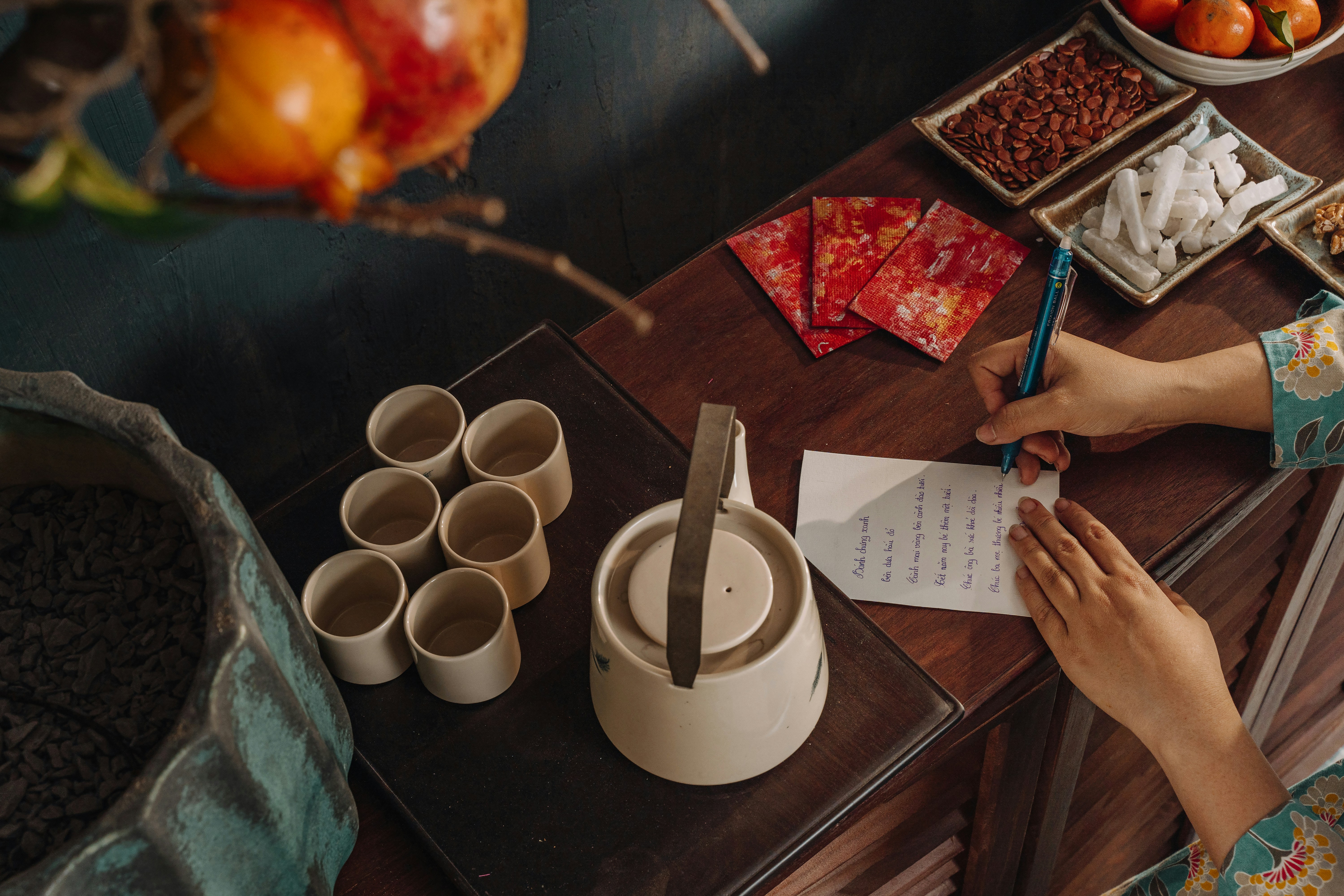
“I don’t really set strict resolutions,” she says. “Winter invites us to turn inward, so I take time to reflect, slow down and set soft intentions for the year ahead.”
For her, new beginnings are less about specific dates and more about transitions. “Moving to Cyprus was one, quitting my job in October was another. Each transition feels like a new chapter”. January can still feel symbolic, she says, but it is not the only moment.
For many in Cyprus, however, another planning season feels more natural: the end of summer. August’s slowness creates space to breathe, think and envision a new year ahead, even if it is the academic year.
“September feels like the ‘new year’ for me,” says Pavlos. “Being a student for so many years, being the father of a student now and the husband of a teacher, September feels the right time to buckle up and face the future. “
Teacher Ekaterina Kyriakou agrees. “I used to passionately craft New Year’s resolutions – vision boards, lists, all of it – with zeal and stompy optimism. Looking back, it was like trying to close an overstuffed suitcase. Mission impossible.”
“In recent years, I have acknowledged the closing of the year at the beginning of summer. July and August give me space. Work slows, my nervous system finally feels in the right place to see beyond the now. There are holidays, swims, hikes, the sea, salt, sun, sand so, my mind can dream more. The new era starts in September.”
Now, she has found her own practices she likes to do. “Apart from journaling with myself and attending the beautiful journaling workshops offered by The Curious Curly, I now have developed another routine. Instead of a list of things to do in the New Year, I observe what is happening within me.
“I do not wait for the end of an era. At night, before I sleep, I will invoke the feeling I wish to have. Visualise it. The words hugging me. I dive into the feeling I want and fall asleep in this golden bubble of my lived future. This type of resolution feels softer on me because it is an intention, not a mission.”
Journaling is a common practice, and a quick reflection tool to think back on the year that has passed and the experiences lived which can help with noticing what’s important for the year ahead. Maria Christofide likes to journal on the major things that happened in the year that passed, an exercise she does on December 31 and on January 1 she writes a resolutions list.
“The funny thing is,” she laughs, “that while I do last year’s ‘wrap-up’ in my normal journal, I write the resolutions in a separate paper, which I usually misplace and find years later. Finding them is always a treat, as it helps me think about what I’ve wanted back then, what I want now, who I was and who I am becoming.”
This practice is not bound only to January for Maria. It is something she likes to do mostly in September and on her birthday in the summer. There is no doubt, that each of us will have a time in their yearly calendar when goals and reflections feel more natural.
While New Year’s remains the most popular time for resolutions, it is clear that fresh starts do not belong to a single date. Depending on work, lifestyle, family rhythms or general mood, intentions can arise any time of year. The secret lies in understanding the cycles of your own life and moving in alignment with them – because a fresh start can come year-round.




Click here to change your cookie preferences