
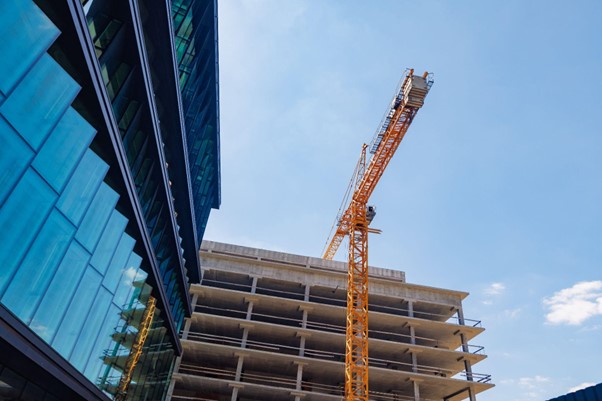
Across Europe, the commercial construction sector is undergoing a fundamental transformation. Sustainability is no longer a niche ambition but a central pillar of modern real estate development. From logistics hubs to office spaces and industrial facilities, businesses are increasingly looking for buildings that align with environmental goals, lower energy costs, and meet stricter regulations. For companies in Cyprus—whether active locally or seeking expansion into mainland Europe—this shift represents both a challenge and an opportunity.
European momentum towards green building standards is reshaping how companies approach business premises
As environmental concerns and regulatory frameworks grow more urgent, businesses are rethinking the way their buildings are designed, constructed, and operated. Energy efficiency, circular construction, and reduced carbon footprints are no longer optional—they’ve become essential components of competitive and future-proof commercial spaces.
The Dutch approach: future-proof construction that delivers business value
One of the leading examples of this transition can be found in the Netherlands, where construction companies like unibouw.eu are redefining how sustainable business premises are developed. Unibouw specializes in the full-service construction of commercial buildings—particularly for logistics, production, and distribution companies—with a clear emphasis on energy efficiency, circularity, and long-term value.
Their approach includes early integration of sustainability principles such as solar energy, intelligent building layouts, the reuse of materials, and a sharp focus on reducing the environmental impact during and after construction. Notably, Unibouw doesn’t merely comply with environmental standards—they actively build with Environmental, Social, and Governance (ESG) objectives in mind, helping businesses turn their buildings into assets for long-term resilience.
Why Cyprus-based companies should follow this trend closely
Cyprus itself is making strides toward more sustainable business practices, including in the construction sector. However, the island faces unique challenges—such as limited local resources, higher energy dependence, and extreme weather conditions—that make smart, sustainable design all the more important.
Looking at how companies in Western Europe are innovating can offer Cypriot decision-makers a roadmap for future investments. For example, building with a focus on energy neutrality and flexibility makes it easier to adapt to future climate regulations and economic shifts. These are insights that can directly benefit local businesses and property developers.
Furthermore, many companies in Cyprus are outward-facing—engaged in trade, logistics, and e-commerce—and may consider expanding into mainland Europe. Studying how leading construction partners in the Netherlands approach the full life cycle of commercial buildings offers a competitive edge in such international ambitions.
Practical ESG principles are now shaping construction projects from the ground up
The shift toward sustainability is not just driven by environmental concern; it’s also about performance. Smart buildings lower operational costs, reduce regulatory risks, and enhance employee wellbeing. Unibouw, for instance, applies ESG thinking from the very first design session through to final construction and handover. Their transparent, data-driven approach ensures that business owners can measure the return on their sustainable investments.
In an increasingly interconnected world, businesses in Cyprus don’t need to reinvent the wheel when it comes to sustainable construction. Instead, they can look to proven European models and adopt the principles that best fit the local context.




Click here to change your cookie preferences