
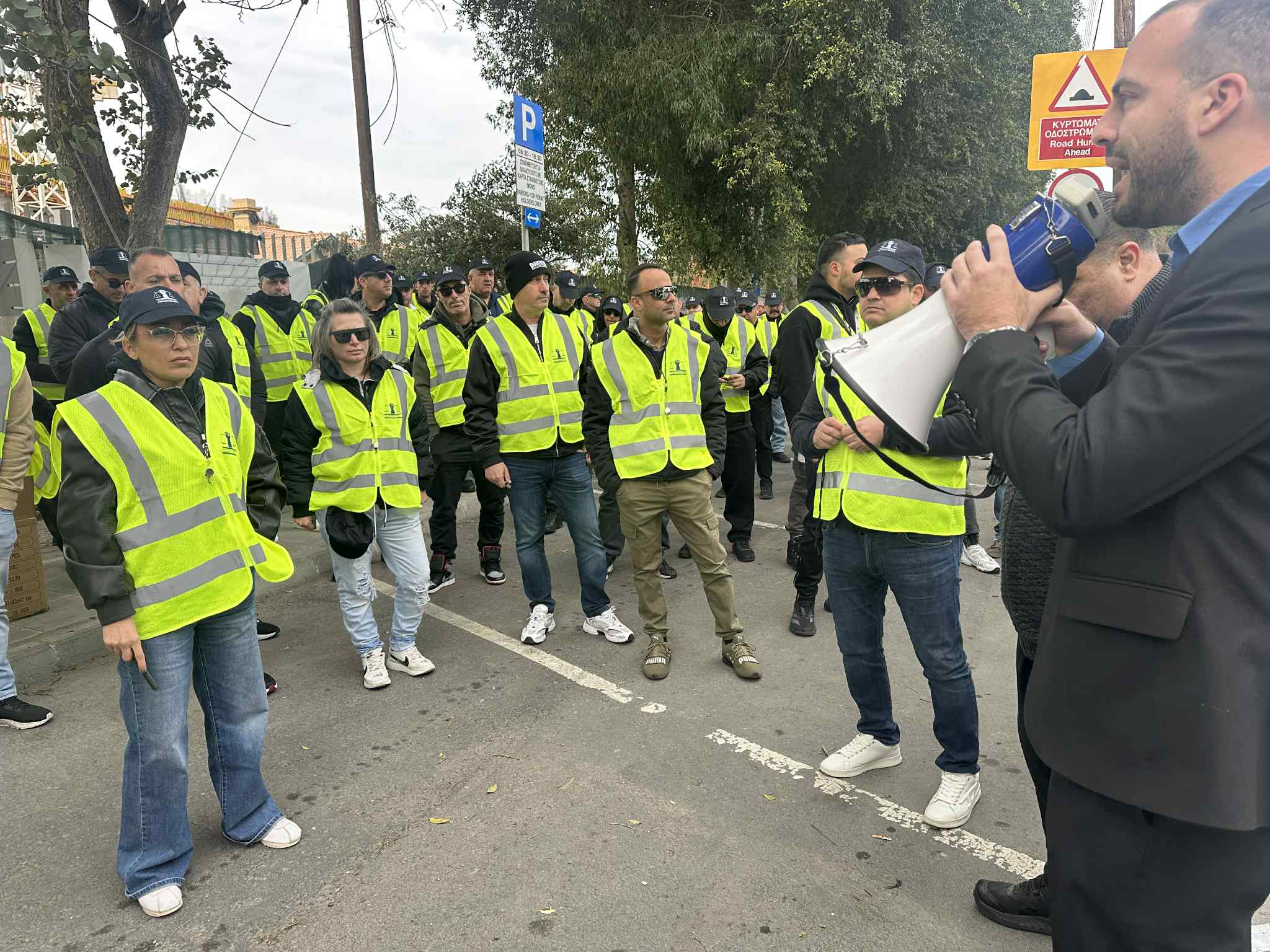
Cyprus police officers took to the street on Wednesday, following trade Isotita union’s call for a protest over the new police reform which came into effect at the beginning of the new year.
“The law on the police has been violated,” head of Isotita’s police branch Nikos Loizides said, speaking outside parliament.
Around 100 demonstrators had gathered outside the House of Representatives at 9am, where the reform was being discussed by the legal committee, to express their outrage over the amendments.
The protesters held banners reading “Respect those who protect you” and “No more cuts on the backs of police officers”, calling for their rights to be respected.
“[They] gave us pay scales, others united us by cutting our rest days. They messed with our working conditions in a single day without asking anyone, arbitrarily. They entered our homes, entered our pockets and took our money without asking us,” Loizides said.
He demanded immediate adjustments to the reform, stressing that Isotita has already proceeded with taking legal action based on article 19 of the police law regulating working conditions.
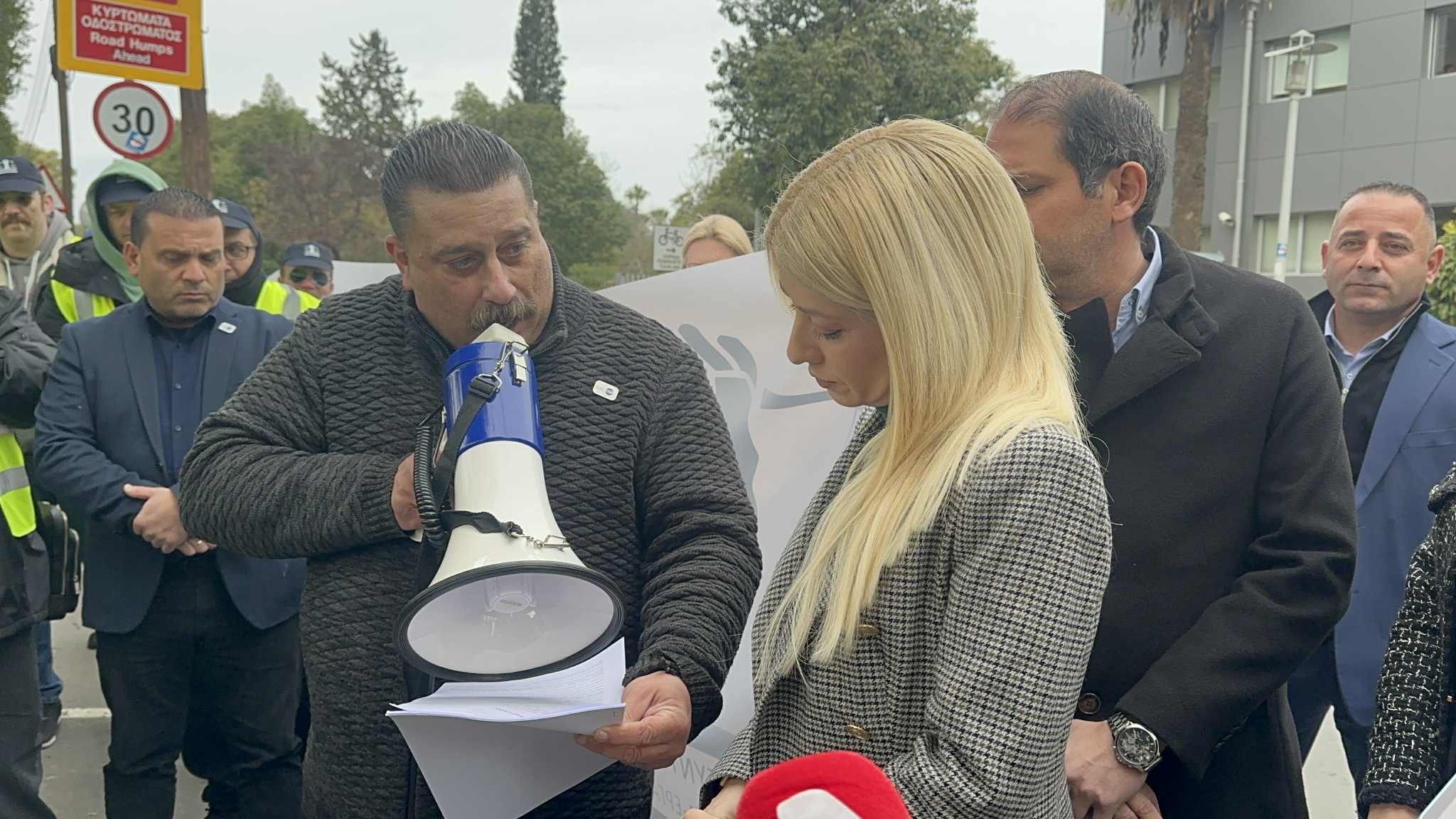
House president Annita Demetriou assured the protesters that MPs stood by their side “in an effort to have the best result through which we will strengthen and reorganise our police force”, after having been handed a list of demands by the demonstrators earlier on.
“We will definitely listen to you,” she added. “Your chairman [Loizides] is making sure he is informing us personally and institutionally with his interventions, but essentially, you will want suggestions for us to listen to, to be by your side,” she said.
Demetriou said that although the decisions may be a step in the right direction, they could not be made without prior consultation, echoing the union’s criticism that the decision to alter how working weeks for police officers were arranged was ‘unilateral’ and imposed from above.
“It is not possible. And we say that rights must be guaranteed, they must be discussed, we will be here with your just demands,” she said.
Police chief Themistos Arnaoutis, speaking before the House legal committee on Wednesday noon, refuted the union’s claims that the reform was a “unilateral decision”.
“The harmonisation of police working hours with those of the civil service is not a sudden or unilateral initiative. On the contrary, it has been a long-standing request of the police themselves and their union representatives,” he said.
Arnaoutis said that the decision to reduce police working hours from 40 to 37.5 hours was approved in the context of broader reorganisation and modernisation efforts by the Council of Ministers in May 2019.
He added that the decision was made on the condition that operational requirements would be assessed throughout the implementation and underscored that the decision had been ratified by the House soon after, in December 2019, though had never been fully executed under the previous police leadership.
He said that the criticised measures were drafted following an independent expert study, which had closely examined human resources, operational performance and staff welfare issues, considering a “rational management of resources”.
“The conclusions were clear: adapting working hours to modern working conditions is a necessary prerequisite for a modern, effective and humane police force,” he said.
Arnaoutis emphasised that the amendments were aimed at the overall modernisation of the body, improving its efficiency and ensuring the police were able to “respond to the challenges of the times, without being trapped in the practices of the past.”
“I exercised my legal powers to adjust the working hours,” he added.
“As the matter is before the courts, I consider it institutionally correct not to comment further.”
Arnaoutis’ outlining of new police working hours had been met with fierce backlash from police unions and the Cyprus Police Association, which argue that the reforms altered daily working schedules and significantly reduce officers’ rest days.
Referring to the plans as a “violent intensification of work”, the union alleged that the amendments constituted a “a dismantling of decades of achievements” and disregarded the provisions of the police law, mandating the terms of service, hours of duty and days off, which are regulated exclusively by Council of Ministers.
Isotita had previously described Arnaoutis’ decision to reform the officer’s schedule as a “direct, blatant and premeditated attack on the core of the rule of law, on the hierarchy of rules and on the fundamental labor rights of (…) police officers.”
A request for the revocation of the amendments has since been filed with the administrative court.





Click here to change your cookie preferences