
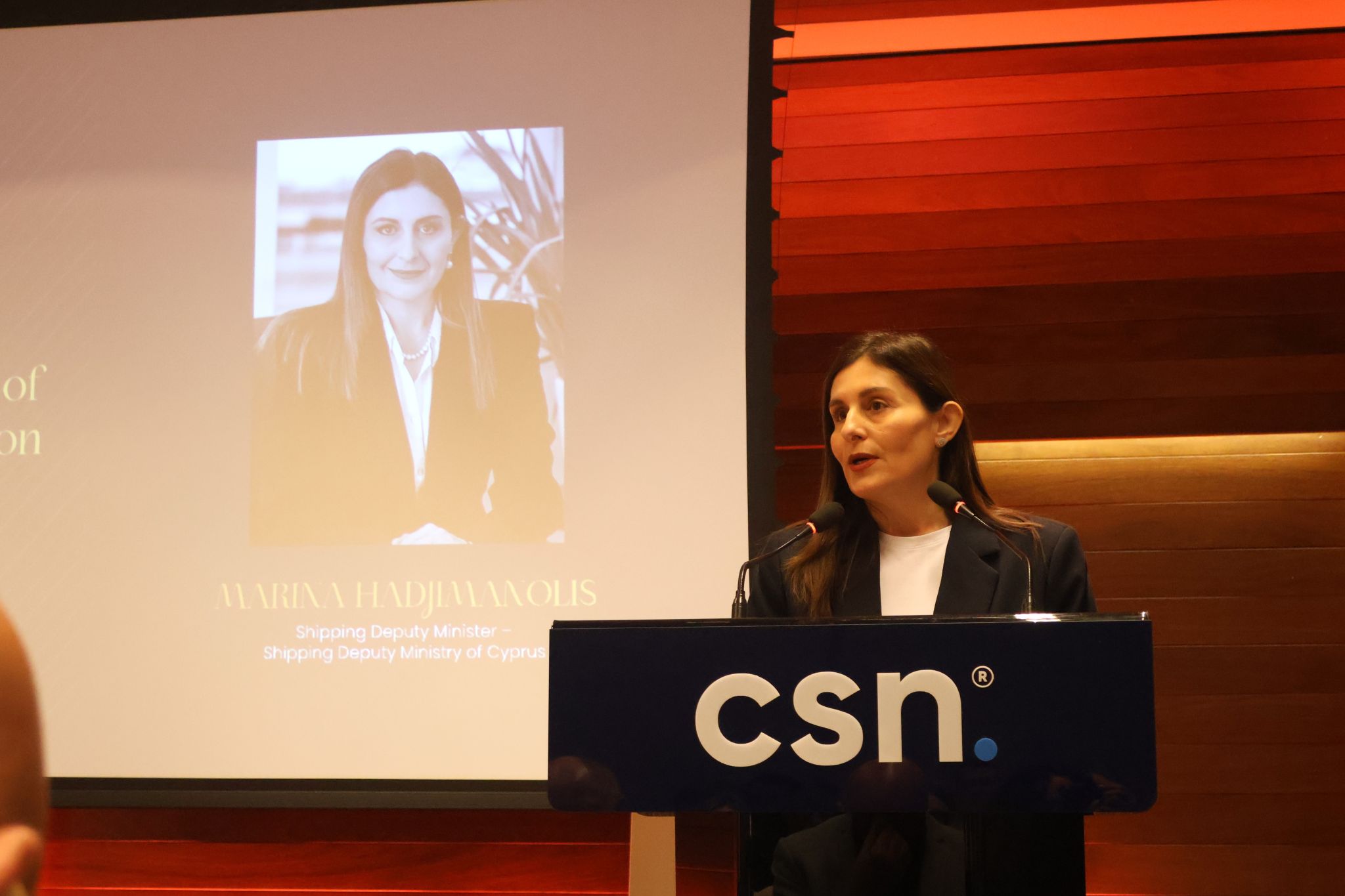
While the global shipping industry remains tethered to persistent operational pressures, Cyprus continues to navigate these headwinds with a unique blend of resilience and innovation, according to Shipping Deputy Minister Marina Hadjimanolis.
Addressing the road ahead, Hadjimanolis noted that while 2026 arrives with “turbulent waters,” the year is equally defined by the emerging opportunities awaiting a successful maritime sector.
The comments came during the 3rd CSN Cyprus Shipping Debate in Limassol this week, where industry and institutional representatives met to discuss current pressures on shipping.
Hadjimanolis said the sector is at a pivotal point that will shape its future, noting that technology and innovation, if used properly, can strengthen shipping in a sustainable, long-term way.
She said the global operating environment remains demanding. As in 2025, shipping continues to face challenges linked to decarbonisation, environmental regulation, digitalisation, a shortage of trained seafarers and geopolitical developments, factors that together leave the industry exposed.
Despite this backdrop, she said Cypriot shipping has continued to consolidate its position. Over the past two years, the Cyprus registry has grown by more than 20 per cent, “the result of a strategic plan of priorities”.
She said she was encouraged by the registration of newly built vessels under the Cyprus flag, noting that several companies continue to place their trust in “the prestige and quality of the Cyprus flag”.
Hadjimanolis said efforts to upgrade services for shipping companies are continuing to ensure the registry remains modern, efficient and competitive. The digitalisation of services offered by the Deputy Ministry of Shipping, she said, “is expected to further strengthen Cyprus’ position”.
She also referred to Cyprus’ re-election to the Council of the International Maritime Organisation (IMO), linking it to the country’s role in international maritime affairs, while outlining the priorities of the Cyprus Presidency of the Council of the European Union.
“These priorities include strengthening seafarers’ education through retraining and skills upgrading, raising awareness of the maritime profession and promoting the equal participation of women across the sector,” she said.
They are expected to be formally adopted through the Nicosia Declaration at the Informal Council of EU Ministers for Maritime Affairs on April 29.
A day earlier, on April 28, the Deputy Ministry of Shipping will host a high-level ministerial conference dedicated to these national priorities for seafarers and gender equality in shipping.
Concluding her remarks, Hadjimanolis said Cyprus is ready for 2026 which, “despite its turbulent waters, is full of opportunities”.
The debate was also addressed by Cyprus Shipping Chamber (CSC) president Andreas Neophytou, who referred to the challenges facing the industry and said the chamber would continue to support its members, working with the government and the Deputy Ministry towards a sustainable, competitive and internationally aligned shipping sector.
The event concluded with discussions on geopolitical developments, the green transition and digital transformation, including artificial intelligence.




Click here to change your cookie preferences