
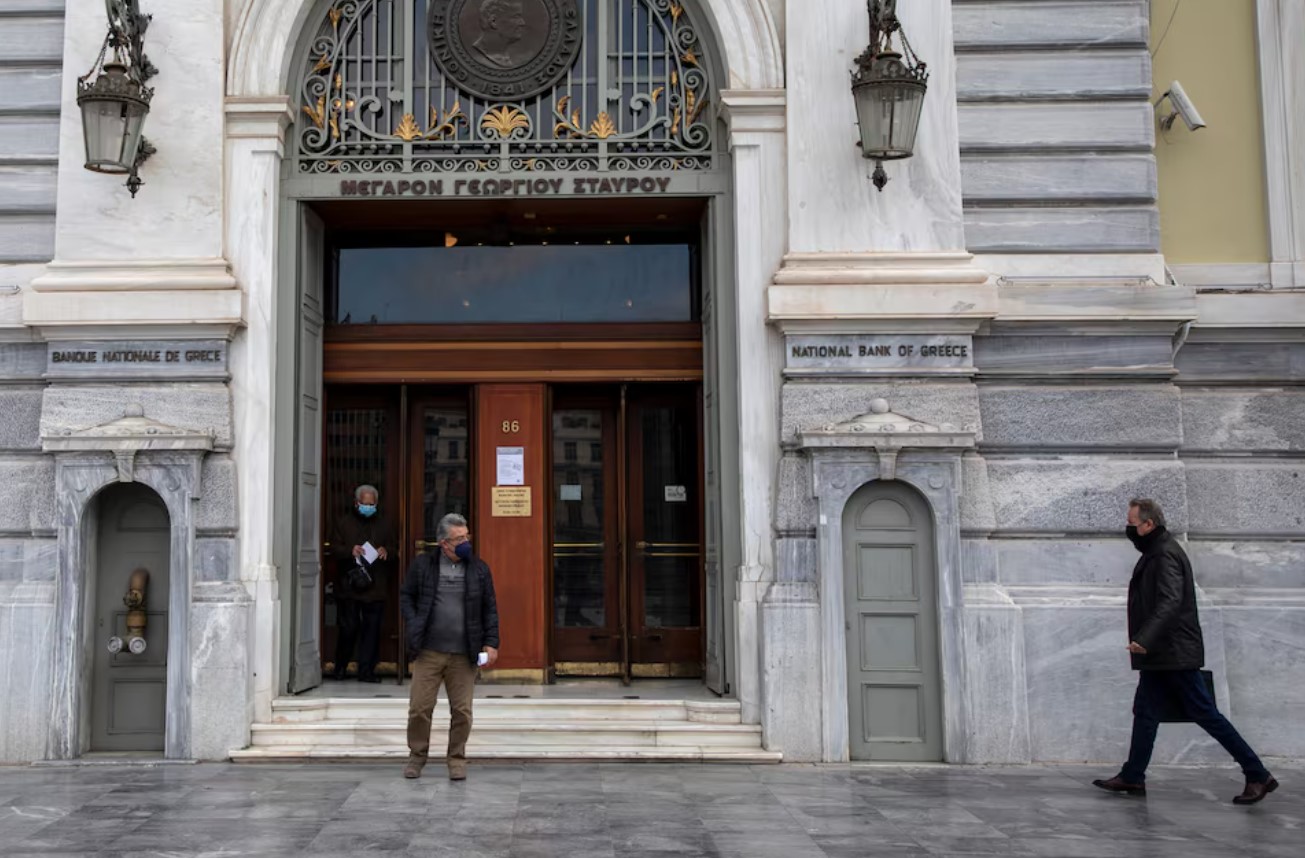
Greek banks are currently designing new development models and orienting themselves toward fresh sources of revenue and profitability as their customer base changes rapidly.
According to a report by Greek business outlet Newmoney, while profits from core banking operations remain significant, electronic banks are gradually capturing market shares through modern investment banking that attracts deposits into diverse industries.
Traditional lenders have consequently begun planning to alter their models, leveraging their own dynamics against this new order of things.
Banks that have not yet done so will attempt a turn toward digital sales for two primary reasons related to operational efficiency and customer demand.
By doing so, they will leverage their smaller number of physical branches and reduced staff levels following numerous voluntary redundancy schemes.
It is estimated that a significant portion of their customer base is interested in such services, particularly within the investment and real estate sectors.
Significant investments are expected in this area, as a critical element is for work on such platforms to be user-friendly and solve problems rather than creating new ones.
National Bank, for example, has developed a digital real estate platform called Uniko, which aims to unify property transactions with modern banking support.
The platform is described as a complete ecosystem for buyers and sellers rather than a simple property listing, and other banks are reportedly moving in a similar direction.
Greek banks are also considering entering the crypto industry in a measured way, as a large portion of their clients are requesting services currently provided by electronic banks like Revolut.
The new European Markets in Crypto-Assets (MiCA) framework has now created legal clarity and regulatory security for traditional banks to offer regulated services.
These services may include custody, trading, and token issuance, allowing lenders to operate without the previous legal “grey areas” they faced.
Many large banks in Europe are already preparing or launching cryptocurrency trading and custody services for both private and institutional clients.
Institutions such as Deutsche Bank and Sparkassen-Finanzgruppe are moving toward regulated platforms for Bitcoin and Ether that are integrated into the banking experience.
Another major trend involves banking partnerships for the issuance of regulated stablecoins, which are digital currencies pegged to the euro.
Consortia of large European banks, including ING and UniCredit, have created ventures like Qivalis to issue euro-stablecoins under the MiCA regime.
This project intends to create a stronger European digital payment instrument, reducing dependence on dollar-oriented tokens and strengthening digital payment infrastructure.
The old model of bank partnerships with commercial enterprises is also returning in a reinforced and dynamic way through sales platforms.
Banks are looking for ways to leverage their sales and are developing increasing numbers of ecosystem partnerships to reach consumers.
The partnership between Piraeus Bank and Skroutz serves as a characteristic example of embedded finance, where funding is granted directly within the marketplace at the moment of purchase.
A similar initiative is the “Skroutz Plus Mastercard” digital credit card designed by Skroutz and the National Bank.
The need for insurance is also becoming clear and substantial due to climate change and the limitations of the national health system.
A new product architecture is being designed by banks to include groups currently outside the private insurance market with specific covers and special tariffs.
The transition to an era of high climate risks and mandatory insurance requirements creates the conditions for a significant expansion in general insurance sales.
Banks, in collaboration with insurance companies, are now shaping conditions to open up product design within this specific industry.





Click here to change your cookie preferences