
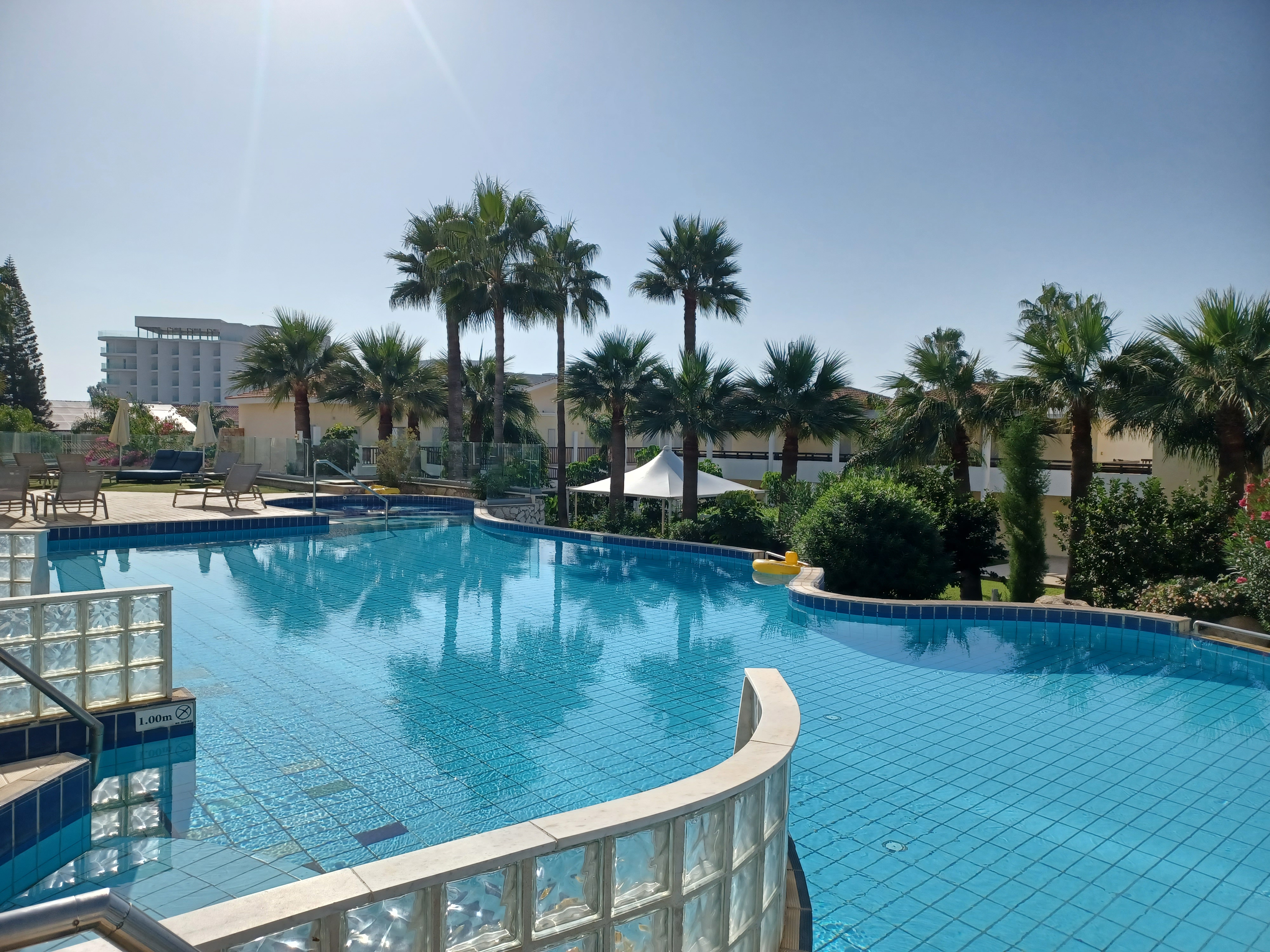
Cyprus Hoteliers Association (Pasyxe) president Thanos Michaelides stated that 2025 was a good year for the industry, proving that the Cypriot hotel sector has reached a steady and satisfactory plateau.
Speaking to Politis, Michaelides said that occupancy rates were broadly in line with 2024 and in some cases slightly higher.
“Two consecutive years with similar results create stability,” he said, adding that this gives the industry a stronger sense of predictability.
Michaelides believes 2026 is likely to move along similar lines, provided there are no major disruptions.
That, he said, is “a very good starting point”, especially as it allows the sector to continue pursuing its longer-term goal of extending the tourist season and moving closer to year-round hotel operation.
This effort, he explained, is already visible during the current winter period, from November 2025 to March 2026.
“More hotel units have decided to remain open,” he said, either for the full season or part of it, with participation clearly higher than in previous years.
He also points to developments in the Famagusta free zone, where several hotels extended their operating period beyond the traditional summer months.
“If this effort proves successful,” he stated, “in the winter of 2026 – 2027 even more hotels will remain open, or those already operating will further extend their period.”
This gradual expansion, he added, brings Cyprus closer to year-round operation for most hotels.
“The results are positive both for the economy and for the labour market,” he said, as longer operating periods create greater employment stability.
While occupancy figures confirm the strength of 2025, Michaelides stresses that profitability remains the key issue.
“Occupancy rates are good,” he said, “but the most critical indicator for sustainability is profitability.”
Revenues have improved, he notes, but profits have not increased to the same extent, as operating costs remain high.
“Energy costs, in particular, are among the most important expenses for a hotel,” he added.
He described 2025 as “a good season” that reinforces stability and provides a solid base for the years ahead.
“If 2026 moves at the same pace as 2024 and 2025,” he said, “this will further support the effort for year-round operation.”
At the same time, he emphasised the need for continuous investment in hotel units.
“We need to improve services and facilities,” he said, adding that this requires sufficient profitability so investments can be repaid.
This stability, Michaelides explained, does not concern hoteliers alone.
“The entire tourism chain depends on it,” he said, noting that travel agents and airlines rely on consistent momentum when scheduling flights to Cyprus.
During the current winter period, several hotels have also proceeded with renovations, improving the tourism product.
Promotional efforts continue as well, both by the Deputy Ministry of Tourism and by hoteliers.
Michaelides made particular reference to the cooperation model launched in Paphos, where hoteliers, regional tourism board (Etap) and private stakeholders implemented a joint digital campaign.
“That model is now also being applied in the Famagusta,” he said, for the second year.
Digital promotion, he added, “is now the most prevalent way of attracting tourism internationally”, allowing for more targeted and effective campaigns.
Air connectivity remains decisive. Michaelides acknowledged that airfares to Cyprus are not low on average, something he links to geography.
“Good weather, especially outside the summer, comes with longer distances and therefore higher costs,” he says.
At the same time, he notes that increased flight frequencies and stronger competition between airlines “may create opportunities for lower fares”.
Looking ahead to winter 2026, he expects more hotels to remain open than in previous years, with particular emphasis on the Famagusta, which traditionally operated mainly from April to October.
He also acknowledges the challenges of winter operation. “Winter is loss-making whether hotels are open or closed,” he said, explaining that fixed costs remain even when units are not operating.
“The goal is not immediate winter profitability, but reducing the winter loss,” so that overall annual performance improves.
Beyond seasonality, Michaelides highlighted the human-resources challenge, a global issue for the hotel industry.
In recent years, he said, progress has been made in issuing work permits for third-country nationals, who now form the sector’s main labour pool.
“Pasyxe has submitted specific proposals to the Ministry of Labour,” he stated, aimed not only at facilitating recruitment but at creating stability for these workers.
“Stability is decisive for service quality,” he added, as employees who stay longer become more productive and effective.
He also stressed the role of hotel staff as ambassadors of Cyprus.
“Every employee must not only know how the hotel operates, but also Cyprus itself,” he said.
Integration into local culture, he added, is essential, as staff are “the first and most direct ambassador of our country to the visitor”.
The vision for Cypriot tourism, he explained, is long-term.
“We want higher-quality tourism, year-round operation and balanced development in all regions,” he said.
“Tourism”, Michaelides concluded, “should not be limited to the summer season but should make full use of Cyprus’ climate, hospitality, culture and gastronomy throughout the year”.

Click here to change your cookie preferences