
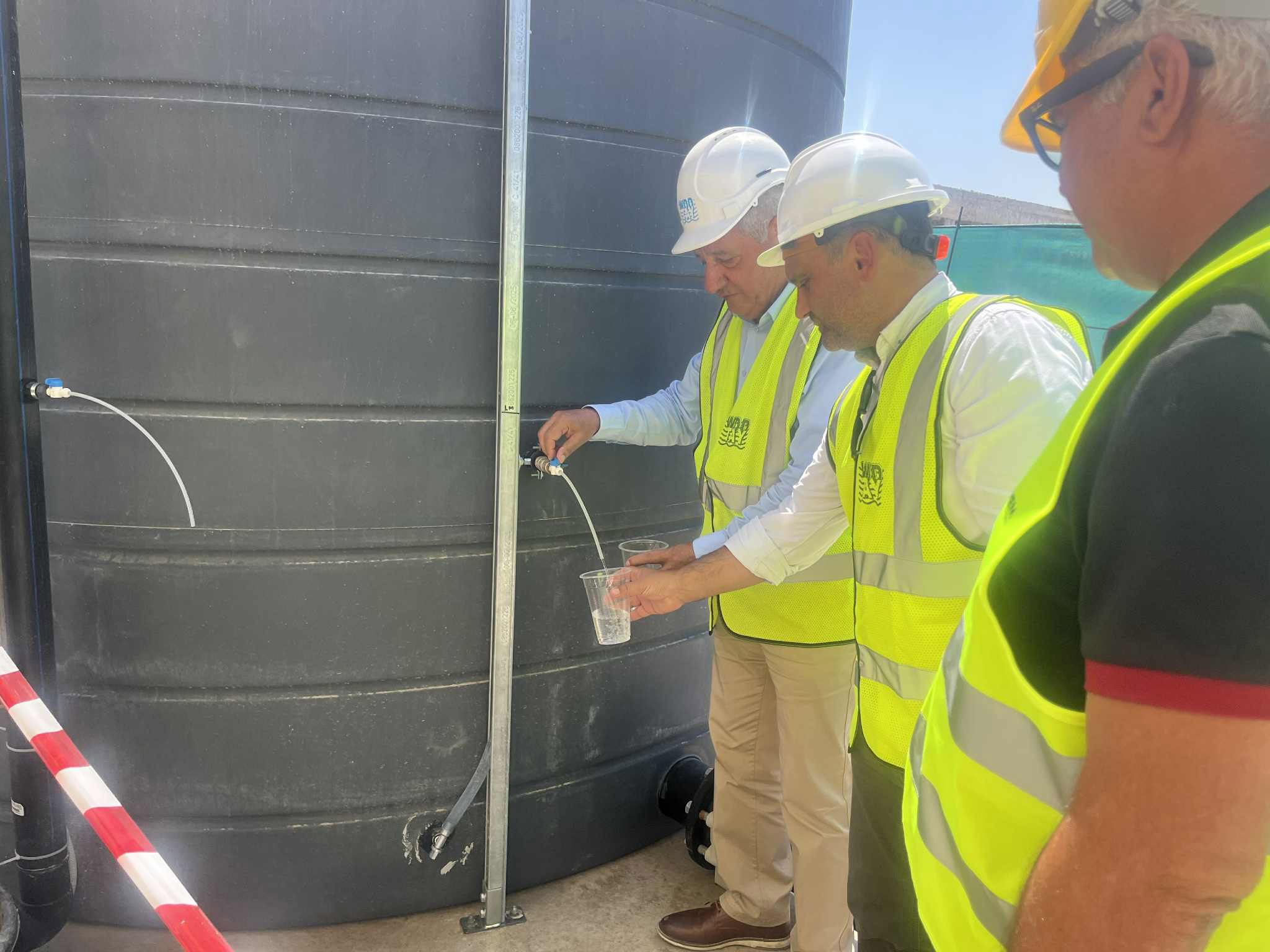
The expansion of the Kouklia desalination plant, set for an increase in capacity of up to 30,000m³, and the installation of an additional mobile desalination plant in Polis Chrysochous are currently being discussed with the agriculture ministry, Paphos district governor Charalambos Pittokopitis said on Tuesday.
“The recent rains, although they do not solve the problem, give us a sense of optimism and, above all, they offer us time,” he said.
Pittokopitis emphasised that the extra time was vital for the local district government (EOA) and the state as a whole, enabling further steps to ease the ongoing water scarcity “in a more organised way.”
“Our goal is for the unit to reach a production of 25,000 to 30,000m³ per day by the summer,” he said, marking the quantity considered necessary to allow for a sufficient water supply in Kato Paphos.
Pittokopitis said it was merely a political decision, as the EOA had been informed by the contractor that the infrastructure for the Kouklia expansion was already in place, meaning that once a decision is made, it would take another five to six months for the additional water quantities to be made available.
“If the decision is taken now, in January, then in the middle of the summer we will have at our disposal the necessary quantities of water that the Paphos region needs,” he said.
Meanwhile works to identify a suitable site for the installation of a mobile desalination unit are underway in Polis Chrysochous.
That plant is set to produce 10,000m³, providing flexibility in case of a surge in demand. Combined with the expansion of the Kouklia plant, the mobile unit is expected to significantly increase water security in the region.
He said this would also free up water that is being used for general consumption for use by farmers.
Pittokopitis stressed that given the effects of water cuts in the region, which had been primarily imposed on farmers, the boosting of desalination projects could act as a “breathing space for agriculture.”
He appealed to the collective responsibility of conserving water and preventing water shortages, stressing that this was not just the responsibility of the ministry, the water development department or provincial self-governments.
“Consumers themselves should pay attention to the use of water,” he said, emphasising that water has become one of the most valuable resources on the island.
Pittokopitis had earlier in January met with Agriculture Minister Maria Panayiotou, who assured that works to increase the regional water capacity were already underway, with relevant instructions given by President Nikos Christodoulides.
The desalination plant in Kouklia burnt down in December 2024 and was made fully operational in September 2025, with its current maximum capacity standing at 15,000m³.





Click here to change your cookie preferences