
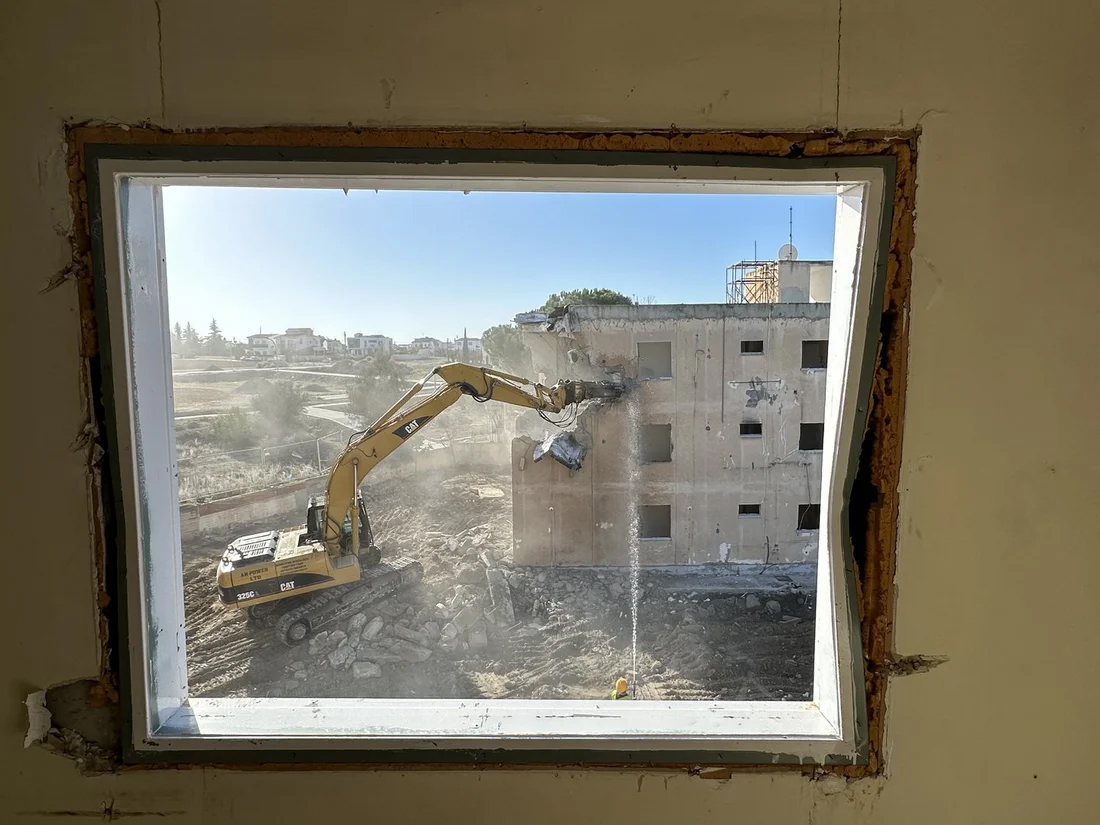
Attempts to secure financing for some refugees enrolled in the Ktizo scheme have come to nothing, leaving these people in the lurch, MP heard on Tuesday.
In April 2023 the government launched Ktizo, a €130 million long-term project to provide “respectable living conditions” on refugee estates. The scheme involves giving incentives to tenants to relocate to new housing.
There are 358 refugee apartment buildings across the government-controlled areas. Living conditions in some of them have been described as dangerous, with refugees fearing the apartments are at the brink of collapse.
Of the 358 apartment buildings, 245 are deemed to be in satisfactory condition and 70 have problems that need maintenance. The remaining 43 have structural issues and their renovation is deemed unsustainable and not financially viable.
Tenants of these 43 unsafe buildings, opting out of being relocated to new housing, will receive a one-off grant.
For those beneficiaries choosing to participate and move into new government-subsidised housing, they will contribute out of pocket €10,000 for a single-bedroom apartment, €20,000 for a two-bedroom apartment, or €25,000 for a three-bedroom apartment.
The out-of-pocket contribution amounts to approximately 10 per cent of the value of the new apartment.
But in parliament on Tuesday, it emerged that a number of refugees cannot afford the co-pay amount for relocating.
MPs heard that efforts to secure loans for these refugees – covering the out-of-pocket contribution – have so far borne no results.
Officials informed MPs that overtures for financing had been made to “two major banks” – but these did not respond.
Likewise, the Housing Finance Corporation did not show interest.
Another idea floated is to provide the loans via the Central Agency for the Equitable Distribution of Burdens.
The agency is a public legal entity established in 1989 to address economic disparities resulting from the 1974 Turkish invasion. It supports displaced persons and those affected by the occupation through housing loans, interest rate subsidies, and financial aid, funded partly by a 0.4 per cent levy on property sales.
But it also emerged that red tape was hindering the agency’s involvement in providing loans to cover the out-of-pocket contribution.
This prompted House refugees committee chairman Nikos Kettiros to remark: “We don’t have a mafia state, we have a stupid state.”
It was a play on words, alluding to Mafia State – a controversial book published by an investigative journalist alleging corruption and influence peddling in the political world.
Kettiros expressed frustration that, after almost three years, no financing solution has been found to assist these refugees.
This issue aside, an interior ministry official said that overall the scheme was progressing well.
She said that two of the five new buildings – to accommodate refugees – would be delivered soon.
And all the tenants in the buildings included in the first phase of the scheme have moved out. Demolition work has begun on most of the vacated buildings.




Click here to change your cookie preferences