
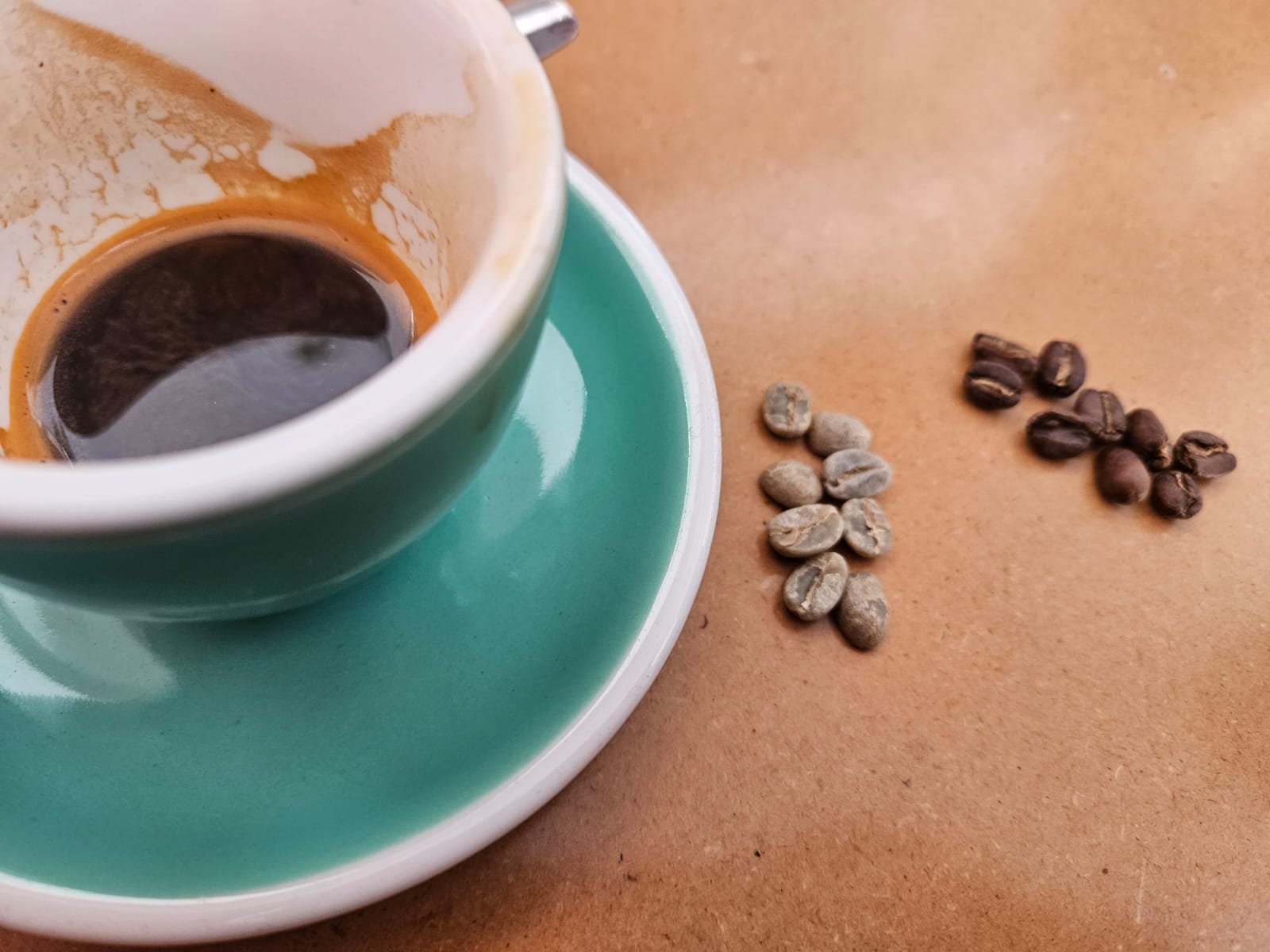
‘The best coffee is the one you like’ says one, admitting that roasters of specialty coffee owe a debt of gratitude
Here’s a pro tip, says Christos Soteriou. If you’re in a place with no good options – at the airport, say – and desperate for a coffee, go to Starbucks (or whatever the big global chain is), grab an Americano, and add some salt.
The salt will absorb the bitterness, so the coffee should be at least halfway-drinkable. Just make sure you don’t use the thick kind of salt – or it won’t dissolve, and you’ll end up with the worst of both worlds: jarringly bitter coffee that’s now salty too.
Starbucks does indeed feature in the fact-finding trip I take with Demetris Michaelides of Utu Coffee in Nicosia (more on this later). Christos, meanwhile, is the owner of Kollaborative, down the road from Demetris’ place and another shop selling specialty coffee – some of which it also roasts, unlike Utu.
We’re talking here about a niche of a niche. Still, it’s a pretty big pie. According to the charts at World Population Review, Cyprus ranks 20th in the world when it comes to coffee consumption (Hong Kong is top, of all places), quaffing 12.05kg annually per capita – an impressive stat, but most of that is likely to be Cyprus coffee, and/or frappé and instant coffee.
The various chains serving espresso-based drinks are a relatively recent arrival – and places like Utu are more recent still, specialty coffee being “a term for the highest grade of coffee available,” to quote Wikipedia, made from single-origin beans and “typically relating to the entire supply chain”.
Some will roll their eyes at such ‘coffee snobbery’ – but here’s the thing. Unlike, say, beer – where craft-beer fans are forever looking down on Keo and Carlsberg while clutching their hazy IPAs – coffee is a staple, not a luxury.
Most people have a coffee every single day. Some need it just to wake up, and be able to function. Yet they seem curiously indifferent to how the thing tastes, as long as it gives them a buzz and delivers that little caffeine shock to the synapses. That tip about adding salt to Starbucks will just seem irrelevant to most coffee drinkers.
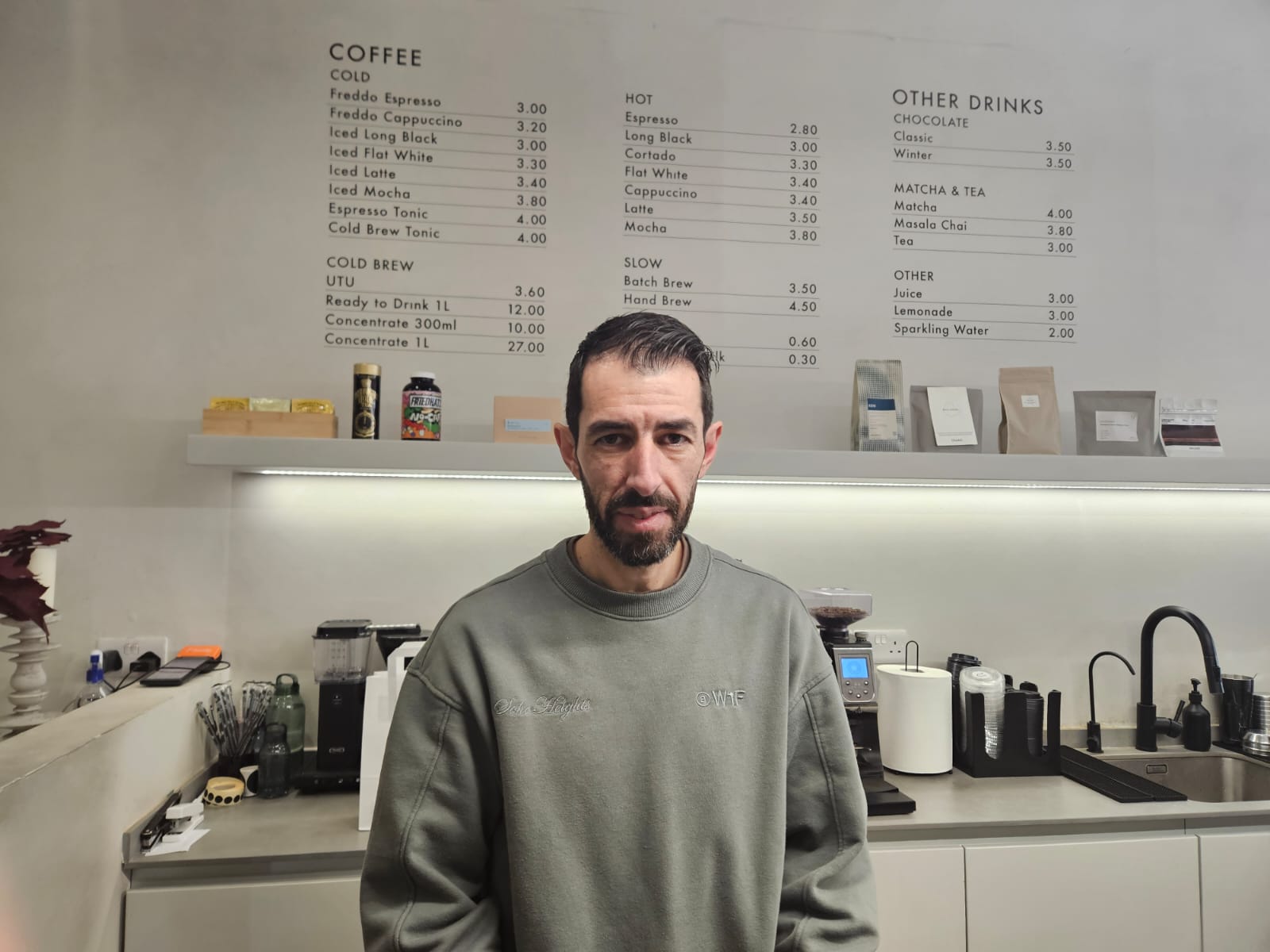
It’s not really a question of price. ‘Specialty coffee’ means a coffee scoring over 80 out of 100 on the SCA scale, the Specialty Coffee Association – but, for instance, a double espresso at Utu costs €2.80, which is much the same as a non-specialty coffee at a chain café.
The shop also sells coffee beans for home use, most bags priced at around €23. I peruse the shelves, noting exotic places: Honduras, Burundi, Guatemala. One shelf is devoted to Coffee Collective, which is a roaster based in Copenhagen. One of their bags contains roasted beans from Ethiopia, called Bekele and described with the following tasting notes: ‘Red strawberries, wine gums, melon and bergamot’.
Utu is the only ‘multi-roaster coffee shop’ in Cyprus, meaning that Demetris – a rangy, soft-spoken 42-year-old – imports coffee from about 10 different roasteries all over the world, from Denmark to Japan to the US, the roaster roster changing every month. (They also sell beans with their own Utu branding, custom-roasted by a company in London which sources the beans and sends samples.) Most of his customers are foreigners, admits Demetris frankly, implicitly affluent people – many are Russians – who’ve developed a taste for the finer things in life.
More coffee snobbery? Maybe. But the twist is that Demetris himself has no time for pretension or affectation, nor does he care overmuch about SCA scores or the so-called ‘third wave’. He has a motto, he says. “I always tell people, ‘The best coffee is the one you like’.”
Maybe it’s because he’s quite new to the coffee world, having studied Sports Science and spent many years working as a trainer and freelance photographer. His various travels included two years in Singapore – a great place in many ways, but not for coffee. It was all Starbucks, he recalls, “a Starbucks on every street corner”.
Not that he minded, at the time. Before opening Utu three years ago – preceded by a year’s deep-dive in the coffee world, which entailed ordering and sampling from dozens of roasteries – he was just another coffee drinker, and not even an especially obsessive one.
So he wasn’t too selective?
“I wasn’t, no. I became selective. And that’s why I never judge, I’ll never say to someone ‘Oh, what kind of coffee is that? Why are you drinking that?’… I always believe there’s a process with coffee, which people have to go through before they can start comparing, and becoming more selective.”
Demetris is, in short, a compassionate coffee expert, making him the perfect companion for the mission I have in mind: a fact-finding trip, a coffee crawl, visiting the various chains and sampling what’s on offer.
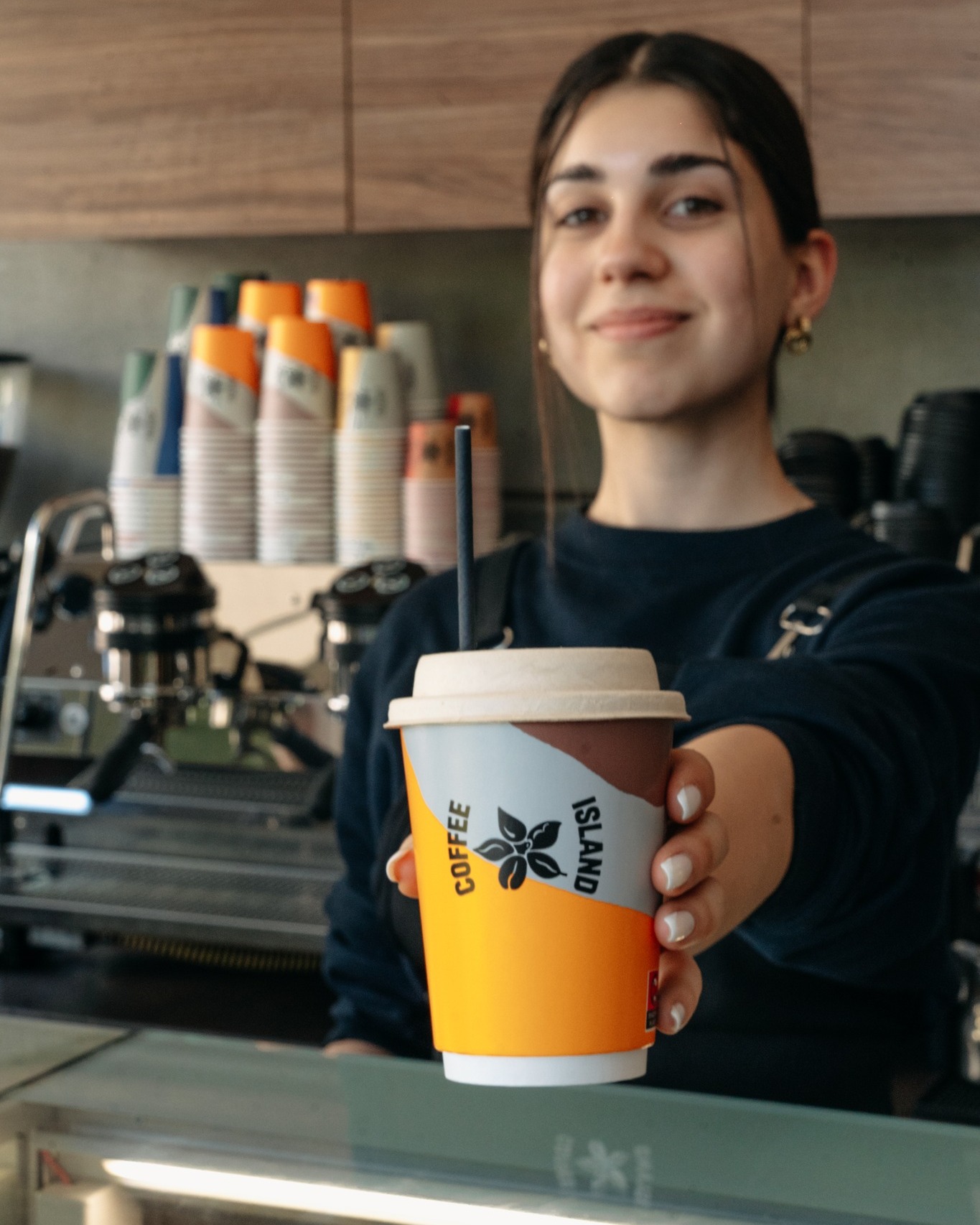
We start with Coffee Island (42 shops in Cyprus, according to their website). There’s a branch just down the road from Utu, and I’m expecting Demetris to be recognised – but in fact, he says, he hasn’t had chain coffee in years. €1.50 for a single espresso is very reasonable, that being our beverage of choice at every stop – both so we can make a fair comparison, and to avoid head-pounding caffeine buzz.
I set the cups down, and watch as he sniffs, tastes – then nods, as if finding more or less what he expected.
“The main characteristic you find in these chains is bitterness,” he tells me. “It’s quite intense, and covers any other notes there might be in an espresso.”
Notes – “nuts, chocolate and so on” – are one of the ways in which coffee is described. “There’s also acidity, mouthfeel and aftertaste”, all of which tend to be obscured by so-called ‘dark roasting’, which creates the bitterness.
Can he tell which country the beans are from?
“There’s definitely some Brazil, probably something from Central America… There’s a lot of body, and the bitterness also means it’s a low-altitude coffee.” The higher the altitude, the greater the acidity – meaning this espresso can’t be Ethiopia, for instance, where farms typically start at 1,800 metres or so.
I soon realise that our mission may have to be modified. My original plan was to visit several chains (there’s quite a few: Coffee Berry, Kawacom’s, Mikel, Coffeehouse and so on), but in fact the bitterness isn’t unique to Coffee Island.
Dark roasting is a choice, because – as Christos Soteriou explains later – “whatever coffee you take, if you dark-roast it enough you’ll always end up with the same result, taste-wise. Because you’re moving away from the character of the coffee, and ending up with a rather burnt and bitter product” – which, he adds pointedly, if your original coffee wasn’t quite top-class, will also serve to hide any imperfections. It’s a risk-averse strategy to ensure consistency, a top priority for any chain.
Demetris and I do visit a Kawacom’s (€1.80; over 20 shops), but the result is very similar – a bit less body than at Coffee Island (which we prefer overall), but the same classic bitterness. Still, we can’t abort the mission without including the granddaddy of all coffee chains, Starbucks itself.
At this point, a caveat may be in order. Despite what might sound like rather sniffy comments, Christos and Demetris don’t hate the chains. They know they couldn’t do what they do if bigger players hadn’t already introduced Cypriots to espressos and lattes – and what our local chains did in Cyprus, Starbucks did globally in the 90s and 00s. Coffee culture owes them a debt of gratitude.
Also, notes Demetris as we ponder our single espresso (€3.20), there are tens of thousands of Starbucks shops to supply – which requires a huge production area, at very low altitude and probably capable of supporting more than one harvest per year. It’s almost a given that the coffee will be bitter and reflecting what he calls “over-extraction”.
Still, having not had a Starbucks in ages, I’m unprepared for just how harsh and one-note the espresso is. “The bitterness dominates,” confirms Demetris, nodding a little ruefully. “It’s just, like – a black thing…”
Professional jealousy? Not at all – because Starbucks have their own business model. No-one comes to Starbucks for an espresso shot. People come for milky, syrupy drinks, often with pumpkin or caramel. In that context, not only will the coffee’s bitterness be disguised but it’s actually an advantage, to ensure it gets through the sweetness. Simply put, they and Utu (or Kollaborative) are not in the same business.
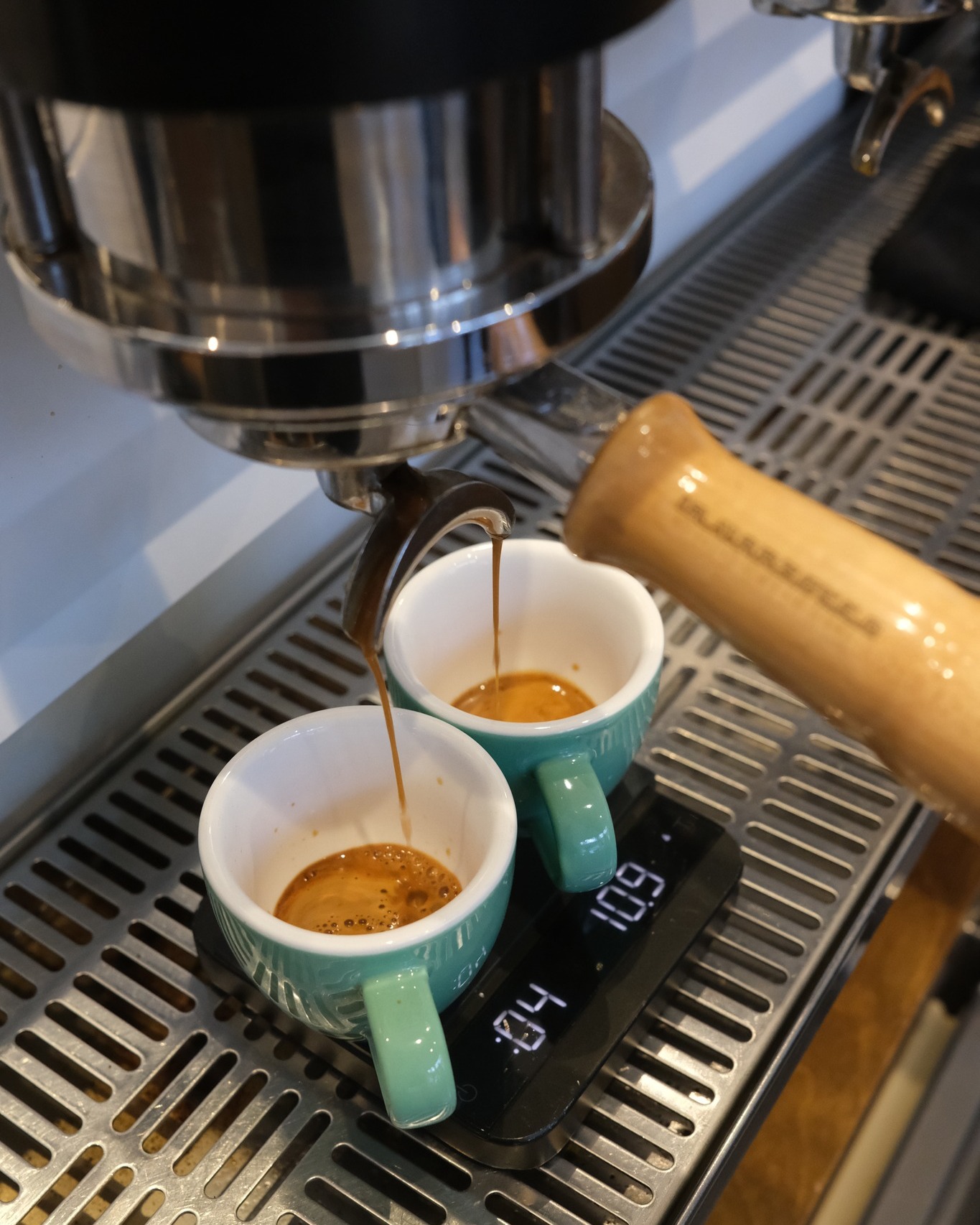
Besides, specialty coffee is not for everyone, says Christos mildly – by which time we’ve moved to Kollaborative, sitting at a table by the roaster and sampling a cup of Ethiopian coffee from the Danche area.
Anyone looking for a crash course in coffee appreciation should do exactly this – because the coffee is a revelation after what I’ve just been through. It’s floral, fruity, certainly more acidic (‘not for everyone’), but also more delicate. The term is apparently ‘tea-like’ – and it does have much less of an in-your-face coffee taste, which could be a problem for some customers.
“I’d say stone fruits, maybe some pineapple,” rattles off Christos when I ask about notes, then points to a teaspoon on the saucer. “Give it a stir,” he advises. I do, then try again – and the taste is subtly different.
That said, he adds, “if I really dark-roasted this coffee, it’d be the same thing you drank over there”.
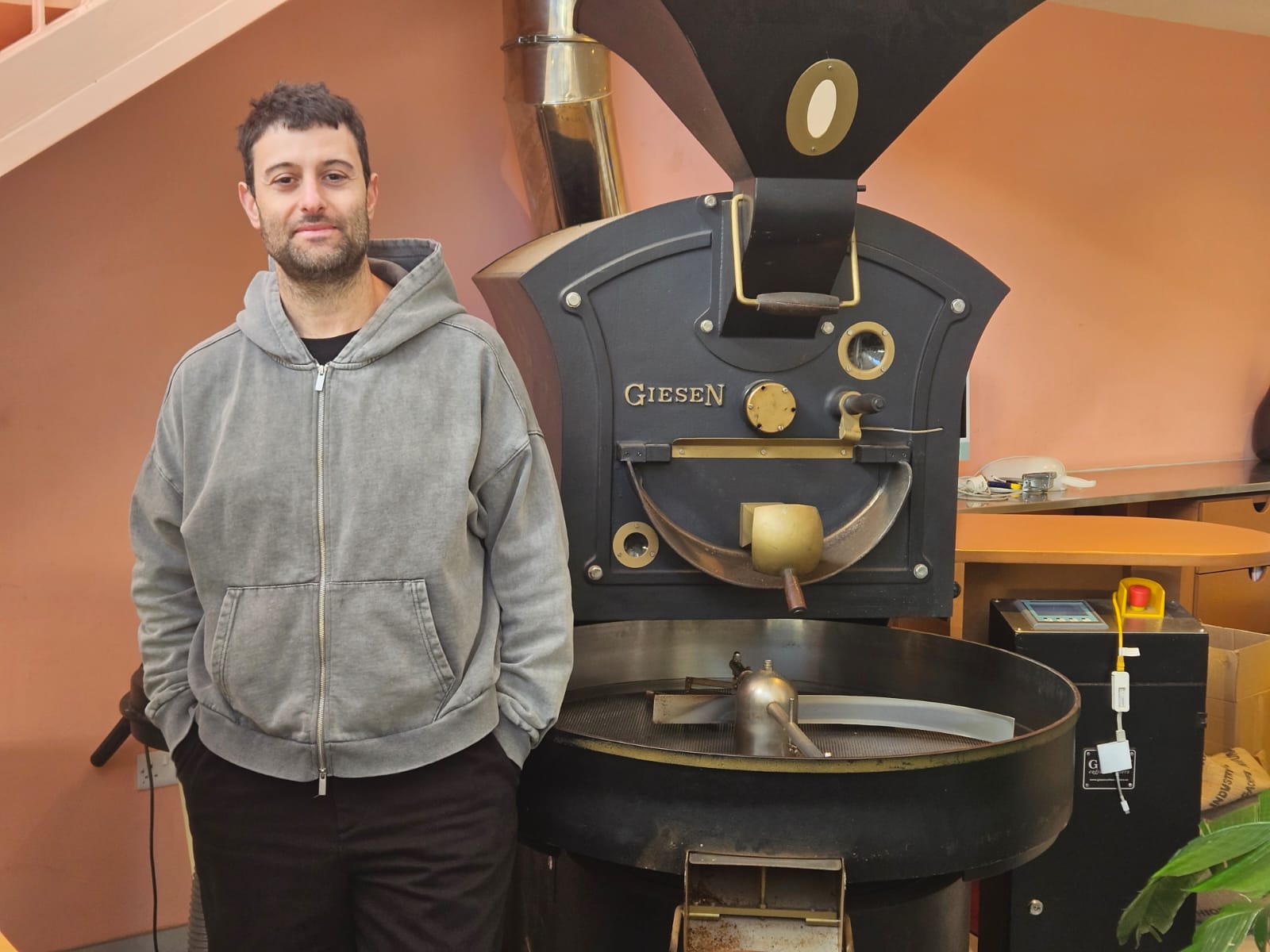
Kollaborative roasts, as already mentioned – the roaster being a sturdy, old-school machine with a touch of steampunk: a trapezoid back-end with a funnel where the beans are dropped, then a cylindrical main part with a perforated drum that spins them round, with a gas fire burning underneath. Christos roasts about three times a week, adding value to his coffee but also increasing the risk of things going wrong.
“It’s a big chain,” says Demetris later (meaning sequence, not coffee chain) – and that may be the most salient point about coffee, how many stages are involved. The beans make a difference (he also only picks ‘ethical’ farms that don’t exploit their workers, he says). The roasting makes a difference. The barista makes a difference. It’s a lot of work for a drink that most people gulp down for a quick buzz, not even caring how it tastes.
Like he said, becoming more selective is a process – and the good news for specialty coffee is that more and more people seem to be embarking on that process.
Christos (a pioneer) launched Kxoffee Project, the flipside to Kollaborative, in 2013 – at which time there was nothing, though fellow pioneers Brew Lab and The Daily Roast weren’t long in coming. 13 years later, there are over a dozen specialty shops in Nicosia alone, four or five in Limassol, and at least one (BeanHaus) in Paphos. Meanwhile, Utu has moved to the next level, featuring “more playful” options like co-fermented coffee where fruit – like lychees or watermelon – are fermented with the coffee beans.
Still, says Demetris, his motto holds good: ‘The best coffee is the one you like’. Coffee is a pleasure, and nothing spoils the pleasure more reliably than being lectured on how to appreciate it.
He does try to kick-start the process – which is why, for instance, the house brew at Utu is a light-roasted Brazilian with notes of nuts, caramel and milk chocolate, hopefully drawing in newbies. (Everybody likes chocolate.) Beyond that, all he can do is wait for the community to grow, meanwhile delighting local Russians – and hopefully non-Russians – with the options on his menu. And perhaps put a salt shaker in his hand luggage when he goes to the airport.





Click here to change your cookie preferences