
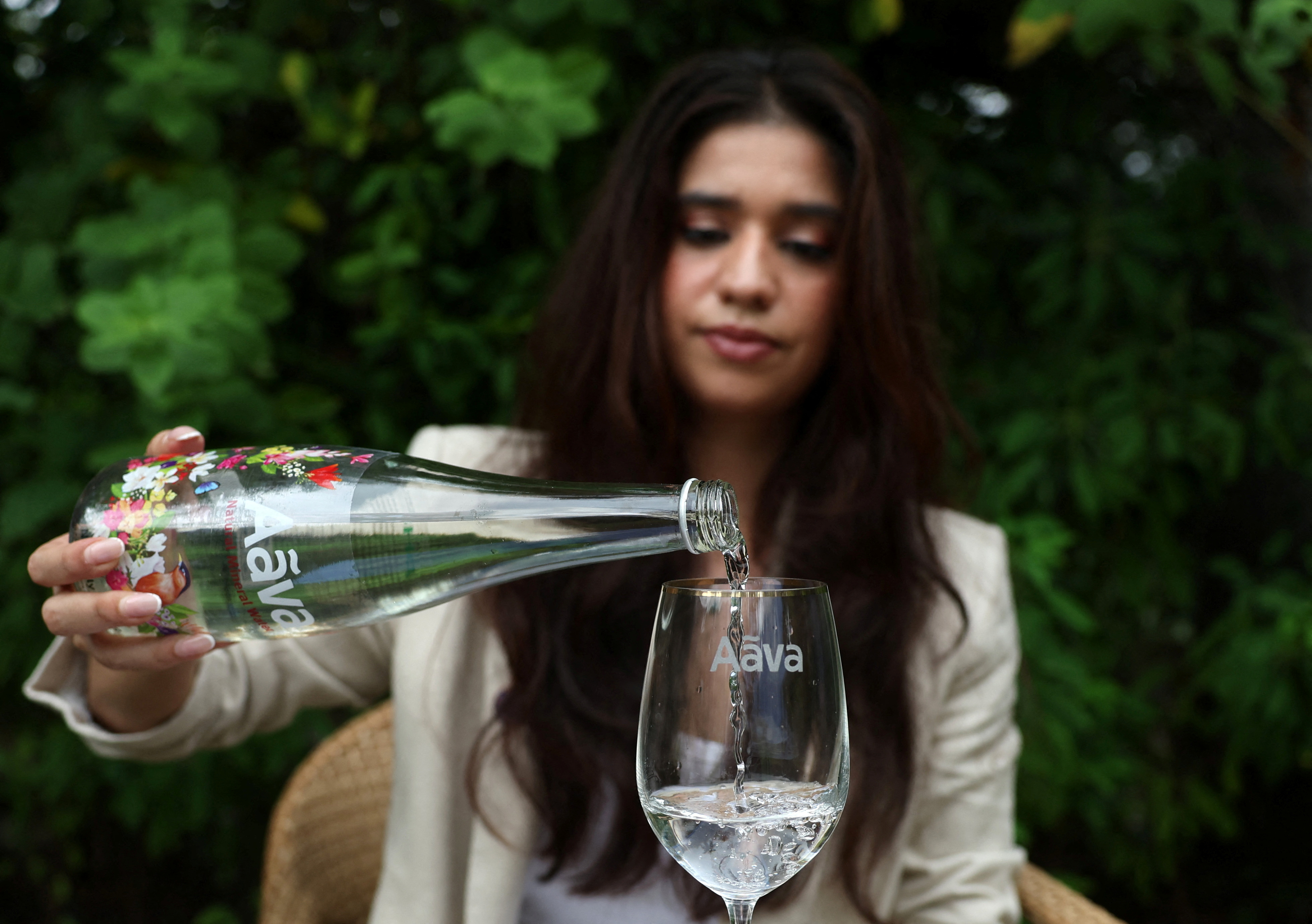
At an Indian gourmet food store, Avanti Mehta is organising a blind tasting of drinks sourced from France, Italy and India. No, this isn’t wine, it’s water.
Participants use tiny shot glasses to check the minerality, carbonation and salinity in samples of Evian from the French Alps, Perrier from southern France, San Pellegrino from Italy and India’s Aava from the foothills of the Aravalli mountains.
“They will all taste different … you should be choosing a water that can give you some sort of nutritional value,” said Mehta, who is 32 and calls herself India’s youngest water sommelier, a term usually associated with premium wine. Her family owns the Aava mineral water brand.
Premium water is a $400 million business in the world’s most populous nation and is growing bigger as its wealthy see it as a new status symbol that fits in with a spreading wellness craze.
Premium Indian mineral water costs around $1 for a one-litre bottle, while imported brands are upwards of $3, or 15 times the price of the country’s lowest-priced basic bottled water.
Clean water is a privilege in the country of 1.4 billion people where researchers say 70 per cent of the groundwater is contaminated. Tap water remains unfit to drink, and 16 people died in Indore city after consuming contaminated tap water in December.
Many in India see bottled water as a necessity and standard 20 US-cent bottles are available widely at convenience stores, restaurants and hotels. The market is worth nearly $5 billion annually and is set to grow 24 per cent a year – among the fastest in the world.
In India, the premium water segment is leading the surge in demand, accounting for 8 per cent of the bottled water market last year compared to just 1 per cent in 2021, Euromonitor said.
“Distrust of municipal water in some areas has escalated the demand for bottled water. Now, people understand how mineral water has more health benefits. It’s expensive, but the category will boom,” said Amulya Pandit, a senior consultant at Euromonitor specialising in the drinks market.
The popular 20-cent plastic bottled water is mainly made by Pepsi, Coca-Cola and Indian market leader Bisleri. In addition, Indians who can afford it, install purifiers in their homes which clean the water but also remove most minerals.
Imported and local premium waters are luring wealthy consumers and businesses alike.
Bollywood star Bhumi Pednekar and her sister have launched Backbay – selling 750 ml cartons of mineral water for $2.2; Indian conglomerate Tata is expanding its premium water portfolio, and retailers and businesses are reporting higher sales.
Tata Consumer Products, also Starbucks’ partner in India, sells 20-cent bottled water, but premium water is its priority as it sees affluent, health-focused consumers willing to spend on the drink without worrying about the price, CEO Sunil D’Souza said in an interview.
“I don’t have to push water uphill…I see a long, long, long runway for the business,” he said.
Tata’s premium “Himalayan” mineral water factory – which a Reuters photographer visited – is located in the foothills of the Himalayan range in Himachal Pradesh state. Workers there largely keep a hands-free watch on machines filling plastic and glass bottles with water sourced from a natural underground aquifer.
“When you open your tap, you’re not getting an Aava, Evian … And that is what you’re essentially paying for,” said water sommelier Mehta.
At the water tasting session, some participants said they enjoyed the experience but many found the price hard to swallow.
“To be honest, it is kind of expensive,” said executive Hoshini Vallabhaneni, one of 14 people at the event. “For everyday use – it will burn a hole in the pocket.”





Click here to change your cookie preferences