

Melbourne-born human-centred AI company HUMRN is moving from early validation into its next phase, with co-founder and chief executive David May setting out why the company is relocating its corporate base and, crucially, why Cyprus has become central to that decision.
Speaking to the Cyprus Mail, May said that, at its core, HUMRN is designed to help people function sustainably in environments where pressure is constant rather than occasional.
He described the platform as one built to help people “live better, more fulfilled, less stressful lives – closer to their potential more often”, not by reacting to failure, but by intervening earlier.
As May put it, the world is built on systems that assume people can absorb demand indefinitely. In most cases, he said, support only appears once something breaks, when performance drops, people struggle, or health declines.
HUMRN, he explained, is designed to sit before that point. By giving people clearer insight into how they are tracking, the system allows adjustment before strain turns into damage.
Importantly, May stressed, the human problem is not a lack of effort or motivation. Rather, he said, “it’s the absence of early, practical signals in high-pressure environments”.
That framing, May said, feeds directly into how HUMRN defines “human-centred” technology, not as a slogan, but as a constraint.
For HUMRN, he explained, the primary beneficiary must always be the person, not the system.
“It’s not about selling or harvesting people’s data. We don’t even see it,” May said. Instead, he explained, individual-level data remains on the user’s device by design.
This, he added, limits certain commercial shortcuts, while creating a system people trust rather than tolerate. “Insight flows back to the person.”

That philosophy, according to May, has shaped HUMRN’s approach to launch.
Rather than a broad rollout, the company has opted for a cautious strategy, working through targeted pilots in environments where the cost of getting it wrong is high, including professional sport, leadership roles and confidential, high-responsibility settings.
“These are not places where novelty is welcomed unless it’s genuinely useful,” May said, adding that the company is deliberately prioritising validation over visibility.
The same restraint, he argued, also differentiates HUMRN in a crowded AI landscape. The company does not see itself as part of the wellness or productivity category.
“Most platforms focus on behaviour correction,” May said. “HUMRN provides awareness and leaves decision-making with the human being.”
It is against that backdrop, May said, that HUMRN’s decision to relocate its corporate headquarters comes into focus. While the company was founded in Melbourne, he explained, it is now moving into something more durable.
“We’re in the process of relocating our corporate head office from Melbourne to Cyprus,” May said. “That decision reflects where HUMRN is heading, not just where it started.”
Asked why Cyprus, May pointed to what he described as a specific turning point.
Engagement with Demetris Skourides, the Chief Scientist of the Republic, he said, fundamentally changed how the company viewed the country.
What stood out to him was the seriousness of the national vision Skourides has helped articulate and advance – not just in theory, but in how research, regulation, ethics and real-world application are being aligned at a Republic-wide level.
“For us at HUMRN, operating in a sensitive space involving people, data and long-term outcomes, that kind of joined-up thinking matters enormously,” May said.
It reduces friction, he added, increases trust, and creates the conditions to build something responsibly, at scale.
It was that clarity of vision, and the way it has been embedded nationally, that convinced him Cyprus could serve as a credible long-term base for HUMRN.
“That’s what made Cyprus serious for us,” May said.
EU market access also factored into the decision, May noted, though he was careful to distinguish access itself from the conditions that come with it.
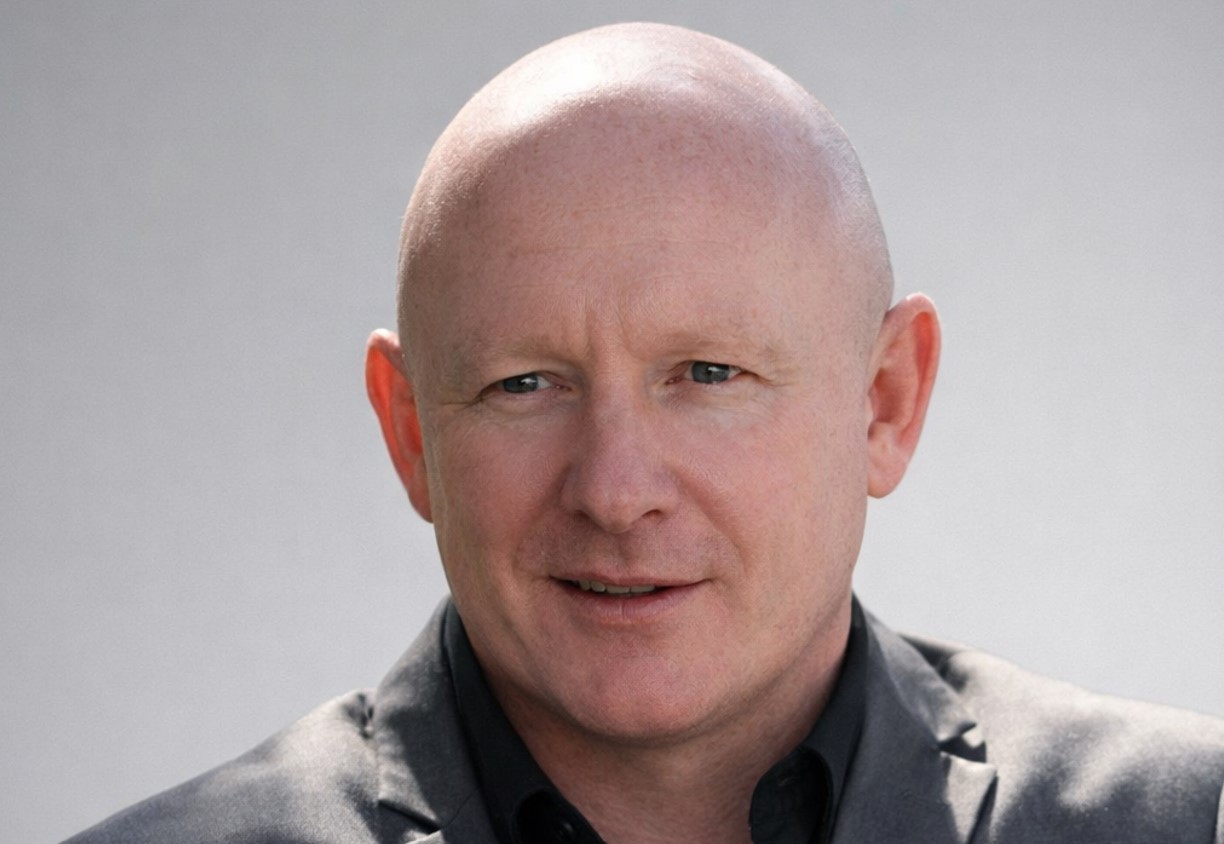
“Access on its own is table stakes,” he said. “What matters is how that access is governed.”
In that context, May said conversations with the Cyprus Chamber of Commerce and Industry (Keve), as well as engaged principals Stavros Stavrou and George Georgiou, reinforced his view that Cyprus combines strategy with the people and capability to deliver it.
More broadly, May argued that the country offers a balance of European standards and strategic local intent, regulation taken seriously, without innovation being buried under inertia.
For a company that depends on both trust and momentum, he said, that balance is critical.
Beyond regulation, however, May said the decision also comes down to sustainability. “People need to be able to live normally while doing demanding work,” he said. “That’s not a lifestyle preference; it’s a structural requirement for us.”
That thinking, he explained, feeds directly into HUMRN’s team strategy. The company began with a small, senior team distributed internationally.
Over time, May said, remaining fully distributed would limit coherence.
Cyprus, he added, provides an opportunity to unify the company around a physical base while continuing to operate internationally. HUMRN plans to relocate most of its executive team and expects between 30 and 50 per cent of future hires to be based locally.
“Our long-term goal is for Cyprus to be a genuine centre of gravity for the company,” May said, pointing to teams on the ground, leadership presence and long-term capability developed locally.
On ecosystem engagement, May said HUMRN would consider working with universities, accelerators and research centres in Cyprus, “yes, but with intent”.
The company has already begun conversations around trials, testing and research and is interested, he said, in partnerships where there is a genuine pathway from ideas into real-world use.
That means practical collaboration, shared problem-solving and outcomes that do not simply stay on paper. Where that alignment exists, May said, HUMRN is “very, very keen” to pursue long-term partnerships in Cyprus.
Turning to his personal background, May said his experience spans professional sport, leadership environments and building organisations under sustained pressure, settings where performance is not occasional, but expected every day.
“Regardless of how you are travelling, it’s expected every day,” he said.
What stayed with him, May explained, was not the intensity itself. High pressure is part of the deal, he said, and most people in those environments understand that.
What struck him instead was how often capable, disciplined people quietly turned strain inward.
When things began to fray, May said, the instinct was almost always self-blame, saying “I’m not resilient enough, I’m not managing it properly, I should be coping better.”
Looking ahead five years, May expects HUMRN to be operating at real scale, with millions of users and strong revenue. Growth alone, however, does not define success, he added.
“Success is whether outcomes actually change,” May said, fewer sudden failures, lower burnout, and earlier, better decisions in environments where pressure never really switches off.
The biggest risk ahead, in his view, is dilution, as “human-centred AI” becomes fashionable without being treated as a real constraint. Avoiding that drift, he said, requires constant discipline.
“The challenge isn’t choosing between innovation and responsibility,” May said. “It’s proving they can and must exist together.”
For founders considering expansion into smaller but fast-growing tech hubs, May said the priority should be understanding systems and how they work for everyone involved.
If alignment and intent are taken seriously, he added, growth tends to take care of itself.
As former San Francisco 49ers coach Bill Walsh once put it, a quote May said he keeps close, “If you focus on the process and the standards, the score will take care of itself.”



Click here to change your cookie preferences