
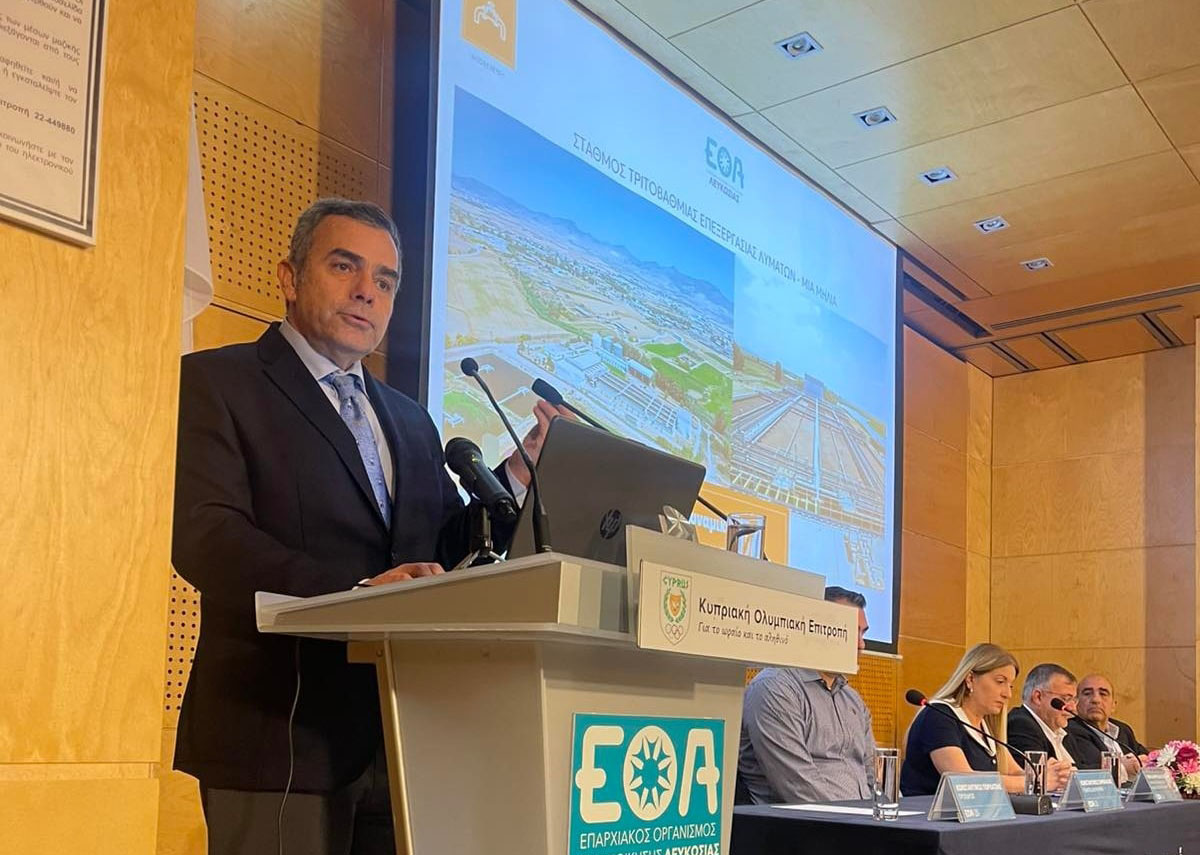
Despite the teething problems, the new district self-government organisations (EOA) have produced significant work during their first 18 months, Nicosia district governor Constantinos Yiorkadjis said on Tuesday, adding that much is yet to be done in his district, including managing the restored Kotsiatis landfill and the biogas trapped in it.
Speaking to mark his 18 months in the post, Yiorkadjis said transforming biogas into green power would relieve the communities that have suffered during the operation of the landfill, while the EOA would reduce its dependence on electricity and its carbon footprint.
“By properly managing the biogas, this natural resource will stop being burned through a flare and burdening the area,” he said.
Yiorkadjis also referred to the 2,565km-long water supply network, 115km longer than 2024, serving more than 170,000 water meters.
Efforts are being made, he said, to save water with smart systems and increase the capacity to store water, adding that during the 18 months since the EOA was set up it had repaired 8,248 faults.
The Nicosia sewerage system is 1,645km long and improvements in both urban and rural areas are in the pipeline for 2026.
A tender will be announced for sewage works in north Nicosia-Dhali and in Kato Pyrgos Tillyrias, worth about €85 million.
Yiorkadjis said the tender launched for reconstructing the central sewage pipe in Mia Milia and laying pipes to return processed water to the south was considered to be a “huge success”.
The Nicosia EOA took over the management of the rainwater drainage systems and has already cleaned 15km of pipes and changed a large number of grids, in an effort to reduce the risk of floods.
Anti-flood works are also planned for 2026, with particular importance placed on repairing the covered Kotsirkas river under Digenis Akritas avenue.
Regarding the management of solid waste, the Nicosia EOA is expanding green points and collection infrastructure for the reuse of materials, thus “enhancing the circular economy and contributing to the reduction of waste sent for containment by burial”, Yiorkadjis said.
There are currently eight green points, with three more under construction and two in the planning phase.
The Nicosia EOA also took over handling dangerous buildings and set up a department to reexamine hundreds of cases and manage new ones, with priority given to public safety.
Yiorkadjis furthermore referred to the finances of the Nicosia EOA, explaining that Cyprus was obliged to adopt the European Local Authority Charter, which provides that economic resources are relative to their duties, that they approve their own budget and are not subject to other approval procedures.
The Nicosia EOA is still awaiting answers from the state regarding the continuous amendments to legislation, which Yiorkadjis said “should stop at some time”, island-wide regulations for the operation of the EOAs, the passing of budgets for 2026, the creation of unified software for all EOAs, the approval of funds for anti-flood works, funds for dangerous buildings, and the annual grant for processed water from the Mia Milia sewerage processing plant.
Funds are also expected for other projects, including sewerage systems, fixing water supply pipelines, constructing infrastructure for organic waste processing and community composting and the Kotsiatis biogas project.
Additionally, Yiorkadjis said legislation should also be unified and simplified for planning and building.
The overall aim of the Nicosia EOA, he said, was to improve the quality of life, contribute to the development of the district, provide reliable services and listen to the people.




Click here to change your cookie preferences