
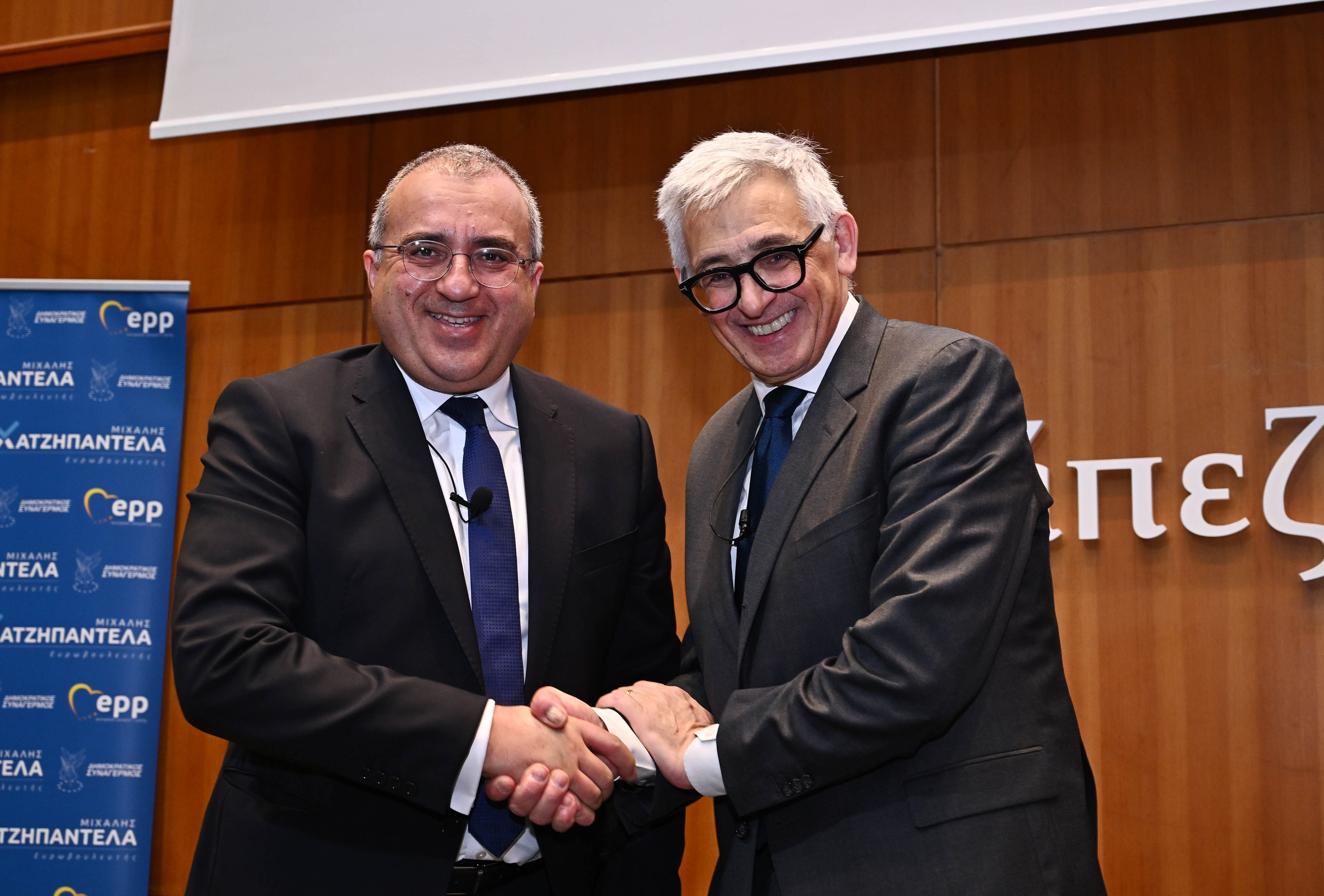
Cyprus stepped into the European discussion on the digital euro on Friday, as policymakers, bankers and institutions gathered in Nicosia for the first event held on the island with the participation of the European Central Bank (ECB).
The event, titled ‘Presenting the Digital Euro in Cyprus’, took place at the Bank of Cyprus headquarters and was organised by Disy MEP Michalis Hadjipantela, in cooperation with the Association of Cyprus Banks, and in the presence of Finance Minister Makis Keravnos.
More than 170 representatives from government bodies, social organisations, banks and financial-services professionals attended.
Hadjipantela said that “today’s conference proves that Cyprus, although a small country, can play an active and substantial role in the dialogue and development of the digital euro”, adding that the island can contribute “to the shaping of European decisions that will determine the financial environment of the coming years”.
At the same time, he explained that the digital euro would preserve the central role of public money, enable fast and low-cost pan-European payments, and support competitiveness and innovation, while remaining “a safe and comprehensive means of payment for 450 million citizens, without undermining the role of banks”.
The keynote address was delivered by ECB executive board member Piero Cipollone, who outlined the expected benefits for citizens and businesses and the next implementation steps.
He noted that the Cyprus EU presidency arrives at a decisive moment, with Europe facing geopolitical uncertainty and rapid technological change, and referred to the priority “Autonomy through security and competitiveness” as reflecting the EU’s ambition to strengthen independence through a stronger and more innovative economy.
Cipollone also recalled that European leaders had called to “swiftly complete the legislative work and accelerate the preparatory steps” for the digital euro, stressing that action could no longer be delayed.
In that context, he said that “in a rapidly changing world, Europe must respond decisively to modern challenges, protecting its currency and ensuring the freedom of citizens to pay in the way they choose”.
Central Bank of Cyprus (CBC) governor Christodoulos Patsalides described the project as a stability tool, saying that “the digital euro is about ensuring a secure European payment option in an increasingly digital economy, in a world that requires stability amidst increased uncertainty”.
He added that “at the core of this vision lies a fundamental goal of Central Banks, serving the common good by providing a sovereign, resilient and universal digital payment instrument”.
Meanwhile, association’s director general Marios Skandalis said the initiative had reached a turning point, noting that “the implementation of the digital euro is coming to a critical turning point”, because “as the world is digitising at a rapid pace, the Eurozone must ensure that our common currency remains relevant, resilient and safe for use by all”.





Click here to change your cookie preferences