
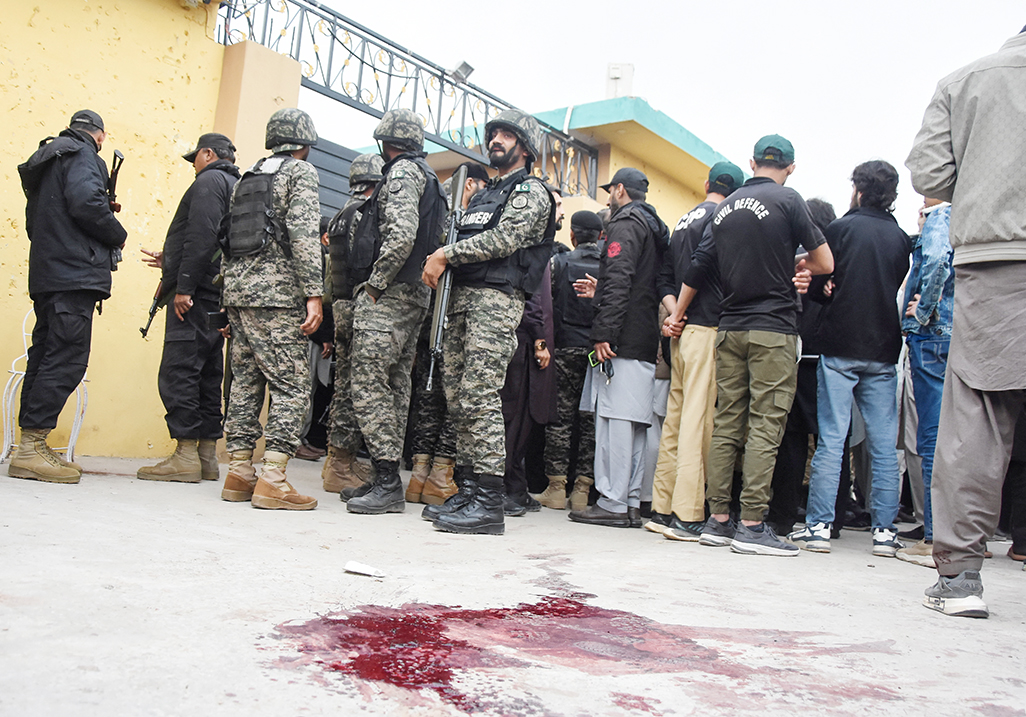
An attacker opened fire at the gates of a Shi’ite Muslim mosque in Islamabad on Friday before setting off a suicide bomband killing at least 31 people,in the deadliest attack of its kind in Pakistan’s capital in over a decade.
More than 170 others were wounded in the explosion, detonated after guards challenged the attacker as he made his way into the Khadija Tul Kubra Imambargah compound on the outskirts of the city, officials said.
Images from the site showed bloodied bodies lying on the carpeted mosque floor surrounded by shards of glass, debris and panicked worshippers. Dozens more wounded were lying in the gardens of the compound as people called for help.
The man blew “himself up in the last row of worshippers,” Defence Minister Khawaja Asif wrote on X.
He said the bomber had a history of travelling to Afghanistan and blamed neighbouring India for sponsoring the assault, without providing evidence.
There was no immediate response from New Delhi, which has dismissed Pakistan’s accusations of backing militants in the past.
CAPITAL ALREADY ON ALERT FOR VISIT
The attack was the deadliest suicide bombing in Islamabad in more than a decade, according to conflict monitor ACLED, which said it “bears the hallmarks of the Islamic State”.
Shi’ites, who are in the minority in the predominantly Sunni Muslim nation of 241 million, have been targeted in sectarian violence in the past, including by Islamic State and the Sunni Islamist group Tehreek-e-Taliban Pakistan.
Bombings are rare in the heavily guarded capital, although Pakistan has been hit by a rising wave of militancy in the past few years, particularly along the border with Afghanistan.
Afghanistan’s foreign ministry condemned the attack. Kabul has repeatedly denied charges that it provides safe haven to militants carrying out attacks in Pakistan.
“A total of 31 people have lost their lives. The number of wounded brought to hospitals has risen to 169,” Islamabad’s Deputy Commissioner, Irfan Memon, said in a statement.
The capital was already on high alert on Friday for the visiting President of Uzbekistan, Shavkat Mirziyoyev, with roads around the capital blocked by checkpoints and security forces posted across the city.
“We are giving every possible help to the families of those killed and those injured,” Pakistan’s parliamentary affairs minister Tariq Fazal said after visiting the wounded at Islamabad’s Polyclinic hospital.
WEEK OF VIOLENCE
Pakistan has also blamed India for assaults by militants in the restive Balochistan province over the weekend, accusations that have fanned smouldering tensions between the nuclear-powered neighbours who engaged in their worst conflict in decades in May.
New Delhi has denied any involvement in the violence in Balochistan where Pakistan’s military has battled a decades-long insurgency.
That region was brought to a standstill after separatist militants stormed government buildings, hospitals and markets in a coordinated attack, killing 58 civilians and security officials. The military said it killed 216 militants in targeted offensives across the province.
The military said earlier on Friday that another 24 militants linked to Tehreek-e-Taliban Pakistan were killed in the northwestern Khyber Pakhtunkhwa province.
The last major attack in Islamabad was a suicide bombing on November 11 that killed 12 people and wounded 27 others. Pakistan said it was carried out by an Afghan national. No group claimed responsibility for that attack.



Click here to change your cookie preferences