
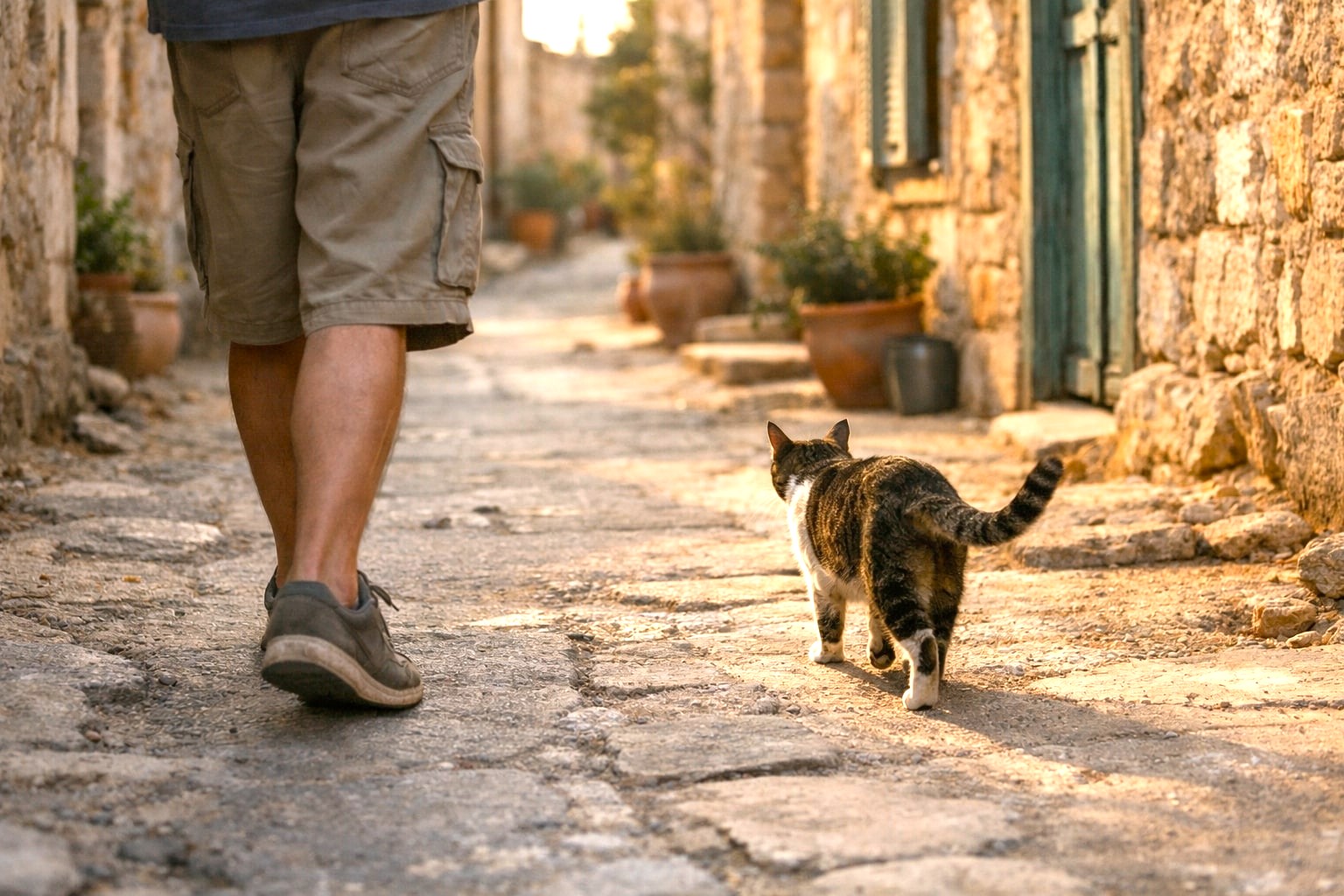
They sit beside us at café tables, follow us down village streets, sleep near our restaurants, homes and hotels
Cyprus has a complicated relationship with animals.
Stray cats curl up outside bakeries. Dogs wait patiently in car parks. Volunteers stretch themselves thin, feeding, rescuing, worrying.
It’s sad. It’s uncomfortable. And it’s something many people would rather not look at too closely.
And yet, for all the heartbreak, Cyprus might also be one of the places where the human–animal bond is most visible.
Animals aren’t abstract here. They’re present. Physical. Close. They sit beside us at café tables, follow us down village streets, sleep near our restaurants, homes, and hotels.
Over the years, we’ve written about Cyprus’ cats and dogs many times – their long history on the island, the people who care for them, the quiet ways they shape our lives; woven into our environment.
But what’s striking is that science is now catching up with something animal lovers have long known: animals can actively help regulate our bodies.
Studies show that interacting with animals can lower blood pressure and heart rate, particularly during periods of stress. One review found that the presence of an animal could, in certain situations, reduce cardiovascular stress responses even more effectively than even human companionship!
Hands-on interaction matters too. Research into therapy dogs has shown measurable reductions in blood pressure and physiological stress markers after even brief contact. It’s an effect that’s partly hormonal: petting or sitting near an animal has been shown to lower cortisol, and increase oxytocin, the chemical associated with bonding and safety.
There’s also a psychological dimension. Studies consistently link animal companionship to reduced loneliness, improved mood, and lower perceived stress, particularly in societies where people feel stretched or isolated.
Importantly, these effects don’t only apply to people who own pets. Casual interaction – stroking a dog, sitting near a cat, feeding an animal regularly – can produce similar responses. And in a place like Cyprus, where animals exist in shared spaces rather than behind closed doors, that matters.
Of course none of this erases the ethical reality of our island’s stray problem. Science isn’t a justification for neglect, nor a romantic gloss on suffering. But it does offer a fuller picture of why animals matter so much here – and why so many people feel compelled to care, even when it’s hard.
Animals meet us without language, judgement, or expectation. They don’t ask us to explain ourselves. And in a world that increasingly demands attention, productivity, and emotional labour, that kind of presence is quietly powerful.
Perhaps that’s why, despite everything, people in Cyprus keep feeding, rescuing, stopping, stroking, sitting. Not because animals need us – though they often do – but because, in ways we’re only beginning to understand, we need them too.






Click here to change your cookie preferences