
Cyprus forex companies hold €4.5bn in total assets
The forex market requires strong emphasis on investor protection, proper information and cultivation of financial literacy, Finance Minister Makis Keravnos said on Wednesday.
At the same time, Cyprus Securities and Exchange Commission (CySEC) Chairman Georgios Theocharides said at the same event that around 600 inspections were carried out on Cyprus Investment Firms (CIFs) during 2025 and administrative penalties of approximately €2.3 million were imposed,
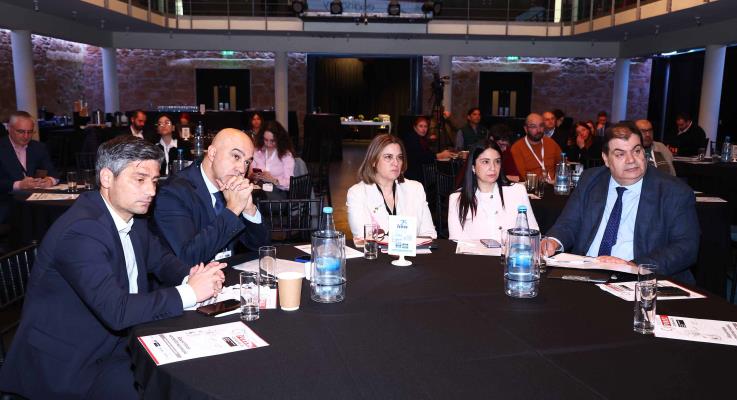
The two men were speaking at the Cy Economy Forex Conference ’26, which took place in Nicosia.
Representatives from the Cyprus Chamber of Commerce and Industry (Keve) and the Employers & Industrialists Federation (Oev) also highlighted the need for effective supervision at the conference, whilst referring to the forex sector’s contribution to the Cypriot economy.
“Ensuring conditions of macroeconomic stability and sustainability of public finances remains a steady priority, as a foundation for sustainable development and improvement of citizens’ living standards,” Keravnos said in remarks read by Avgi Chrysostomou Lapathiotou, Director of Financial Services at the Ministry of Finance.
“The pursuit is for an economy that is more competitive, leverages its comparative advantages and strengthens its productive base,” he added.
Keravnos also said that “ensuring adequate and efficient financing for the economy is also a central axis of policy”.
“The government is working to develop tools and mechanisms that cover financing gaps, particularly for small and medium-sized enterprises and innovative start-ups, with more modern equity-based instruments such as the utilisation of equity funds, as well as actions for financial technology (FinTech) and new financing models,” Keravnos continued.
The minister explained that “the goal is a financial sector that strengthens the real economy, attracts quality investments, creates opportunities for businesses and citizens and operates with rules that establish trust”.
After noting that the forex market requires strong emphasis on investor protection, proper information and cultivation of financial literacy, Keravnos said that within a strongly regulated framework, forex companies can and do offer employment, specialisation and know-how both at the level of forex companies and at the level of external providers and partners.
This, he said, “strengthens Cyprus’ operation as a regional business and financial centre in the era of digital finance”.
Additionally, the Finance Minister said that during the first half of 2026, within the framework of the Cyprus Presidency of the EU Council, the union is placing emphasis on initiatives that increase the effectiveness, transparency and competitiveness of European capital markets, as a prerequisite for financial stability, market integrity and growth.
“The Savings and Investments Union (SIU) acquires particular importance, aiming to improve the way the European financial system channels savings into productive investments, expanding citizens’ access to capital markets and financing options for businesses,” he stated.
“Actions are being promoted to simplify rules with a high level of investor protection and for better access of small and medium-sized and start-up enterprises to capital within the Single Market,” he added.
The minister pointed out that “significant European initiatives are underway that affect the financial sector and the daily lives of citizens and businesses, such as the digital euro package and the modernised payments market, as well as Open Finance approaches through access and sharing of financial data”.
In his own address, CySEC chairman George Theocharides said that “the Cyprus Securities and Exchange Commission works consistently so that the Cypriot capital market remains competitive, open to innovation, but at the same time fortified against risks that can undermine investor protection and its smooth operation”.
Approximately 600 on-site and remote thematic inspections were carried out on CIFs during 2025 regarding organisational requirements and professional conduct issues, as defined by MiFID II, and administrative penalties of approximately €2.3 million were imposed, of which €1.3 million were on CIFs, he stated.
Administrative penalties of approximately €7.3 million have been imposed over the last three years, of which €5.3 million were on investment firms for violations of current legislation, he added.
All amounts are deposited into the consolidated fund of the Republic of Cyprus.
“CySEC sent two cases to the Police and five cases to the Attorney General during 2025 for investigation of whether potential criminal offences arise, whilst for two other cases information was forwarded to the Financial Intelligence Unit (MOKAS),” he stated.
“At present, the Securities and Exchange Commission supervises 808 entities, including 252 Cyprus Investment Firms (CIFs), with their total assets amounting to €4.5 billion at the end of the third quarter of 2025,” Theocharides added.
Of these, 162 have Contracts for Difference (CFD) as their main activity, which are considered complex, high-risk and leveraged investment products, whilst another 89 companies offer traditional financial products such as shares and bonds, or Exchange Traded Funds (ETFs), and one company operates a Multilateral Trading Facility.
In parallel, another 29 applications for the establishment of new CIFs are under examination.
“Cyprus is open to the provision of investment services and maintains a leading role in Europe in this particular sector,” he noted.
Regarding technological upgrade, the CySEC chairman said the commission will continue to strengthen supervision, digital resilience and cybersecurity and will adopt more new innovative electronic security systems, utilising advanced technologies through the use of artificial intelligence.
“Within 2026, the automation processes for submitting applications to CySEC will advance further, whether they concern applications for operating licences, or substantial changes and the submission of notifications for the provision of cross-border services,” he stated.
“With the completion of the projects, a number of procedures of the Licensing Department concerning the submission, evaluation and filing of applications submitted to CySEC are expected to be automated,” he added.
“Beyond technological upgrade, within 2026 CySEC will be further staffed with human resources, which will be utilised to strengthen its supervisory departments as well as optimise organisational effectiveness,” Theocharides explained.
Meanwhile, Cyprus Chamber of Commerce and Industry (Keve) secretary general Philokypros Roussounides said that “Cyprus has evolved into one of the most important centres for the establishment of forex companies in Europe, adding that the main reason is the combined advantage of a clear and organised regulatory framework, competitive tax regime and the ability to access the entire European market”.
“The regime of forex companies in Cyprus is characterised by strict supervision and alignment with European law,” Roussounides stated.
“Although Cyprus attracts a large number of forex companies, the regulations function flawlessly and the required conditions aimed at investor protection and ensuring market credibility are maintained,” he added.
He further said that despite this, “forex trading remains a high-risk activity and requires proper information and responsible approach”.
Referring to the forex sector’s contribution to the Cypriot economy, the Keve secretary general said that “besides the fact that the presence and activity of forex companies contributes to everyone’s permanent goal of transforming the country into a regional financial centre”.
“The forex sector creates attractive employment positions for Cypriots, contributes to trade development, creates conditions for new investments, expands know-how in high-tech systems, strengthens state tax revenues and generally contributes significantly to the development of the economy,” he added.
Moreover, Roussounides said that the chamber “welcomes the development of the sector because Cyprus is being pursued as a modern centre of financial services that will utilise the geographical position, EU and Eurozone membership status and economic advantages”.
Meanwhile, in remarks, Oev first vice president Demetris Vakis said that “the forex sector in Cyprus has prospects but also responsibilities”.
He added that “there cannot be sustainable development of the sector without effective supervision, without clear rules and without substantial information“.
“The forex institution has prospects to contribute to attracting quality business activities, employing specialised human resources and maintaining Cyprus on the map of international financial centres,” Vakis said.
“At the same time, however, it has the responsibility to operate with absolute adherence to the institutional and legal framework, with respect for the final investor and with full understanding of the risks entailed by this particular form of investment,” he continued.




Click here to change your cookie preferences