
‘I never thought I’d miss Cyprus so much… I feel safe in our culture’: from the luxury of Engomi to the streets of Cali
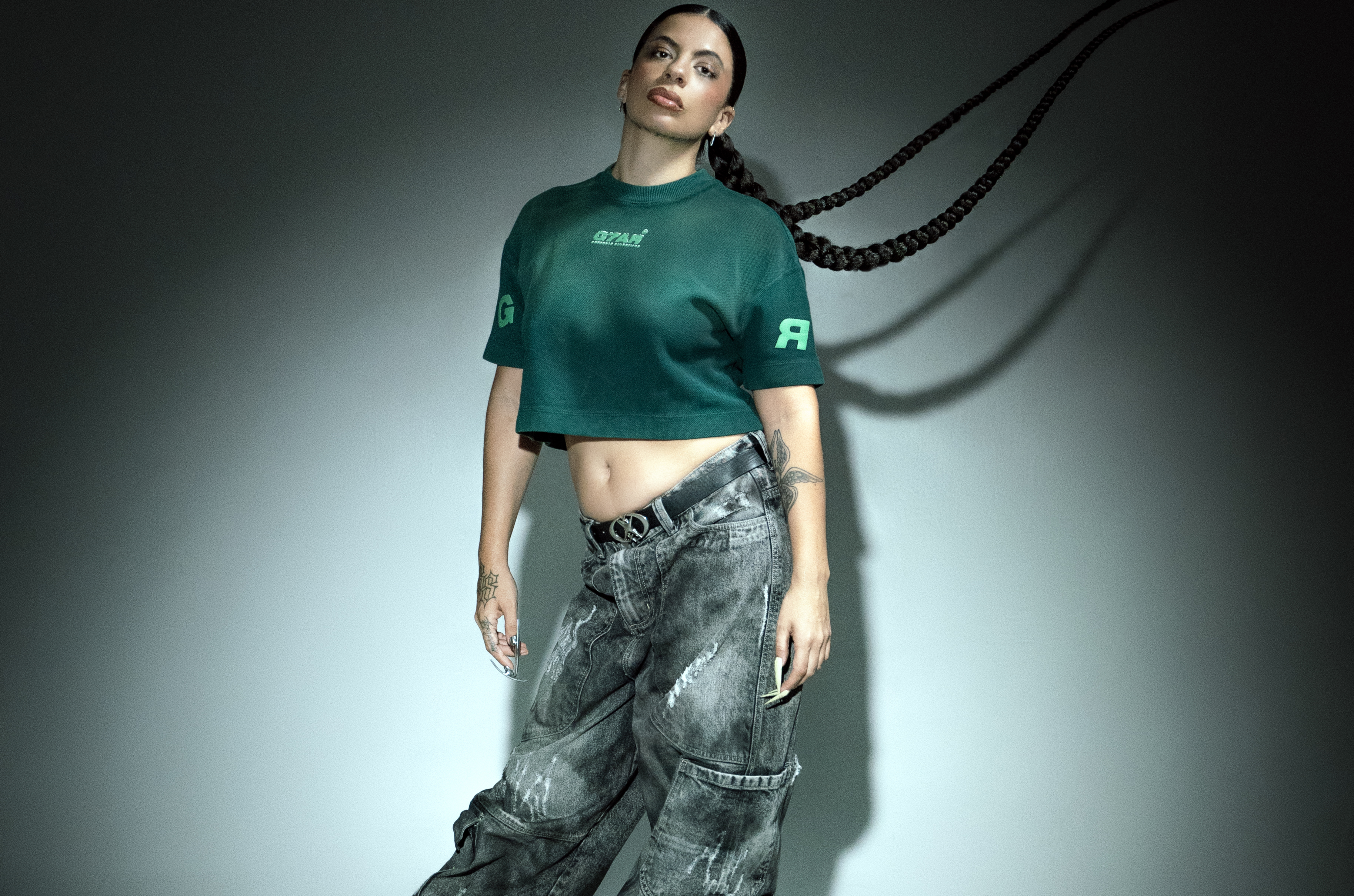
She’s ‘the queen of Colombian trap music’. She also appears in thriller show Fake Profile, “the most-viewed Latin series on Netflix the year it came out”. (Her song ‘Problem Boy’ – actually ‘Pr0Bl3Mb0I‘ – was the theme song for the first season.) She’s styled the Golden Globes, and performed shamanic rituals with native Indians in Cali. And she also lives in Engomi, in a beautiful house in the northernmost part of Nicosia with a view of the buffer zone.
The house is her parents’ house – though not strictly speaking the house where she grew up, since Stephania Ayiotou, a.k.a. Stefficrown, was already 18 when it was built, and eager to flee. Her dad Constantinos, who doted on her (the feeling was mutual), built her the biggest bedroom an 18-year-old could desire – it’s larger than most houses’ master bedrooms – but it was too late. Never mind the bedroom, Cyprus itself was too small for her.
That was a while back, of course. Steffi turned 38 at the end of January, marking the event at Velissima club in Protaras with a top Colombian DJ and the birthday girl herself performing two songs from Machinism, her latest album.
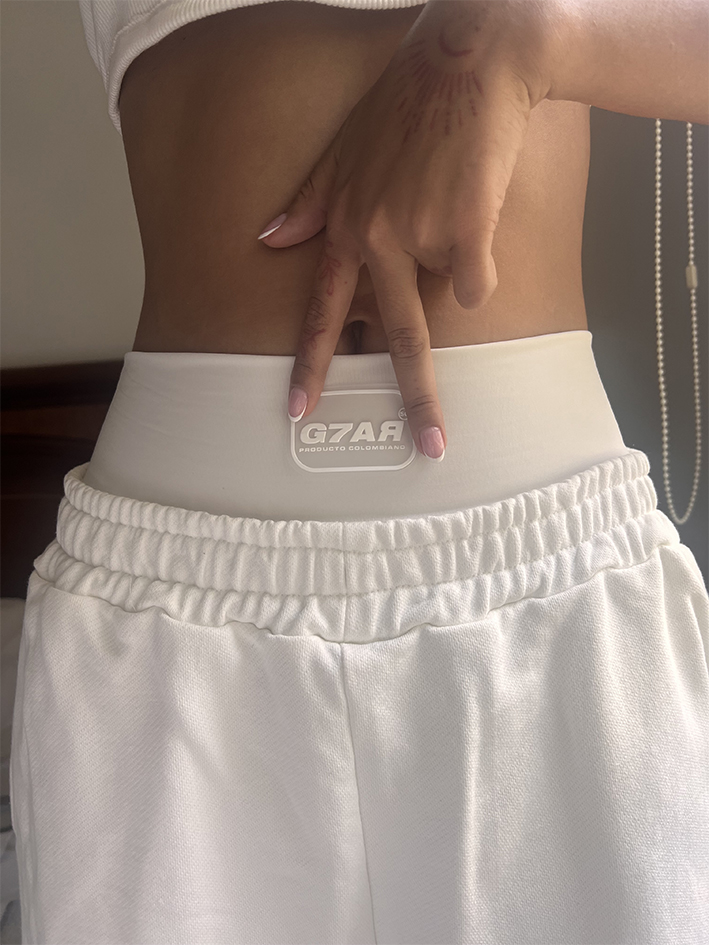
She’s spent most of the intervening 20 years outside the island, only moving back last year (she’s based in Protaras, with occasional trips to Engomi) – her new “chapter” focused on “expanding Stefficrown and my brand”, a leisurewear brand called Gear using only organic textiles. “I always design my own clothes,” she adds in passing.
She is indeed wearing Gear (charcoal-grey top) when we meet – initially at the house in Engomi but we soon relocate to Mint, the restaurant bar at the Hilton where she talks about her 38 years while demolishing lobster tagliatelle, a Greek salad, and a cappuccino with ‘Smile You’re Beautiful’ spelled out on its layer of foam. She’s famished; she’s been in meetings all morning.
Steffi’s half-Colombian, and it shows – in her openness and casual flamboyance, the badass motto (‘Defy & Prosper’) tattooed under her chin, her entirely un-Cypriot lack of small-country syndrome and pious modesty. “You need balls to do the shit I’ve done,” she affirms at one point. “Not everybody has them.”
Which part is she talking about?
“All of it!”
She’s not bragging, just being real. Our conversation is peppered with lines like “That chapter was crrrrrazy!” and “So we’re literally having breakfast at the Ritz-Carlton…” – but it doesn’t come across as showing off, more a confident woman looking back on a rich, varied life.
Steffi was always artistic – even in her teens, something of a wild child but also an aspiring actress obsessed with Angelina Jolie. She won a scholarship to a UK drama school, meanwhile showing talent in fashion design, music, writing and poetry – yet her father wanted her to study Business, the deadlock broken by a compromise choice of Media and Anthropology at Goldsmiths in London.
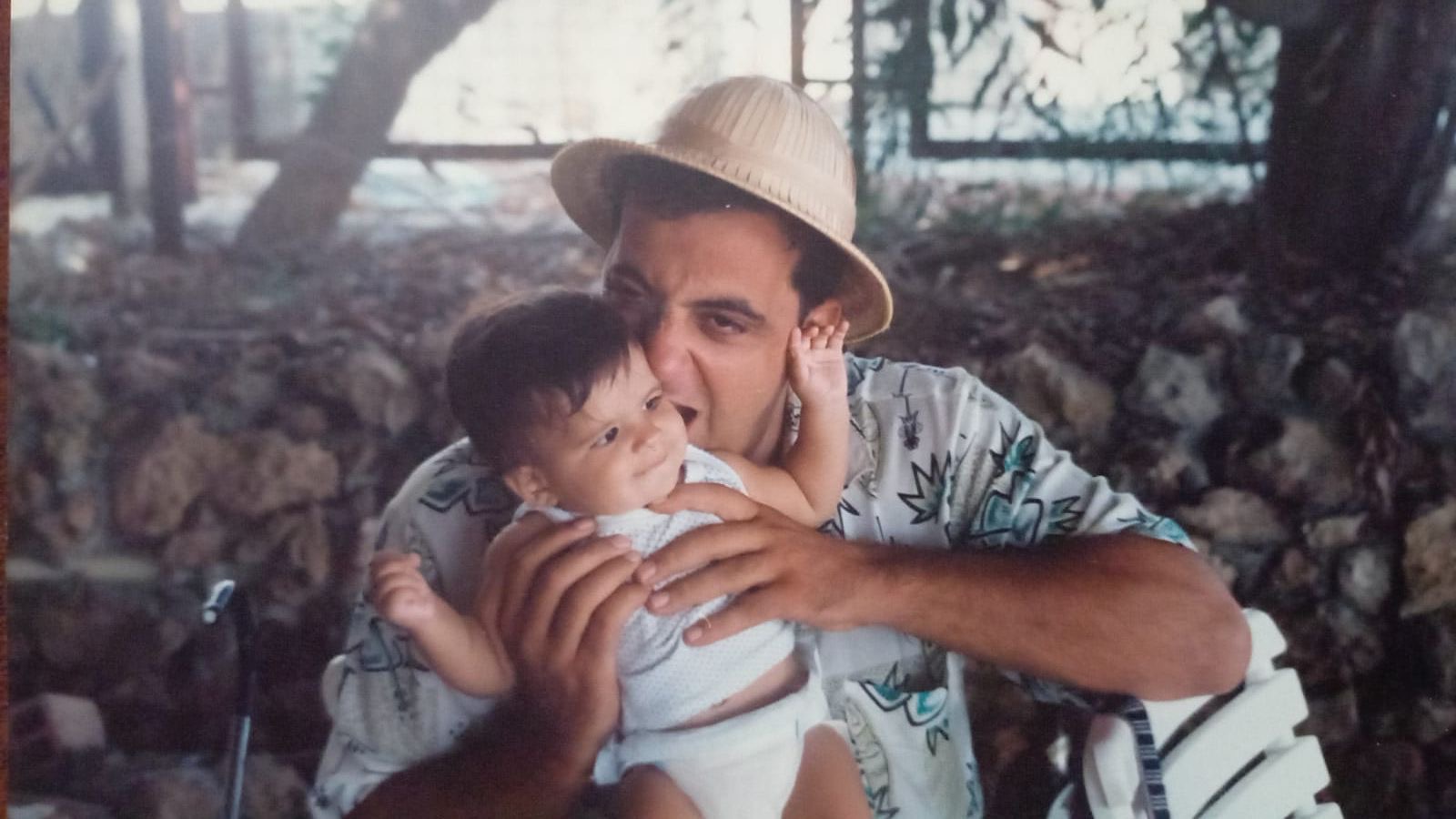
Dad, who passed away in 2022, should’ve known better, being himself a remarkable person – a self-made businessman with a fearless streak and a genius for numbers who came to Cyprus from New York at 40, having met and married Alexandra, a Colombian dancer travelling through Europe who subsequently opened the first salsa school on the island.
They had three girls, Stephania being the oldest and perhaps the one who was most like her father (they even looked alike). “Dad was like the king, we were like his harem,” she recalls affectionately, adding: “He taught us a lot”.
Steffi comes from money – albeit self-made money – and makes no secret of that fact. One time in her teens, in the house in Engomi, “it was so hot, it was in the summer, we were all in the pool and we were so hot. And he brought a truck full of ice, and had the truck tip the ice into the pool – and then we opened champagne, Bollinger, that was his favourite champagne. And he always said: ‘Life is to enjoy, and don’t take things too seriously’.”
Steffi comes from money – yet a few years later she was doing hip-hop ‘battles’ on the streets of Cali (one of the most dangerous cities in Colombia, hence the world) and, far from not taking things too seriously, was so laser-focused on her music career she had “no personal life, no relationships”. A good start only takes you so far: “You have to hustle,” she says firmly.

Goldsmiths was, predictably, a non-starter. She lasted a year – then secretly applied, and was accepted, to the Lee Strasberg Theatre Institute (Angelina Jolie’s old school) in New York.
The ensuing two years were the aforementioned ‘crrrrrazy’ chapter, she and her equally underage besties becoming “part of the scene”, as she puts it, invited to afterparties and “realising that the people you admire are basically all crackheads,” she says wryly. On one such night, she also got arrested for public indecency (peeing in the street), an infraction that earned her a reprimand from the US embassy in Cyprus years later, “when I had to get a visa again to do the Golden Globes”.
Wait, what? The Golden Globes? That’s a story in itself – and involves Mad Dame, a short film she made in Cyprus (inspired by her New York escapades) after graduation.
The film was accepted into Cannes, which would be the highlight of the story for most people – but Steffi had more going on, having just been asked to “design a collection” by the owner of Ammos club in Larnaca, working with a well-known textile designer from London, which in turn was why she went to Cannes with business cards for her new clothing brand: “That’s how ‘Stefficrown’ was born”.
There they were, she and her kid sisters (she’d brought them along for a little taste of glamour), “literally having breakfast at the Ritz-Carlton” – and a French lady at the next table was dropping some pretty big names. The woman got up to go. Steffi, prompted by taunts of “You’re too chicken!” from the girls, ran after her and gave her a business card.
The woman was sniffy, but said she’d look her up. Steffi forgot about it – then, a month or two later, received an email from her Cannes friend, “and she’s like: ‘Would you like to style the nominees for the Golden Globes of 2012?’.” So she did. The ceremony was on January 15, two weeks before her 24th birthday.
“I always had confidence,” she muses, when I compliment her on having achieved so much, so young. “And this is something I’d like to say to any new artist reading this interview, any young artist that has dreams: Just do! Create!
“Because when you’re younger – especially now, with social media – you always doubt, like ‘Oh my stuff’s not original enough’… And it’s like, we are all original. We’re all influenced by each other, obviously, cause we are all connected – but anything you do is original, because it’s an imprint of your soul.”
That said, you need something more; “You need balls,” like she says. Hard to say what that means, exactly – but maybe it’s about following your heart, and being ready to impose your will when the world tries to lead you in a different direction.
Steffi did go to Hollywood, as a clothes designer, and spent a year in LA (her roommate was Pom Klementieff, now better known as ‘Mantis’ in MCU superhero movies) – but her heart was set on being a performer, and besides “Hollywood is very soulless”. It was (and is) about connections, who you know – but “I’m more about real connections. I’m more about… I dunno, expressions from the heart”.
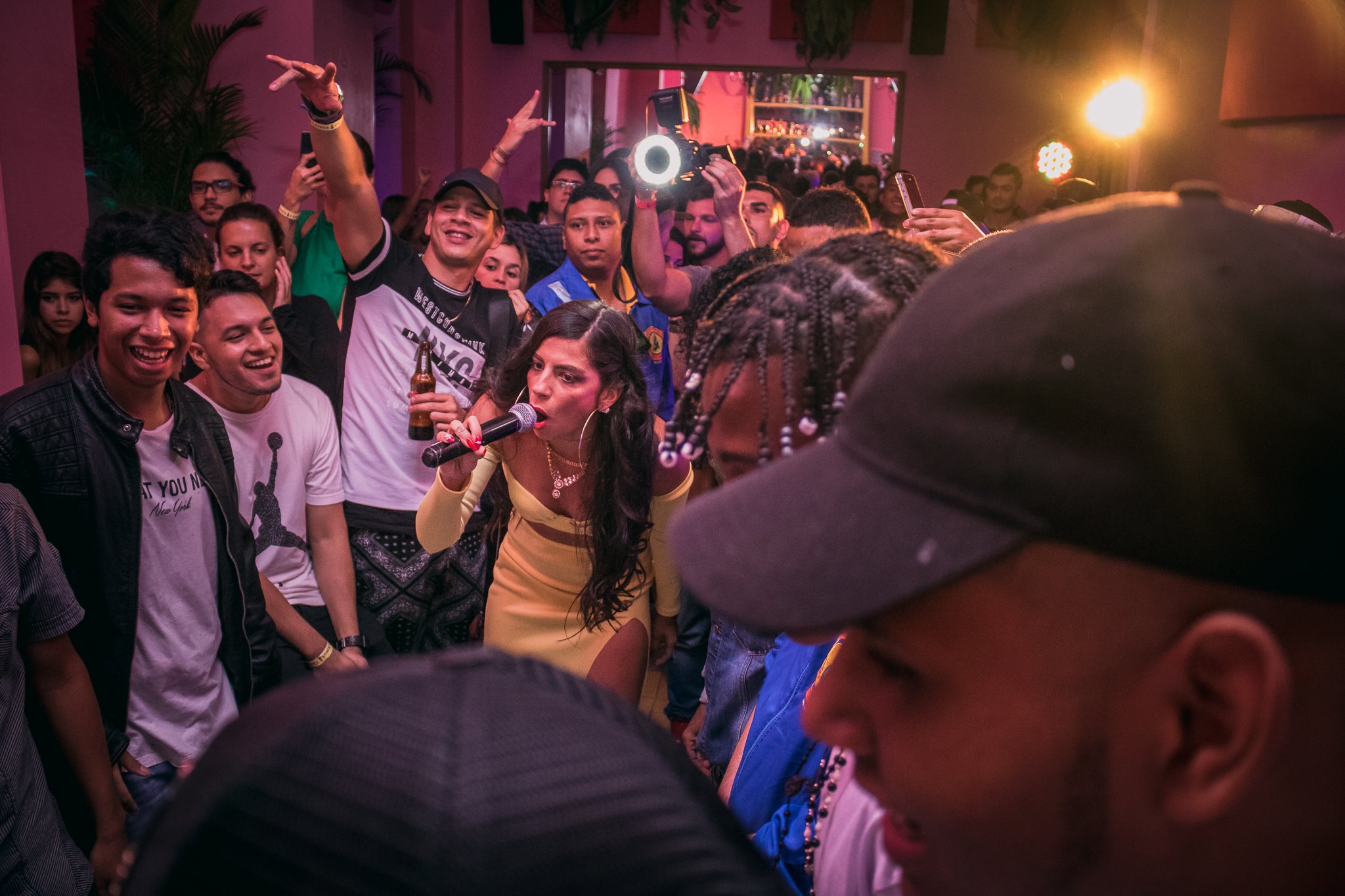
Her mum suggested Christmas together in Colombia. They went – and, much to Mum’s surprise, Steffi stayed, gradually segueing from fashion to music. “Eventually I became a singer and rapper” – still what she calls “an indie artist”, not a superstar, but popular and influential, with her own record label, “which is why I became titled by the press ‘the queen of Colombian trap’.”
Among her fans was the director of Fake Profile, who knew her from Cali – and knew her song, ‘Pr0Bl3Mb0I’. “Viewers loved it so much that it became organically viral on TikTok,” she explains, “so many women made TikToks with the chorus of the song”. It’s “a song about men who don’t know what they want”. Talk about relatable.
Absolutely; but it also begs a question. Having ‘balls’ is (of course) an explicitly masculine trait – and following your heart can also entail other masculine traits, like hardness and ruthlessness.
Steffi had her own ‘man who didn’t know what he wanted’, a Colombian guy who was her boyfriend for a year (still her longest-ever relationship), encouraged her hugely in pursuing music – but, in the end, couldn’t answer the question ‘What comes next?’.
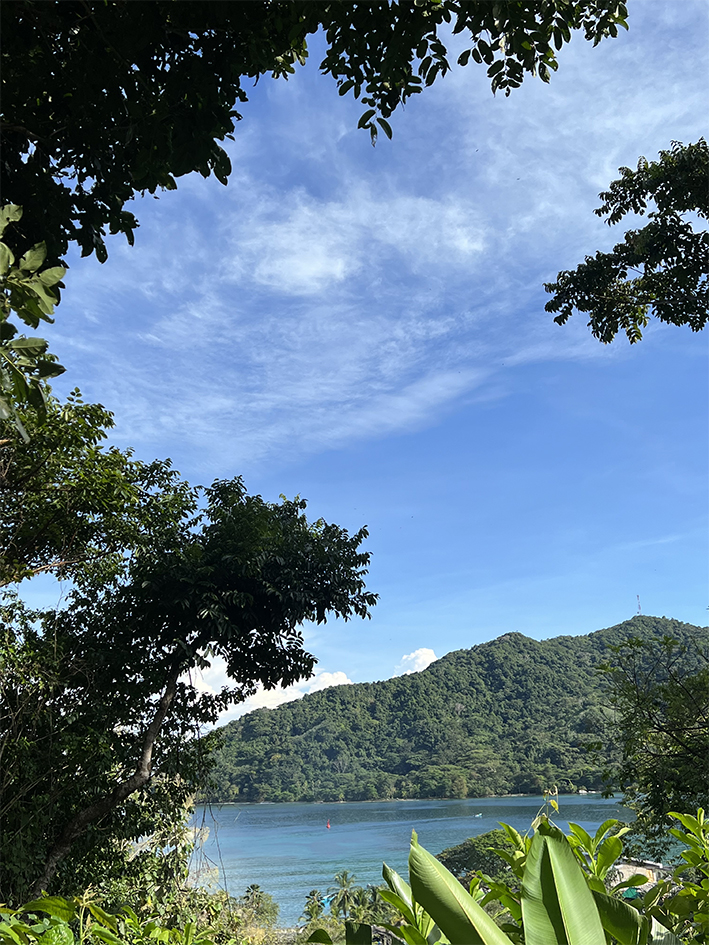
“I was in love with him when I left him,” she recalls soberly, “but I knew… If this is not going anywhere, and you’re – like, holding me back, then I just have to go and move on. That was one of the hardest things I ever did.”
Stephania is warm but strong, a powerful spirit. She was ballsy – to put it mildly – when she bought land in a place called Sapzurro, in the dangerous, remote Darien Gap near the border with Panama (“My mum was like, ‘Are you insane?’”) then stood up to an agent who tried to cheat her, exposing him publicly. “When you want things in life, you have to fight for them,” she says – but adds: “I slept with a machete next to my bed for a couple of months”.
She was confident (“I had blind confidence!”) when she put on her gown and crashed the Golden Globe afterparties, radiating such charisma that security let her pass unchallenged. ‘Defy and Prosper’, indeed – or, as she puts it: “Luck is for the daring”.
And now? Well, now she’s back in Cyprus… Anti-climax much? “I’ll be honest, I really missed Cyprus,” she shrugs, shocking the ghost of her 18-year-old self. “I never thought I’d miss Cyprus so much… I feel safe in our culture.” Colombia is high-energy, and can be chaotic – which is great in your 20s (she still plans to go back regularly), but a bit exhausting when you’re pushing 40.
Clearly, I’ve caught Stefficrown at a very specific point in her life. “You know what? I never even cared about getting married!” she laughs when I ask about biological clocks and broody feelings. “All the people that know me, everyone always knew – Steffi was the freest spirit. I still am. But something happened to me now that I came back…
“First of all, I’m Greek Orthodox and I really, really love my religion,” she says, a bit surprisingly. (She even goes to church every Sunday.) “And I do want to get married. I do. I want to be married in a traditional Orthodox church – and I do want kids, if God blesses me with a family.” Steffi sighs, toying with the remnants of the tagliatelle. “Now I feel – I feel satisfied with myself, career-wise.”
It’s been a ride, these 38 years. “Fuckin’ tear the door down!” she exclaims at one point, talking of success in general. “If they don’t let you in, tear it down.” But then I also ask about friends – who are her really close friends, her confidants? – and she looks a little sheepish.
“God,” offers Steffi, and laughs. “God, Archangel Michael, the Virgin Mary… I don’t have many friends,” she admits with a light shrug. “I have friends around the world, actually.” Her main confidant was her dad – and they stayed close till the end, when he moved to Colombia for the last five years of his life.
She’s artistic, charismatic – but also persistent, and thick-skinned. “You need thick skin in the music industry.” Our young waitress clears the table and lingers, intrigued, having noticed that Steffi’s being interviewed – but also drawn, I suspect, by her presence, the tangible aura of an uncommon person. “She’s the queen of Colombian trap,” I explain, and the waitress smiles.




Click here to change your cookie preferences