
Brussels calls for urgent approval of new Russia sanctions package
The Economic and Financial Affairs Council (Ecofin), which convened under the Cyprus Presidency on Tuesday, has agreed on a €90 billion loan package for Ukraine to cover the country’s financing needs for 2026 and 2027.
The agreement, reached in cooperation with the European Parliament and the European Commission, provides for the disbursement of funds from the second quarter of 2026.
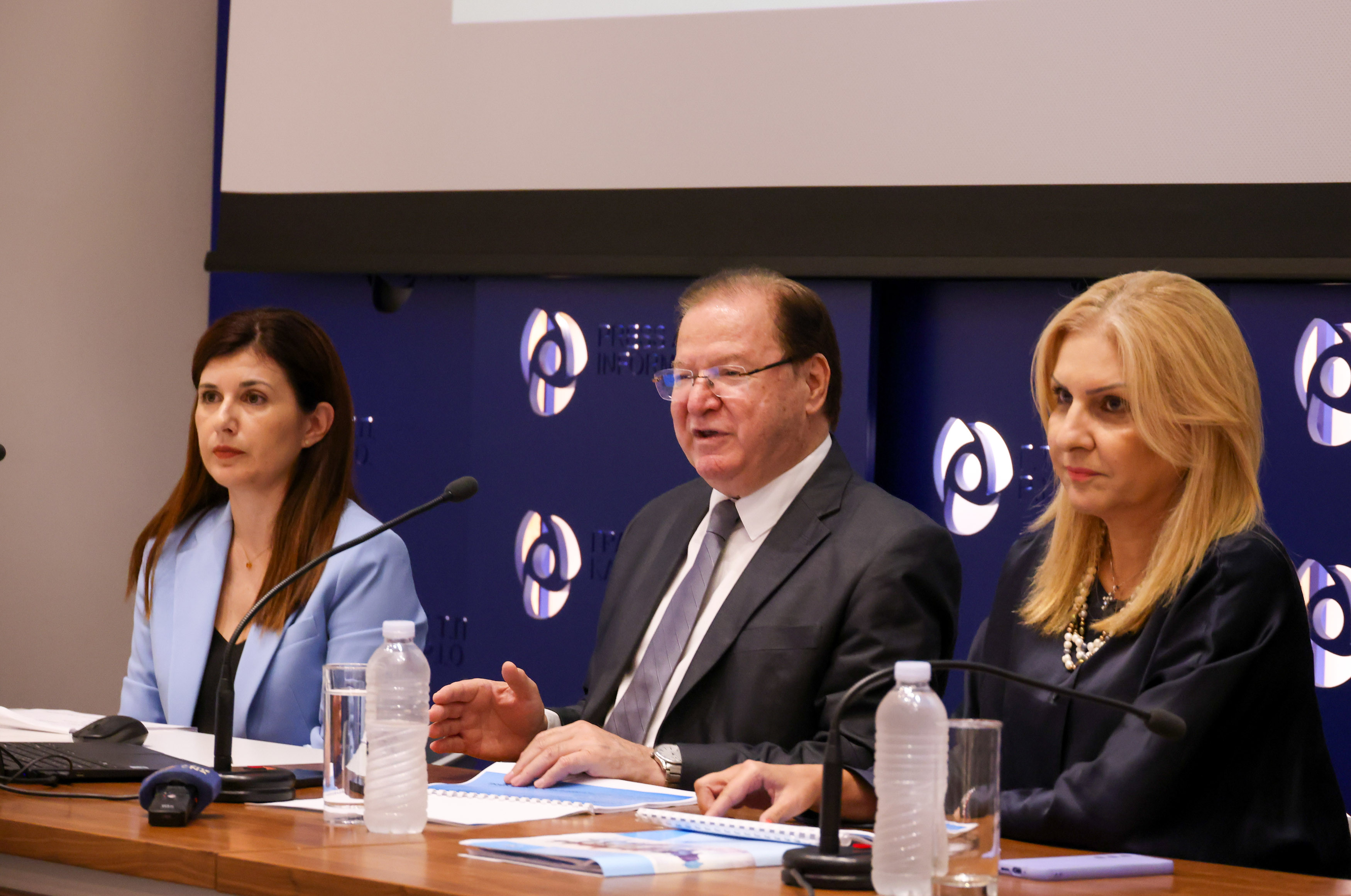
Speaking at a press conference after the meeting, Finance Minister Makis Keravnos said the Cyprus Presidency worked to secure immediate financing for Ukraine, which has been affected by Russian aggression.
Ministers focused their discussion on the economic and financial consequences of the Russian invasion and welcomed the agreement to support Ukraine.
Keravnos also announced that the council approved amendments to Lithuania’s recovery and resilience plan aimed at accelerating its implementation.
He stated that all national recovery and resilience plans of the member states have now been approved, with around €394 billion disbursed under the Recovery and Resilience Facility, corresponding to 68 per cent of the total committed amount under the regulation.
He further stated that, in the context of strengthening defence expenditure, the national escape clause was activated for Austria for a period of four years.
The measure is expected to facilitate the gradual increase of Austria’s defence spending while safeguarding fiscal sustainability.
Keravnos also said that the council adopted eight implementing decisions under the Security Action for Europe instrument, paving the way for the granting of affordable long-term loans by the European Commission.
He added that these decisions will allow participating member states to acquire modern defence equipment and enhance their defence readiness.
The council also updated the EU list of non-cooperative tax jurisdictions, adding Vietnam and the Turks and Caicos Islands while removing Fiji, Samoa and Trinidad and Tobago.
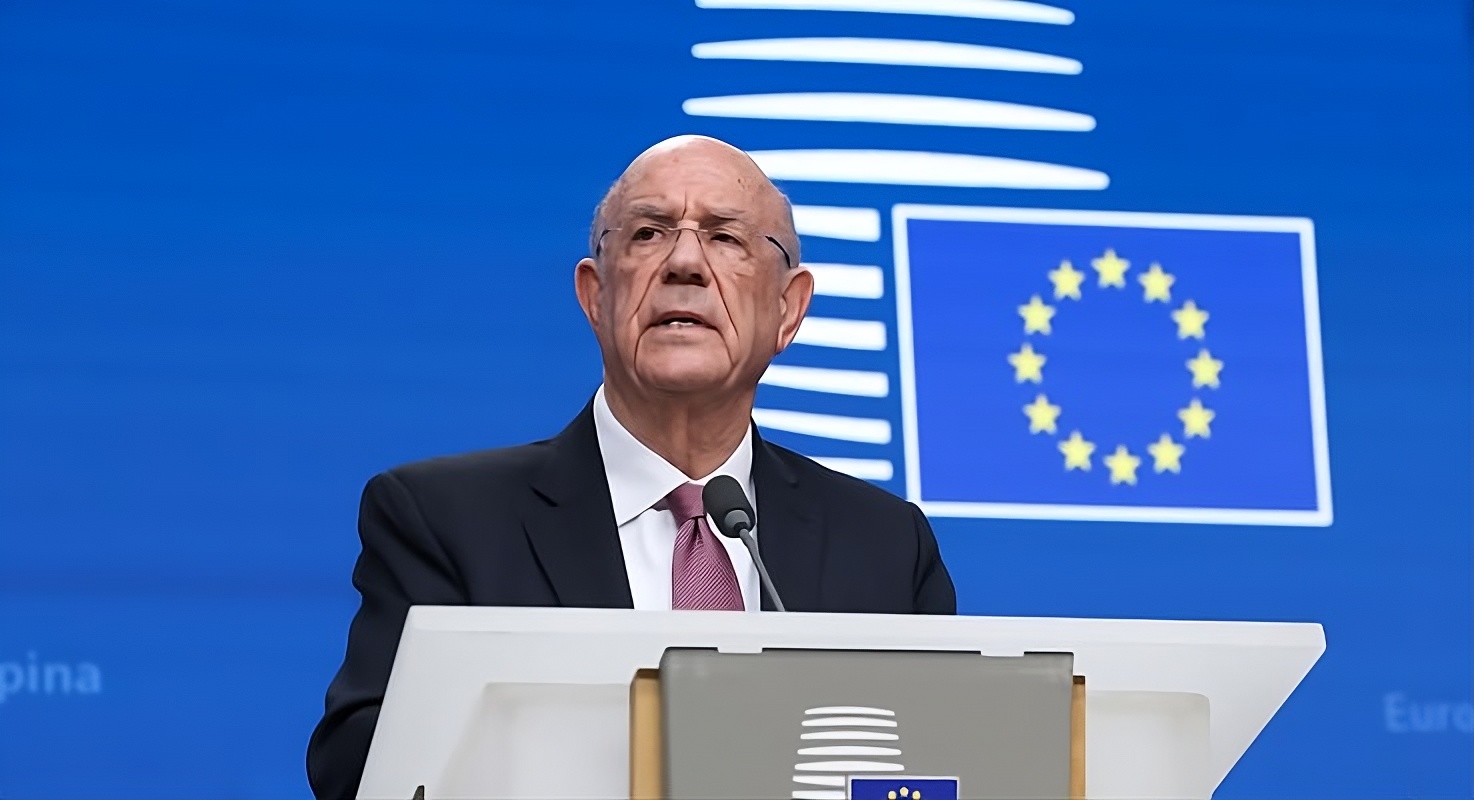
At the same press conference, Economy and Productivity Commissioner Valdis Dombrovskis said that Russia continues violent attacks on energy infrastructure throughout the winter, requiring substantial reinforcement of support for Ukraine.
The commissioner provided an update on the €90 billion loan, stating that following the positive vote in the European Parliament and with the backing of the Cyprus Presidency, the aim is to complete the legislative process within the next week.
He added that work is ongoing with the Ukrainian authorities to facilitate rapid disbursement once the procedure is finalised.
Dombrovskis also mentioned that alongside support for Ukraine, pressure on Russia’s war economy continues.
In this context, he said the commission has proposed a 20th sanctions package targeting energy, financial services and trade, calling on member states to approve it without delay.
He further provided an update on the Recovery and Resilience Facility, confirming that total disbursements have now reached €394 billion.
Dombrovskis stressed that the process is at an advanced stage and reiterated the call on member states to accelerate implementation in view of the August deadline.
In this regard, he welcomed the ratification of amendments to Lithuania’s plan, adding that 25 member states have simplified their plans, reducing the total number of pending milestones and targets by 20 per cent.
The commissioner also reported on the state of the SAFE defence investment instrument, stating that the commission positively assessed defence investment plans of 16 member states and that nearly €113 billion in SAFE loans have been allocated.
What is more, he pointed out that assessments for the remaining three plans will be presented shortly.
Dombrovskis underlined that member states must take into account the fiscal impact of absorbing SAFE loans.
For countries that have not activated the national escape clause, expenditure financed by SAFE falls within the recommended path of net expenditure growth.
For those that have activated the clause, SAFE-related expenditure qualifies for flexibility limited to a maximum of 1.5 per cent of GDP until the end of 2028, he said.
He added that the commission will closely monitor implementation.
Furthermore, Dombrovskis also welcomed the council’s activation of the national escape clause for Austria to facilitate its transition to a higher level of defence spending.




Click here to change your cookie preferences