
Businesses and individuals alike have shown a great deal of interest in solar parks and electrical storage systems, according to data heard in parliament on Tuesday.
The data was provided as background for an ongoing discussion of a bill tabled by opposition party Akel aiming to curb the granting of permits for commercial solar parks on farmland.
Its stated bid is to protect arable land as well as conservation areas from the encroachment of these facilities.
The matter has been discussed on and off in parliament for years, with farmers from the Famagusta and Paphos districts repeatedly complaining that solar parks have sprung up everywhere, squeezing out agriculturalists and wiping out pastures.
The government – the energy ministry – says it agrees in principle with Akel’s proposal. Its only objection is a procedural one – namely that Akel’s bill seeks to amend a law governing the promotion of renewable energy sources.
In 2022, Cyprus enacted the Promotion and Encouragement of the Use of Renewable Energy Sources Law to align with EU directives – specifically targeting a 42.5 per cent share of renewables in gross final consumption by 2030. The legislation supports solar, wind and other renewables, offering incentives like feed-in tariffs and grants to reduce reliance on imported fuels.
The government says that since this is a harmonising law, which does not provide for constraints on the use of RES, it would be inappropriate to amend it with Akel’s proposal. Rather, it suggests that Akel’s bill be used to amend the Town Planning law.
The information provided to parliament shows that the number of applications for solar parks and electrical storage installations comes to 266.
Of these, 221 applications concern solar parks, which combined would have an installed capacity of 1,092 megawatts (MW).
Data valid as of October 2025 shows that actual total installed capacity of RES comes to 1,160 MW.
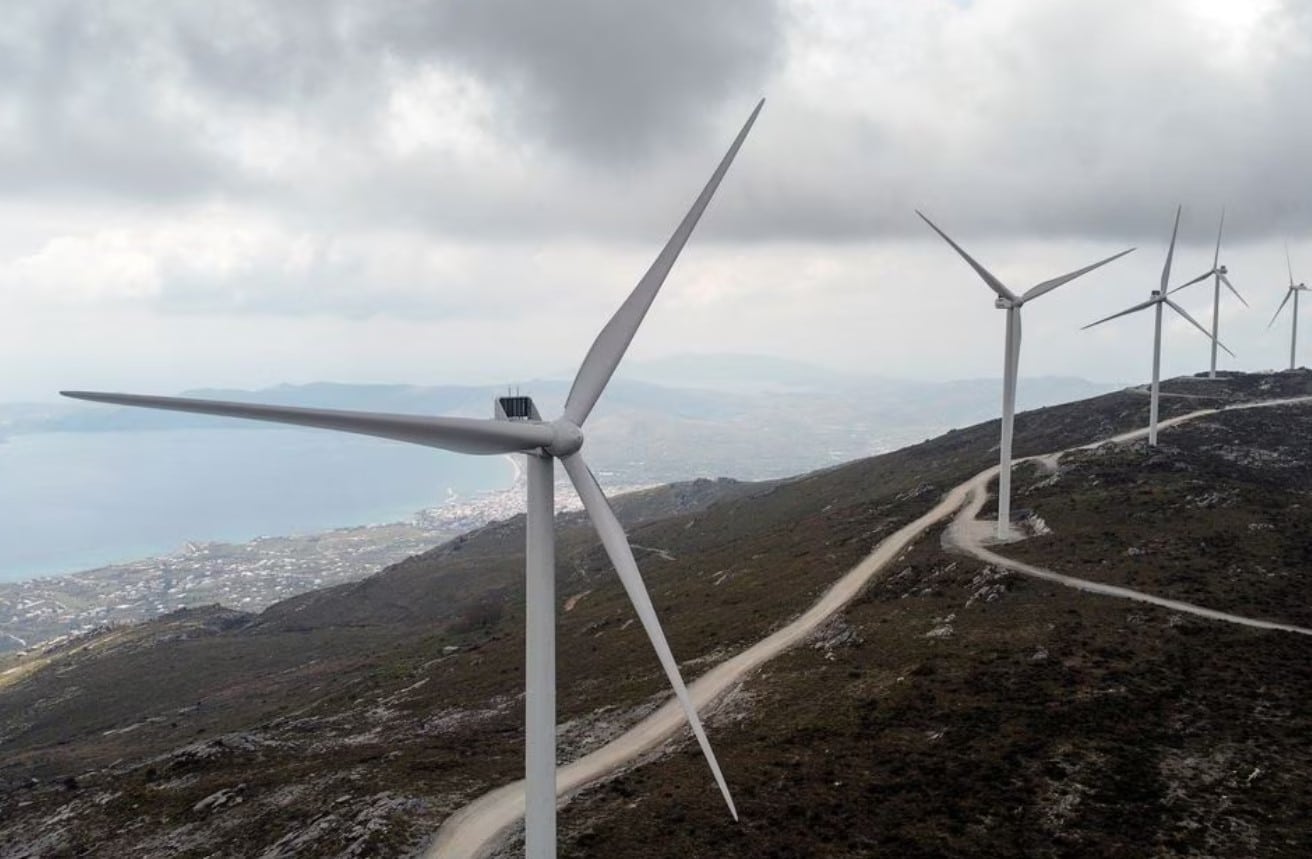
Broken down, these consist of 158 MW from wind farms, 990 MW from solar parks, and 12 MW from biomass.
The government noted that, regarding Cyprus’ national energy and climate plan for 2030, the contribution of renewables is counted as that power that is actually fed into the grid – rather than total installed capacity.
Under Akel’s bill, the granting of permits for solar parks would be prohibited in five cases.
First, where the land is of ‘a high natural value’. Secondly, on arable or permanently irrigated land. Thirdly, on land designated as irrigated, or areas irrigated under a government project. Fourthly, on land lying within an environmental protection zone.
And lastly, on land inside an area designated as Natura 2000.
At the same time, according to the bill’s sponsors, no restrictions will be placed on installing photovoltaic systems by farmers for their own use.




Click here to change your cookie preferences