
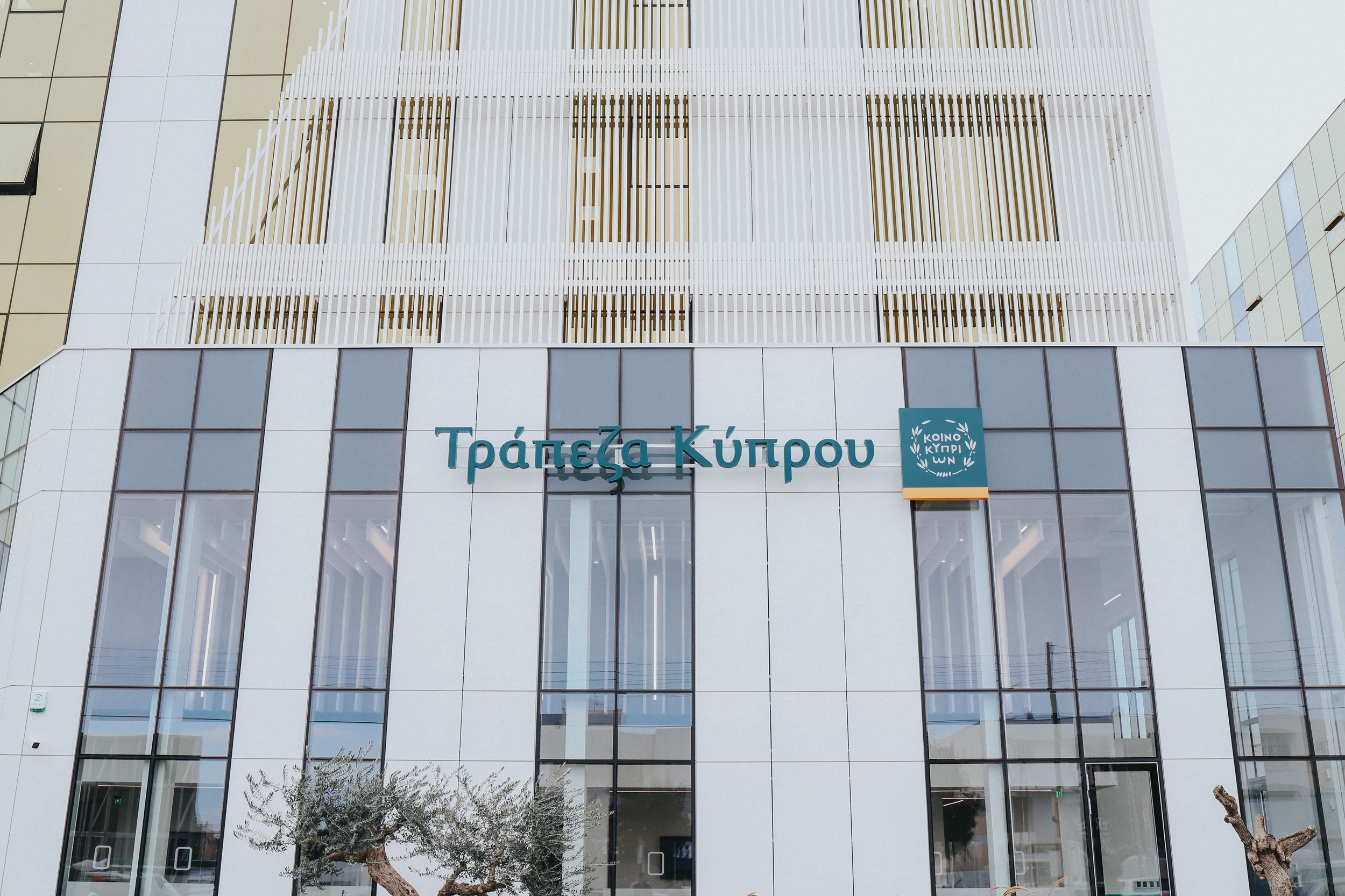
Bank of Cyprus to pay €305m in cash dividends to shareholders
The Bank of Cyprus (BoC) on Wednesday released its financial results for 2025, reporting a profit after tax of €481 million and increased lending activity.
Specifically, the bank achieved record new lending of €3 billion, marking an increase of 23 per cent year-on-year.
“2025 was another strong year for Bank of Cyprus, demonstrated by our financial and operational performance,” said Bank of Cyprus CEO Panicos Nicolaou.
“Our performance was further supported by cost efficiency, robust liquidity and healthy asset quality,” he added.
According to the bank’s financial results, gross performing loans reached €10.9 bn, up 8 per cent year-on-year.
The bank’s predominantly retail deposit base rose to €22.2 bn, also up 8 per cent year-on-year.
Furthermore, profit after tax amounted to €481m for the full year, with €128m generated in the fourth quarter of 2025.
“Gross performing loans and our predominantly retail deposits both increased by 8 per cent year-on-year to €10.9 bn and €22.2 bn, respectively,” Nicolaou stated.
“We exceeded our target of circa 4 per cent loan growth for 2025 as healthy domestic credit activity was complemented by the continued growth in our international loan book,” he added.
In terms of the bank’s lending activity, Nicolaou stated that the growth was “driven mainly by corporate and international demand“.
Return on tangible equity stood at 18.6 per cent for the financial year 2025, while basic earnings per share totalled €1.10.
The cost to income ratio remained low at 37 per cent, reflecting continued cost discipline.
The balance sheet remained liquid and resilient, with the non-performing exposures ratio reduced to 1.2 per cent.
Cost of risk remained low at 33 basis points, the bank reported. The liquidity coverage ratio stood at 321 per cent, supported by surplus liquidity of €9.2 bn.
What is more, the bank reported a CET1 ratio of 21.0 per cent and a total capital ratio of 25.9 per cent.
Organic capital generation reached 436 basis points during the year. At the same time, tangible book value per share increased by 6 per cent year-on-year to €6.10.
Total distribution for the year reflected a 70 per cent payout ratio, amounting to €305m in cash dividends.
“In line with our ongoing commitment to providing sustainable shareholder returns, we are delivering on our promises and today we are pleased to propose a final dividend of €0.50 per ordinary share bringing the total distribution for FY2025 to €305m,” said Nicolaou.
“The total distribution reflects a 70 per cent payout ratio, at the top-end of our 2025 distribution policy, and corresponds to €0.701 per ordinary share,” he added.
“This year’s distribution will be fully in cash, representing a significant increase in both the payout ratio and total quantum compared to the previous year,” he stated.
“In total,” the Bank of Cyprus CEO continued, “we have now delivered almost €550m of cumulative distributions over the last two financial years, demonstrating our track record of increasing and sustainable shareholder value creation.”
“As the leading financial services group in Cyprus, serving three quarters of the population, we operate in a resilient economy whose growth continues to outpace the Eurozone average,” Nicolaou said.
Citing the latest projections from the Finance Ministry, Nicolaou pointed out that Cyprus is expected to see its GDP grow by 3.1 per cent in 2026, in real terms, compared to 1.2 per cent for the Eurozone.
He also revealed that the bank will host an investor update on March 3, 2026, where it will outline its strategic priorities and new financial targets for the years ahead.
“We remain committed to supporting our customers and the broader Cypriot economy, while maintaining an unparalleled focus on continuing to deliver attractive returns to our shareholders,” Nicolaou stated.
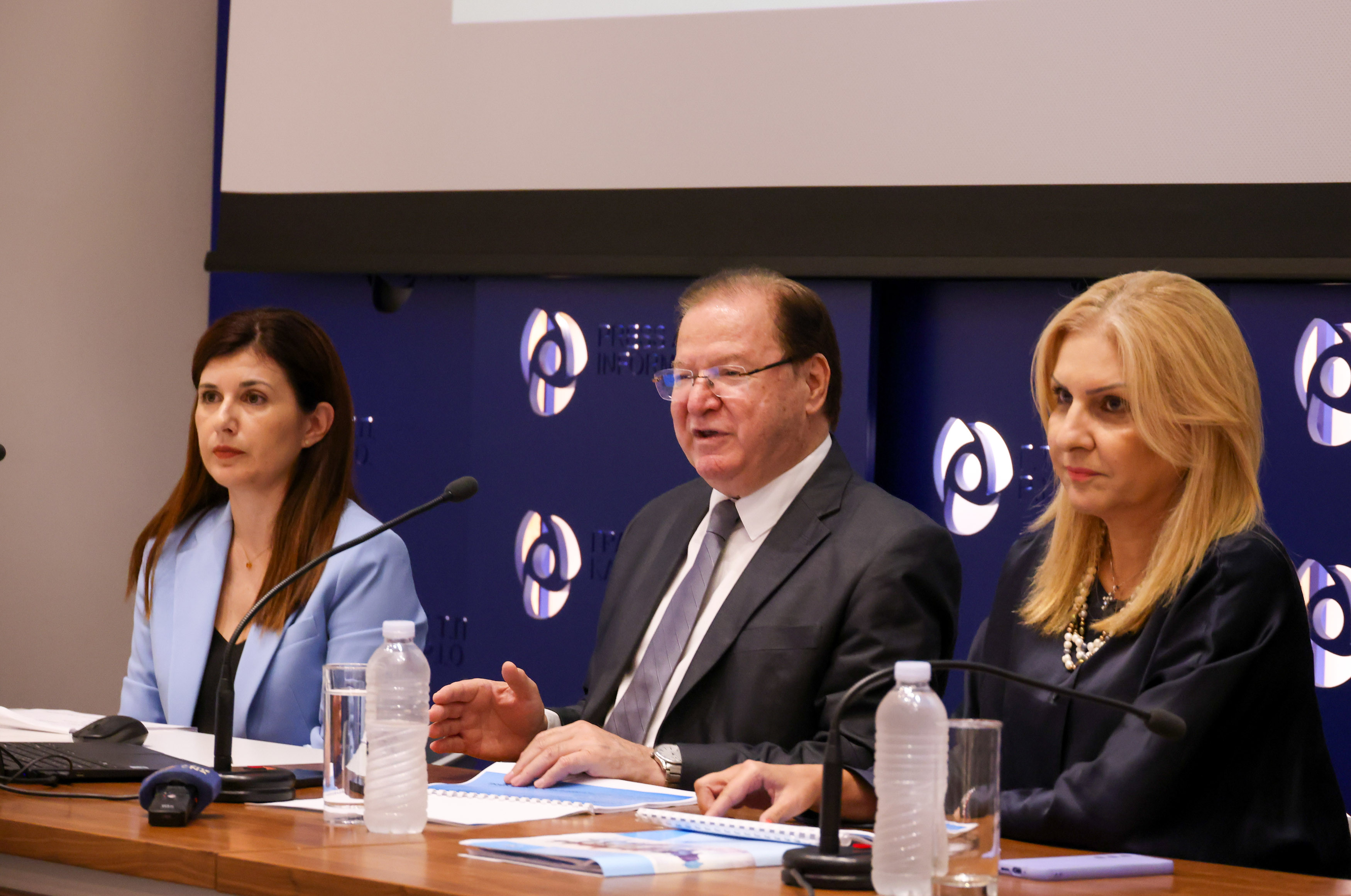
Responding to questions from the media, Nicolaou said in relation to the digital euro that the bank has had a working group over the past two years dealing with this matter “so that it is also technically ready”.
“I believe it will happen because it is Europe’s strategic choice to have an alternative means of payment,” he added.
Asked whether the bank is interested in acquiring a portfolio of non-performing loans from credit-acquiring companies, Nicolaou said that “great caution” is required, adding that they must know the characteristics of the fund and of the borrower.
“I consider this not to be an easy undertaking,” he stated, explaining that the definition of non-performing loans differs between credit-acquiring companies and banks.
He said that “the money we lend is not the bank’s but our depositors’” and that “we must be careful what we do”.
“Do we decide at will what constitutes profit and what constitutes excess profit?” he asked.
Responding to a question about the discussion on taxing bank profits, Nicolaou said that the discussions taking place “ignore the fact that because banks have increased profits they pay more corporate tax”.
“The second thing we ignore is that banks have been paying a special levy on deposits since 2012,” he said.
“We also ignore that banks had a multi-year period of losses from 2012 to 2022 and that bank shareholders, especially those of the Bank of Cyprus from 2014 when they had to contribute €1bn, due to the solution given in 2013 with the transfer of all Laiki Bank loans and the transfer of €9bn of Laiki’s funding through ELA, received not a cent until 2022,” he added.
“Because shareholders will receive some dividend in 2024 and 2025 we call this excess profit and must tax it a third time,” he said, questioning whether 2022 is the reference year.
Regarding which countries have taxed their banks, Nicolaou said these are the Czech Republic, Lithuania, Latvia, Slovakia, Hungary and Romania and that “none of them has a special levy and none of them went through a banking confidence crisis”.
“Have you seen any other large, serious country with a top AAA rating tax its banks?” he asked, adding that Greece did not tax its banks either and “does not have a special levy”.
Nicolaou questioned “whether we want to send the message that we decide at will what is profit, what is excess profit and that we should tax some foreigners who invested money in the country” and stressed that “the most important thing is the country’s credibility”.
“When you are small you must be credible,” he said, adding that the European Central Bank, the International Monetary Fund, the Central Bank of Cyprus and the Finance Ministry do not agree with taxing banks.
Referring to existing non-performing loans in the banking system, Nicolaou said that “a solution must be found for people, either through a government initiative or through any other initiative, and I believe the banks are ready to contribute to this”.
“We cannot, 14 years later, have €20bn in non-performing loans,” he said, calling for the issue to be resolved in order to help people.
The Bank of Cyprus CEO also said that the insurance sector is of interest to the bank.
Asked to comment on the possible change in the composition of Cyprus’ parliament following the upcoming elections, Nicolaou said that “political risk is the number one factor anyone examines when investing in a country”.
Separately, the Bank of Cyprus Holdings Public Limited Company and the Bank of Cyprus Public Company Limited announced that their boards of directors approved changes to board committee compositions and appointed a new vice chairman, with effect from March 1, 2026.
The decisions were taken at meetings of the boards held on Wednesday, February 18, 2026.
The announcement stated that changes were approved to the composition of the audit committee.
As of March 1, 2026, the audit committee will comprise Irene Psaltis as chair, Monique Hemerijck, Adrian Lewis, George Syrichas and Stuart Birrell.
The boards also approved changes to the composition of the human resources and remuneration committee.
From March 1, 2026, the human resources and remuneration committee will consist of Adrian Lewis as chair, Irene Psaltis and Andreas Kythreotis.
The announcement clarified that the composition of the remaining board committees will remain unchanged.
The risk management committee will continue to comprise Monique Hemerijck as chair, Stuart Birrell, Christian Hansmeyer and Andreas Kythreotis.
The nomination and corporate governance committee will continue under the chairmanship of Takis Arapoglou, with Lyn Grobler, Christian Hansmeyer and George Syrichas as members.
The technology committee will remain chaired by Lyn Grobler, with Adrian Lewis and Monique Hemerijck as members.
In addition to the committee changes, the boards approved the appointment of existing board member George Syrichas as vice chairman of the board of directors. He will succeed Lyn Grobler in the position.
The changes to the committee compositions and the appointment of the new vice chairman will take effect from March 1, 2026.




Click here to change your cookie preferences