
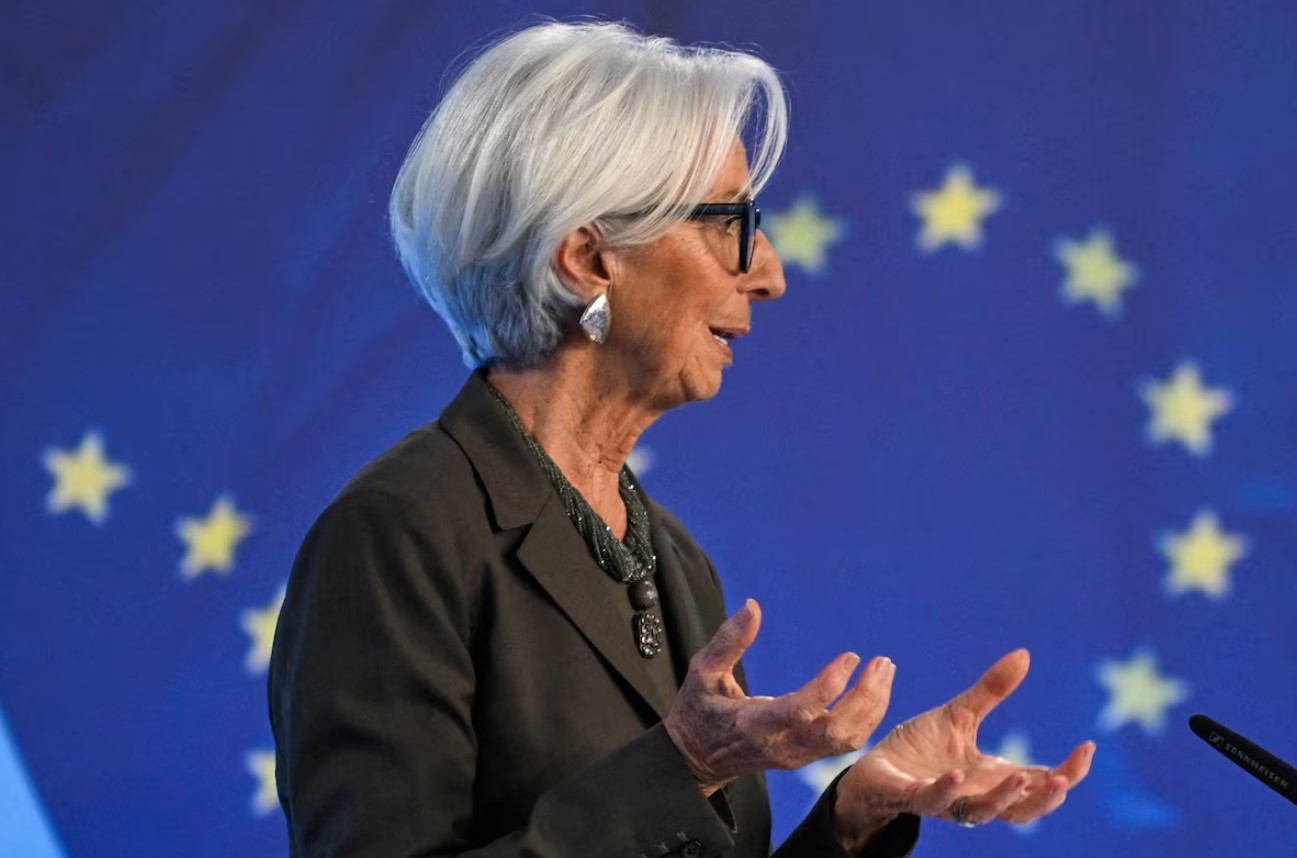
European Central Bank President Christine Lagarde has told colleagues she remains focussed on her job and she would tell them first if she was about to step down, a message they took to mean she was not about to resign, four sources told Reuters.
The Financial Times reported on Wednesday that Lagarde planned to leave her job early ahead of next year’s French presidential election, a vote which the eurosceptic far-right could win.
An early resignation aimed at giving outgoing French leader Emmanuel Macron a say in picking the new ECB president would rekindle a debate about central bank independence from politics, a principle which has come under threat in the United States from President Donald Trump’s attack on the Federal Reserve.
Lagarde sent a private message to fellow policymakers later on Wednesday to reassure them that she was still concentrating on her role of leading Europe’s most important financial institution and that they would hear it from her, rather than the press, if she wanted to step down, the sources said.
Recipients of the message said this indicated that Lagarde did not want to leave the ECB immediately but she did not firmly close the door to such a step either.
An ECB spokesperson declined to comment.
Some policymakers said they were surprised that speculation about Lagarde’s future should emerge already, with more than a year to go until the French elections in the spring of 2027 and the end of Lagarde’s term in October of next year.
ECB board member Piero Cipollone said on Thursday there was nothing to suggest Lagarde was about to leave, emphasising her work on longer-term projects such as the European Union’s Savings and Investment Union and new liquidity lines.
“It doesn’t look at all like the behaviour of someone who’s packing their suitcases,” he told an Italian Parliament hearing.
Separately, ECB Vice-President Luis de Guindos, whose own term runs out in three months time, said Lagarde was completely focussed on her job and would remain a “magnificent president for as long as she is there”.
CENTRAL BANK INDEPENDENCE
Bank of France Governor Francois Villeroy de Galhau announced plans to step down last week, in a move that gives Macron a chance to pick the next French central bank chief.
Speaking privately, ECB policymakers said Villeroy’s move and the Lagarde message indicated a French desire to ensure competent, independent central bankers would be chosen regardless of who wins the French elections.
The far-right Rassemblement National (RN) has condemned the moves as anti-democratic.
The French president picks the country’s central bank governor and, as the head of the euro zone’s second largest economy, plays an important role in wider negotiations to select the head of the ECB.
Polls show either far-right leader Marine Le Pen or her protege Jordan Bardella could win the French presidency.
While the RN has long dropped a call for France to leave the euro, the party is still seen as something of an unknown quantity in central banking circles.
Still, some sources said a decision by Lagarde to resign early to deprive Macron’s successor of a say in who should lead the ECB would itself raise questions about her independence from politics.
Private-sector economists shared this concern. UniCredit said EU leaders and the ECB should proceed “with great care, so as not to endanger the perceived independence of the central bank”.





Click here to change your cookie preferences