
Cyprus should stick with Europe and tread carefully with Trump
At the time of writing, the first meeting of President Donald Trump’s new Board of Peace has not yet concluded, so I cannot comment on its outcome. As I argued last week, the Cyprus government faced a difficult decision: whether to accept President Trump’s invitation to join the board.
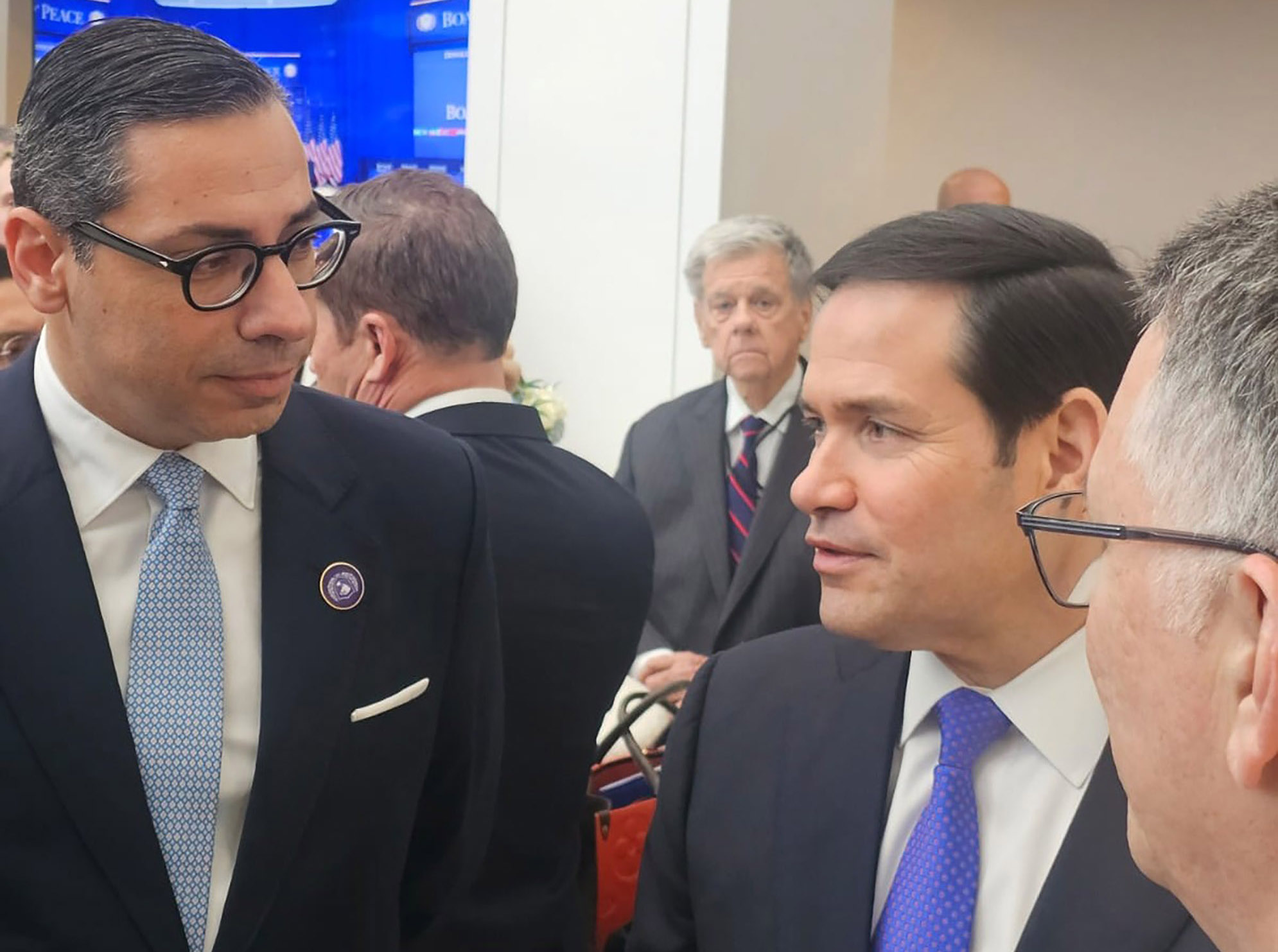
In the event, President Christodoulides displayed his diplomatic skills by crafting a compromise solution. Cyprus would not become a member of the board but would instead send a representative as an “observer” to its first meeting in Washington. Thankfully, Cyprus was not alone in seeking this escape route. Italy, Greece and Romania adopted a similar position, each for its own reasons.
Italy’s Prime Minister, Giorgia Meloni, is widely seen as ideologically close to Trump, a proximity long feared as a potential source of division within Europe. Greece, on the other hand, came under intense pressure after Prime Minister Kyriakos Mitsotakis appeared alongside the US ambassador to Greece, Kimberly Guilfoyle, on February 16 to sign a much-publicised agreement with Chevron to exploit gas reserves in the Aegean as part of a Greek-US venture. Romania, meanwhile, was eager to bolster its credentials following a turbulent election period last year, which involved significant US involvement against the eventual winner, President Nicusor Dan.
Cyprus’ motivation to attend was less clear. I might have been reassured that this was simply an attempt to avoid antagonising Trump were it not for Foreign Minister Constantinos Kombos’ interview with the Washington-based Breitbart News on February 9. Not only is Breitbart headed by Steve Bannon, a figure notorious for his extreme right-wing views and hostility towards Europe, but the tone of the interview itself echoed positions often associated with Hungary’s Prime Minister, Viktor Orban, whose efforts to undermine EU unity are well known.
US attempts to drive wedges between European states are becoming increasingly evident. At last week’s Munich Security Conference, Secretary of State Marco Rubio delivered a more conciliatory speech than Vice President JD Vance’s performance there last year. While Rubio avoided the overtly arrogant and dismissive stance adopted by Vance, the underlying message was unmistakable: either align with the MAGA path forward, or US support will not be forthcoming. He underlined this point following the conference by visiting Hungary and Slovakia, the two countries most active in blocking the formation of common EU policies. In Hungary’s case, Rubio was explicit in signalling US support for Orban ahead of elections in April. So much for non-interference in other countries domestic politics. This is the “Donroe doctrine” in action.
Opposed to this stands what might be called the “Carney doctrine”, following Canadian Prime Minister Mark Carney’s speech in Davos, which called for a coalition of the willing to cooperate on trade and, increasingly, on defence. This shift was underlined in Munich when German Chancellor Friedrich Merz spoke openly of discussions with President Emmanuel Macron on extending France’s – and potentially the UK’s – nuclear umbrella to cover not only Germany but Europe more broadly.
As an economist, I cannot resist adding some figures for context. The UK has 120 deployed nuclear warheads out of a total of 225, while France has 280 deployed out of 290 (Bloomberg, citing the Federation of American Scientists). By comparison, China, which remains far behind the United States and Russia in the numbers game, now possesses around 600 nuclear warheads.
The gravity of the situation was further highlighted by a joint letter published in the Guardian on February 15 by the UK and German chiefs of defence staff, Air Chief Marshal Sir Richard Knighton and General Carsten Breuer. They warned that Europe faces mounting risks but stressed that it remains strong enough to withstand them, provided unity and common purpose are maintained.
The stakes, therefore, are rising sharply, and countries are unlikely to retain the luxury of diplomatic ambiguity. A choice will eventually have to be made. Cyprus would do well to remember who its true friends are. I have long argued that many who once tied themselves to the MAGA chariot have belatedly discovered who Trump really is. Chief among them are Elon Musk and Marjorie Taylor Greene, both of whom have since become vocal critics of the US president.
Christodoulides is therefore treading a dangerous path. His much-heralded approach towards the US risks alienating European allies, on whom we depend in all matters. We should not forget that in 2013 – the last time Cyprus chose to ignore EU advice – the result was financial catastrophe.
Nor is the habit of poor decision-making confined to the executive. The Office of the Attorney General came under heavy criticism this week after the cases against Demetris Syllouris, former president of Parliament, and Christakis Giovani, former MP, ended in acquittal. This followed a series of high-profile failures in recent years, including the Thanasis murder case and the British teenager’s rape case.
It appears that the attorney-general’s office pressed ahead with criminal proceedings despite insufficient testimonial evidence. A wiser course might have been to allow the Independent Authority Against Corruption to investigate. Unlike the courts, the authority is not bound by strict procedural constraints, and justice might have been better served even if formal legal processes were avoided.
The moral of the story is that choices matter. Unfortunately, Cyprus does not have an impressive track record in making them.





Click here to change your cookie preferences