
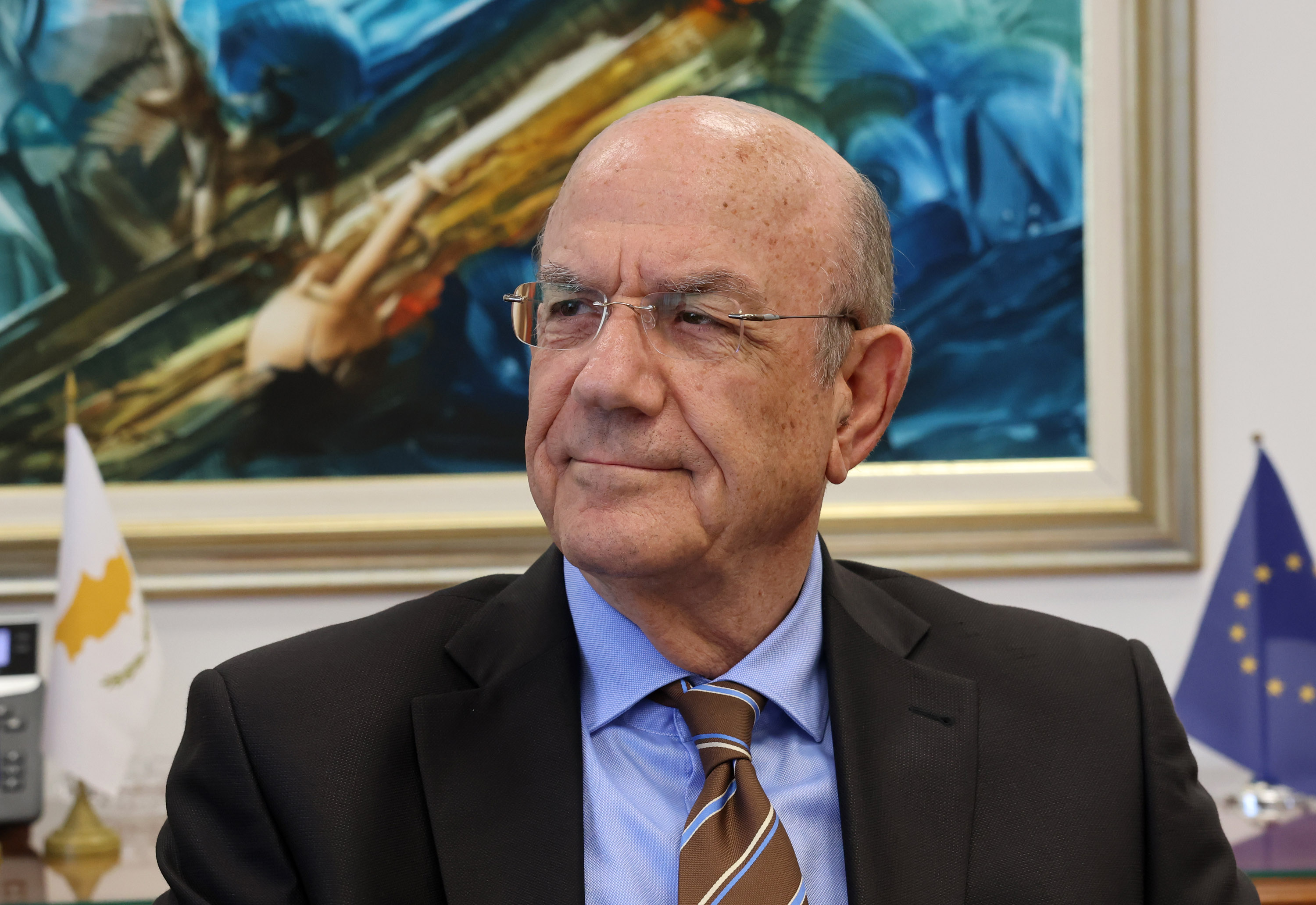
Cyprus outlines cohesion policy priorities to European Parliament
Finance Minister Makis Keravnos on Wednesday presented the priorities of the Cypriot Presidency of the Council of the EU regarding Cohesion Policy to the European Parliament Committee on Regional Development.
“Geography cannot determine opportunities,” Keravnos underlined during the opening of the session.
“Agriculture and livestock farming must remain a key element of Cohesion Policy,” he stressed while closing the meeting with a reference to the foot and mouth disease crisis currently affecting Cyprus.
“Products start from these sectors, there is production related to the food chain, health, human protection, and environmental protection, and from there it is also related to industrial production, exports, and general prosperity,” he emphasised.
“Over these last two or three days, we had a tragic episode in Cyprus, where foot and mouth disease appeared in sheep, goats, and cows, and at this moment thousands of animals must be culled,” he noted.
“We must think of the farmers and livestock breeders behind these people, whose properties, work, and incomes that supported their families have been destroyed,” he said.
“Beyond that, there is a serious problem with processing, because there will be no raw material for cheese producers or for exports in Cyprus, where a significant export product of Cyprus is the Cypriot halloumi cheese, with very serious implications for some industries in milk and yoghurt,” he added.
“We need to address it within the framework of balanced development, and here it touches upon regions, remote areas, and the island policy that we will have plenty of time to discuss in the next period,” he underlined regarding the human-centric nature of the policy.
What is more, the Finance Minister placed heavy emphasis on strengthening the internal resilience of the European Union and promoting strategic autonomy as primary goals.
“For more than four decades, Cohesion Policy has been the main investment policy of the Union and the cornerstone of the Single Market,” Keravnos told the MEPs.
“It has modernised infrastructure, supported small and medium-sized enterprises, strengthened research ecosystems, promoted digital transformation and energy efficiency, improved connectivity, and raised the skill level across Europe,” he said.
“But, above all, it was a stabilising force in times of crisis and an engine of long-term convergence,” he continued.
“During the 2014-2020 programming period, Cohesion Policy interventions contributed to an increase in the GDP of Cyprus by 6 per cent and to the creation of more than 25,000 new jobs,” he said while discussing the transformative impact on the island.
“As a small island member state on the periphery of the European Union, Cyprus does not automatically enjoy all the advantages of the Single Market,” the minister stated.
“Cohesion Policy ensures that geography does not determine opportunities,” he added.
“It provides the necessary support for addressing structural challenges, strengthening competitiveness, and promoting sustainable development on equal terms,” he said.
He explained that with the strengthening of regions like the one Cyprus finds itself in, “the support of innovation, the creation of jobs, and the promotion of sustainable development, cohesion investments build the internal resilience and strategic autonomy of Europe”.
“At the same time, by strengthening competitiveness, connectivity, and openness, they ensure that Europe remains globally active and extroverted,” he said.
“Strategic autonomy cannot be achieved if parts of Europe remain structurally weaker,” Keravnos underlined.
“Competitiveness cannot be strengthened if regional innovation ecosystems are unequal,” he said.
“Resilience cannot be built if territorial inequalities deepen,” he added.
“Our goal is clear: to present compromise texts capable of securing broad support, paving the way for a smooth start to negotiations between the institutions when the time comes,” he stated regarding new regulation negotiations.
Cyprus will host an informal ministerial meeting dedicated to Cohesion Policy in Nicosia on May 21, 2026, to May 22, 2026, focusing on the right to remain and the challenges faced by islands.
“Cohesion Policy is inherently linked to the principle of the ‘right to remain’,” he stressed.
“By creating local opportunities, in employment, housing, connectivity, and services, we ensure that mobility remains a choice, not an obligation,” he said.
“This means that first of all, people’s daily lives are affected,” he pointed out when responding to MEP concerns about the new Multiannual Financial Framework structure.
“That is why the concerns and fears that have been expressed regarding the new proposal are perfectly understandable and make the role of both myself and the Cypriot Presidency during this period carry even more responsibilities, so that these fears are alleviated,” he added.
“I have heard concerns about the Court of Auditors, which has made some critical remarks,” he said regarding recent institutional oversight.
“I think that is the role of a Court of Auditors; to hear its remarks, try to understand them, and how we will translate these into positive developments,” he added.
“Cohesion Policy is not a legacy of the past; it is a strategic tool for the future of Europe,” he said during his concluding remarks.
“It brings together solidarity, strengthens unity, and delivers concrete results,” he noted.
“The Cypriot Presidency is ready to work closely with you to ensure that this policy remains strong, modern, and capable of meeting the ambitions of our Union,” he concluded.

Click here to change your cookie preferences