
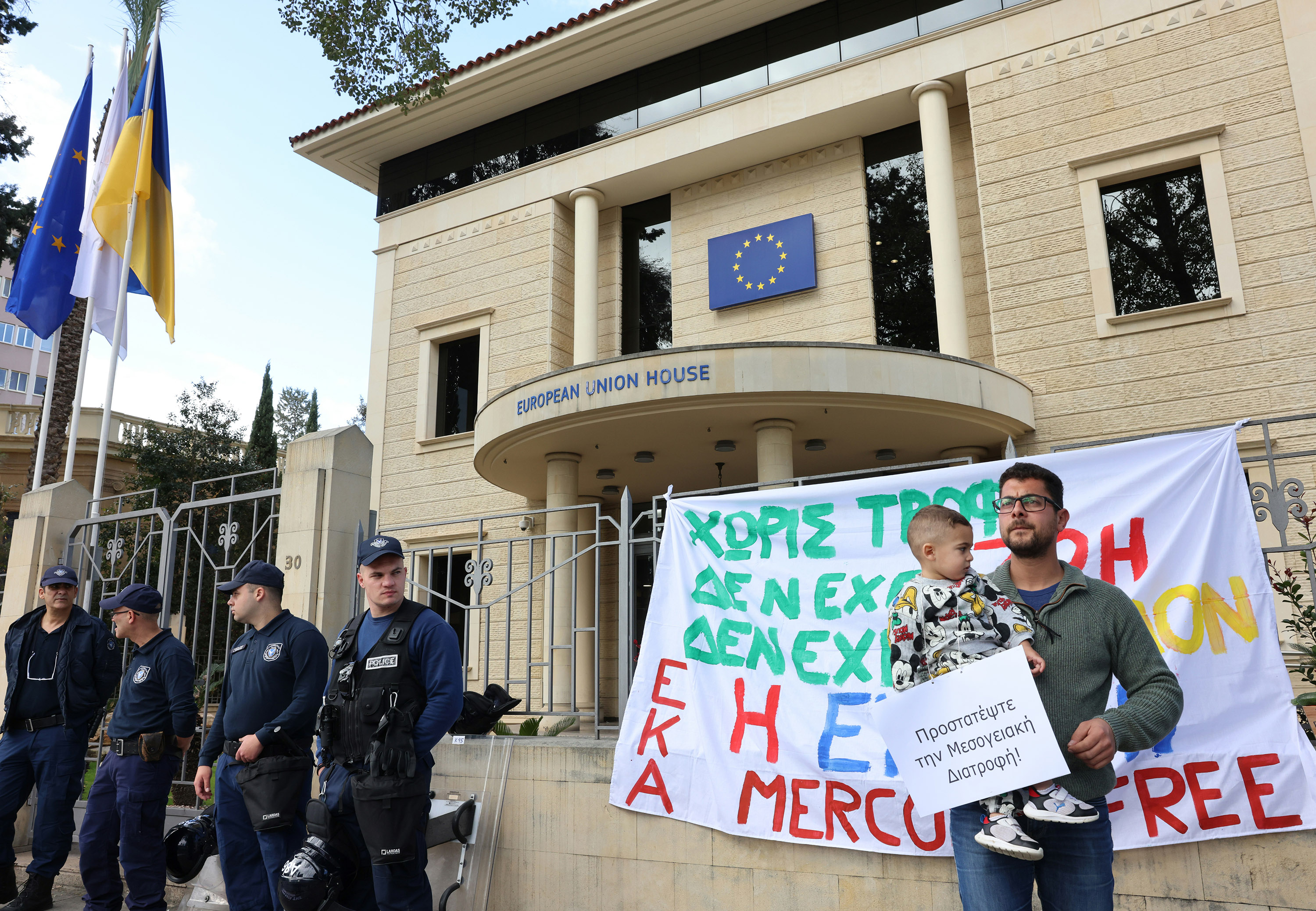
The House on Thursday evening amended the law on public gatherings and parades, softening up some of its provisions which critics had decried as draconian.
The vote garnered 29 votes in favour, while Akel MPs abstained, arguing the changes do not go far enough.
The amending bill that passed had been tabled by Nicosia MP Irene Charalambidou, with input from the justice ministry and academics.
Charalambidou had earlier sought and secured a legal opinion from the Organisation for Security and Cooperation in Europe (Osce). That report, delivered in September last year, said the law – passed in July – contained a number of arbitrary provisions. The Osce warned of a chilling effect on the right to peaceably assemble.
Under the changes effected on Thursday, designating an organiser for a public gathering or parade is no longer mandatory. In the event an organiser is appointed, he or she is not legally liable for any acts by participants.
The amended legislation also spells out that isolated acts of violence do not automatically render a gathering violent, nor automatically constitute grounds for its dispersal by police.
Also, in order for an event to qualify as a public gathering or parade, the previous threshold of a minimum 20 persons no longer applies.
The term ‘public space’ does not include the internal premises of a building.
In addition, restrictions are placed on what information organisers must relay to the police chief regarding an upcoming public gathering. And there’s an explicit provision that failure to provide this minimum information does not render a gathering unlawful or result in sanctions on organisers.
Moreover, the police chief is now obligated to notify organisers or local government authorities of any constraints to be imposed on a gathering, and do so at least three days prior to the event.
The updated law further states that grounds for imposing restrictions on gatherings must be limited to those “absolutely necessary”.
Article 21 of the constitution reads: “Every person has the right to freedom of peaceful assembly.”
It adds: “No restrictions shall be placed on the exercise of these rights other than such as are prescribed by law and are absolutely necessary only in the ‘interests of the security of the Republic or the constitutional order or the public safety or the public order or the public health or the public morals or for the protection of the rights and liberties guaranteed by this Constitution to any person, whether or not such person participates in such assembly or is a member of such association.”





Click here to change your cookie preferences