
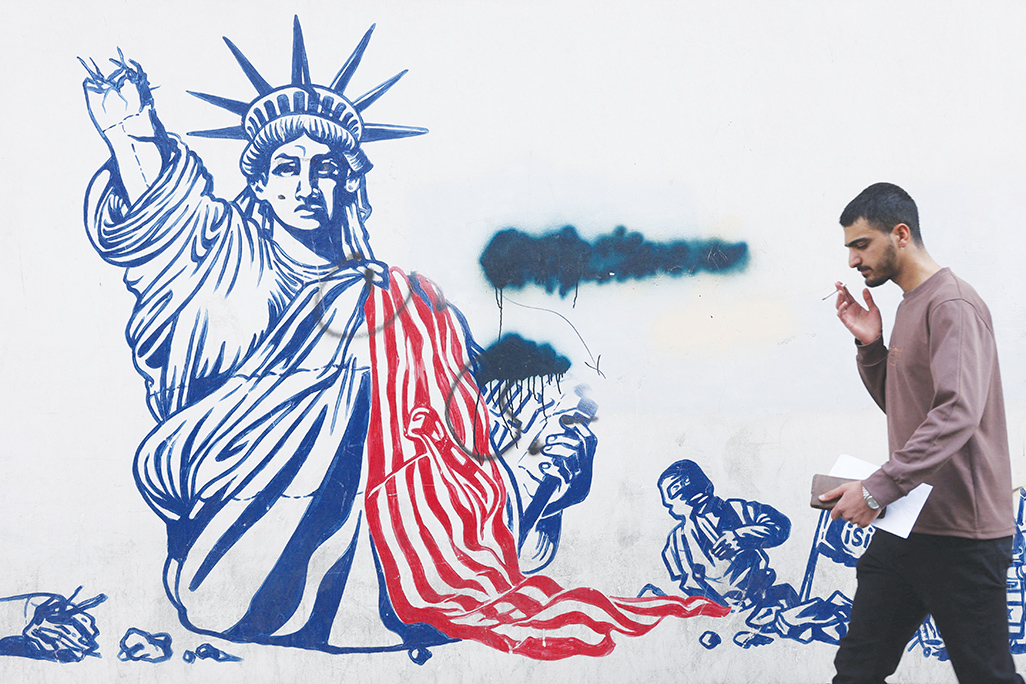
The United States and Iran could reach a framework for a deal if Washington separates “nuclear and non-nuclear issues”, a senior Iranian official told Reuters, adding that remaining gaps need to be narrowed during a third round of talks in Geneva.
Iranian Foreign Minister Abbas Araqchi and U.S. envoys Steve Witkoff and Jared Kushner held a three-hour session of indirect talks mediated by Oman on Thursday morning and adjourned for a break before heading back to resume the negotiations later in the day.
The talks on the decades-long dispute over Iran’s nuclear work come as fears grow of a Middle East conflagration with U.S. President Donald Trump threatening action if there is no deal and the U.S. military building up its capabilities in the region.
‘INTENSE AND SERIOUS’ TALKS
Omani Foreign Minister Sayyid Badr Albusaidi said the two sides had been exchanging what he called “creative and positive ideas” and he hoped for progress, while the senior Iranian official described the talks as “intense and serious”.
“There were new ideas that need to be consulted with Tehran. Still some gaps remain that need to be narrowed,” the senior Iranian official said.
Washington, which believes Tehran seeks the ability to build a nuclear bomb, wants Iran to give up all uranium enrichment, a process that makes fuel for atomic power plants but that can also yield material for a warhead.
Iran has long denied wanting a bomb and said earlier on Thursday it would show flexibility at the talks. Reuters reported on Sunday that Tehran was offering undefined new concessions in return for removal of sanctions and recognition of its right to enrich uranium.
However, the United States also wants to expand talks to other issues including Iran’s arsenal of ballistic missiles and its support for armed groups in the region.
U.S. Secretary of State Marco Rubio said on Wednesday Iran’s refusal to discuss its ballistic missile programme was a “big problem” that would have to be addressed eventually, as the missiles were “designed solely to strike America” and pose a threat to regional stability.
“If you can’t even make progress on the nuclear programme, it’s going to be hard to make progress on the ballistic missiles as well,” Rubio told reporters in Saint Kitts.
Iranian foreign ministry spokesperson Esmaeil Baghaei told Press TV on Thursday that the negotiations would focus solely on nuclear topics and the lifting of sanctions, and said Tehran goes into them with “seriousness and flexibility”.
TRUMP THREATENS ‘REALLY BAD THINGS’
Trump said on February 19 that Iran must make a deal in 10 to 15 days, warning that “really bad things” would otherwise happen.
He briefly laid out his case for a possible attack on Iran in his State of the Union speech on Tuesday, underlining that while he preferred a diplomatic solution, he would not allow Tehran to obtain a nuclear weapon.
In June last year, the U.S. joined Israel in hitting Iranian nuclear sitesand has been ramping up the pressure on Tehran again since January, when Trump threatened to intervene over its crushing of nationwide protests with thousands killed.
Since then, Trump has deployed fighter jets and aircraft carrier strike groups in the region, hoping to pressure Iran into concessions.
Iran responded to last summer’s strikes by firing fusillades of missiles at Israel and has threatened to retaliate fiercely if attacked again, raising fears of a wider regional conflict that has alarmed Gulf oil producers.
Several countries have begun withdrawing dependents of diplomatic personnel and non-essential staff from some locations in the Middle East, or advising citizens to avoid travel to Iran.
The USS Gerald R. Ford, the biggest U.S. aircraft carrier, left port near the Greek island of Crete on Thursday bound for shores near Haifa in northern Israel, where it is expected to arrive on Friday.
The U.S. has also sent around a dozen F-22 fighter jets to Israel – the first time Washington has deployed combat aircraft to the country for potential wartime operations, a U.S. official said.
The Trump administration has not formally announced the deployment. The Pentagon declined to comment.
But the sides remain sharply divided – even over the scope and sequencing of relief from U.S. sanctions – a senior Iranian official told Reuters.
Within Iran, Supreme Leader Ayatollah Ali Khamenei faces the gravest crisis of his 36-year tenure, with an economy buckling under tightened sanctions and renewed protests following the major unrest and crackdown in January.
President Masoud Pezeshkian said on Thursday that Khamenei has banned weapons of mass destruction, which “clearly means Tehran won’t develop nuclear weapons,” reiterating a fatwa issued in the early 2000s.




Click here to change your cookie preferences