
Let’s aim for a happy ending
I have previously written about how, for Turkish Cypriots, the tragic events of 1963 to 1964 marked a profound rupture, during which their political equality, as enshrined in the Cyprus constitution, was undermined andone quarter of the their population was displaced.
However, one cannot underestimate the strength of the human spirit for survival and happiness, even under the most difficult of circumstances.
When the fighting eventually died down, my family, like others, did what we could to make the best of our lives in our enclaved microcosms.
My mother, sister and I lived literally a few feet from the grounds of the Ledra Palace Hotel in Nicosia. We were cast away behind a big, guarded fence, as the spectre of our poverty-stricken neighbourhood and ramshackle mud brick homes had to be hidden from the view of the opulent hotel.
We could never see what went on inside this “heaven on earth” just across the narrow road, but we were told that there was a lush green lawn, a swimming pool, and people, mostly British, who enjoyed exotic drinks called cocktails and ate unimaginably lavish food.
But we could hear the music at night, loud, crisp and mesmerising. We would sit outside, listen and enjoy. There was always a live hotel dance band which played melodious music sung by soulful singers. The memorable pieces were Never on Sunday, which made Melina Mercouri an international superstar, Bésame Mucho, Petit Fleur and The Girl from Ipanema. There were no Turkish songs.
We also used to go to one of two cinemas, one indoor and one outdoor, just outside the walls of the city. We would watch western movies like West Side Story. In our non-English speaking childhood minds we interpreted the storyline as fighting between blond and brunette men who inexplicably broke into song every now and then, ruining the credibility of what we thought should have been a tough-guys film.
With Turkish movies, the first few questions asked were, “is it a weepie, and does it have a happy ending?” The weepies were often the most popular, perhaps because they were cathartic for many people.
There were also melodrama tropes built around “poor guy, rich girl” romances. The “guy” would be proud, hardworking, morally upright, wronged but dignified and would hold honourable Anatolian virtues of honesty and humility. He would also be tall and handsome. The role was often played by everyone’s pin-up, the late Cüneyt Arkın.
The “guy” would fall in love with the wealthy and beautiful heroine but he would be up against her powerful father and their socialite circle, which would reject him outright and take delight in humiliating him for his poverty and lower social status.
The rich family members were often portrayed as westernised Turks who had everything materially, yet were lacking fairness or honour. He would be fighting at every step against odds stacked up against him.
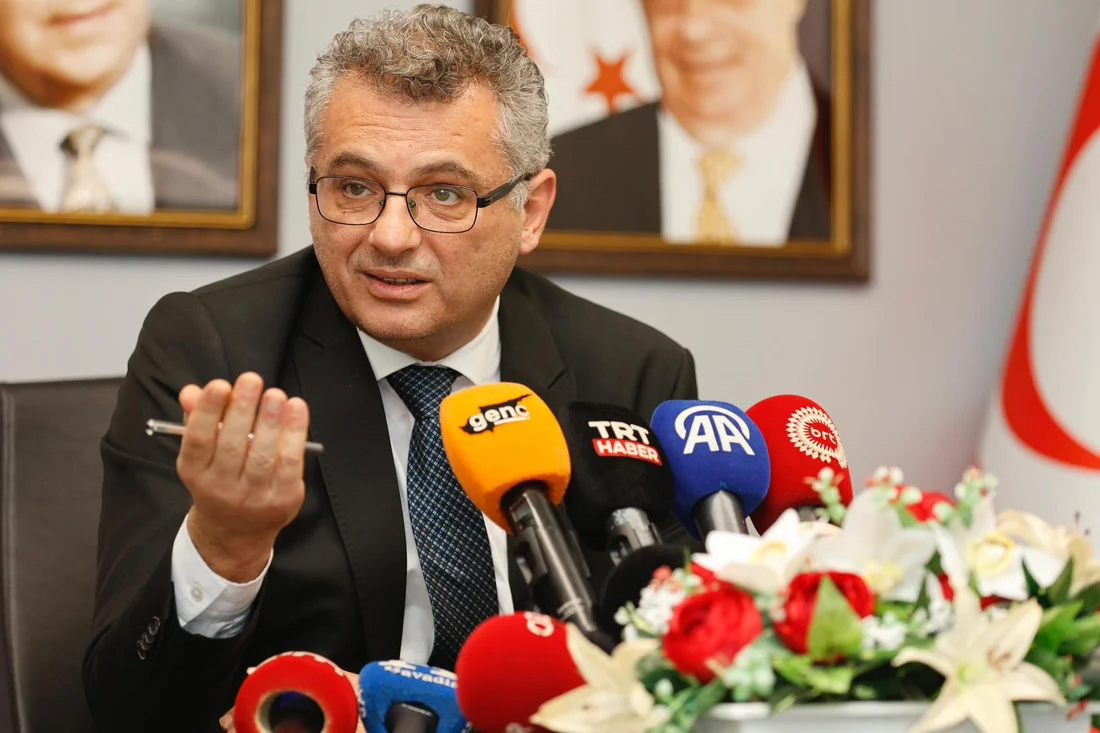
No parallel is exact but there is something faintly reminiscent of these old melodramas in the current Cyprus political theatre. I am not sure how all the political players fit into this scenario, but the earnest “guy”, armed only with the moral high ground, who stands before a world structured by wealth, recognition and entrenched power, must surely be the new Turkish Cypriot leader, Mr Tufan Erhurman.
Mr Erhurman may speak truth to power with legal authority and eloquence, yet with a small northern Cypriot population, poor economy and lack of recognition, he cannot be the one who controls the stage. He is up against formidable obstacles in achieving the dream he presented to the electorate of a European Cyprus federation which safeguards their bizonality and bicommunality through political equality.
His first and most significant obstacle is that the Greek Cypriot leadership appears unwilling to alter the status quo, despite claims to the contrary. President Christodoulides’ recent public references to a “coveted union” with Greece also inevitably undermine confidence in a “union” between Greek and Turkish Cypriots.
What about the other players?
Mr Erhurman will know that the UN is not the honest broker it purports to be. It failed to act on the recommendations of Kofi Annan, UN secretary-general in 2004, whose comprehensive peace plan for Cyprus was supported by Turkish Cypriots. These recommendations included commitments relating to the removal of embargoes. The UN, likewise, failed to implement Status of Forces Agreement in six decades, as required under its own framework, leaving the Turkish Cypriot community officially “invisible”.
Mr Erhurman will also be aware that trust in the EU is no different. The union made a number of commitments to Turkish Cypriots during the Annan Plan period, many of which are still unfulfilled. More recently, EU representative Mr Johannes Hahn appeared unable to provide clear answers when questioned by Mr Erhurman on issues such as the export of hellim under the Green Line Regulations.
Turkey has supported Turkish Cypriots for more than 60 years, but it clearly has a different political aspiration for the future of Cyprus (a two-state solution) from that of Mr Erhurman despite recent appearances of unity.
I have previously referred to Nasreddin Hodja, the mediaeval Anatolian sage and jurist of popular folklore. In one well known tale, he gives each of his wives a blue bead and privately assures her that she alone holds his heart, urging her not to mention it to the others. When asked in their presence, he says “the woman I love is the one with my blue bead”, thus keeping all his wives happy. Mr Erhurman has little choice but to adopt this “blue bead” policy to get by. His recent behind closed doors tête-à-tête with Mr Christodoulides suggests as much.
Having said all this, Mr Erhurman does stand on the moral high ground, the only real card available to him in this political game. He is right to insist on restoring political equality and demanding that the EU and UN honour their commitments if talks fail through no fault of the Turkish Cypriot people.
All Cypriots should wish Mr Erhurman plenty of good luck and vast reserves of patience in his quest to establish a Cyprus solution, based on equality. Nobody wants a “weepie” for Cyprus, let’s aim for a happy ending.




Click here to change your cookie preferences