
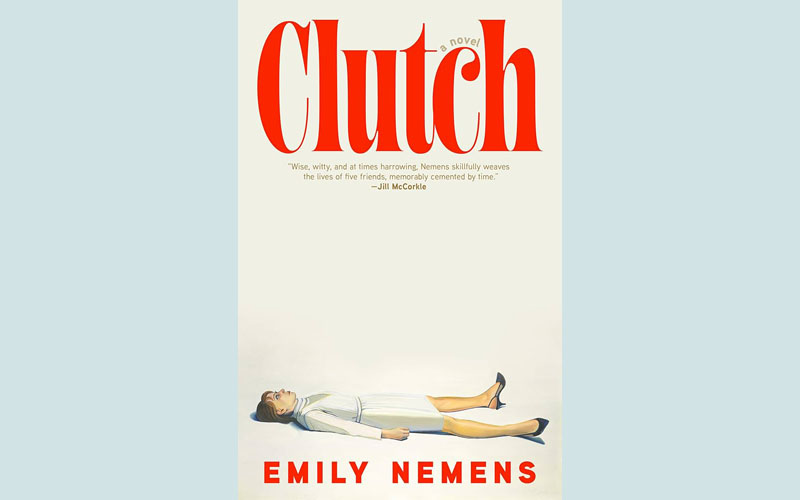
Clutch by Emily Nemens
Emily Nemens’ sophomore novel about millennial female friendship has garnered the sort of positive press that might be expected when the former editor of The Paris Review follows up her first critically acclaimed book with another much-anticipated novel. Unfortunately, for this reader at least, Clutch fails to live up to its billing.
It is January of 2023, and five friends who have loved each other since college but been dispersed about the US by career and marriage over the course of their 20s and 30s, come together for the first time in a while in Palm Springs, to reconnect over the course of a ‘weekend just as beautiful and giddy and sloppy as it needed to be’. We have Bella, one-time college soccer player turned New York litigator married to old money; Reba, whose old-money West Coast lineage takes a back-seat to her struggles with infertility; Carson, a novelist anxiously awaiting word from her agent about the sophomore novel that draws upon her father’s violent crime and incarceration, subjects she has never shared even with her closest friends; Gregg, who turned her back on acting to become a prominent Austin politician with a tech billionaire husband; and Hillary, an ENT surgeon going through a divorce from the handsome, charismatic junkie who is the father of her son.
Right from the start of the novel, Nemens starts laying on the prolepsis: 2023 is going to be a momentous year for the women. At the same time, Nemens begins her ongoing thematic refrain: ‘What is time, really? It can be measured in centuries or seconds, calendar years or costume periods, milestones or metamorphoses.’ Sadly, both feel heavy-handed and over-blown. 2023 does indeed prove to be momentous: Bella is betrayed by her client, her law firm, and her husband; Reba manages to get pregnant; Carson realises that fiction is more rewarding than family; Gregg’s husband turns out to be a vindictive, narcissistic psychopath (sorry, I forgot I already told you he was a tech billionaire); and Hillary becomes the friend-group’s first widow.
Everything I’ve described sounds like it’s worth writing about. It is. And once the events kick in, there are moments that are tense and tender and joyful and moving. But the exposition is interminable, and the writing not brilliant enough to make me care so much about the characters that I can enjoy the length of time it takes for things to actually start happening. And the platitudinous banging-on about time’s vagaries is just annoying.
I’ve tried to make the excuse to myself that since I’m not a woman and almost completely antisocial, I somehow fail as the book’s audience. Perhaps so. But if it was a good enough book, this wouldn’t matter.





Click here to change your cookie preferences