
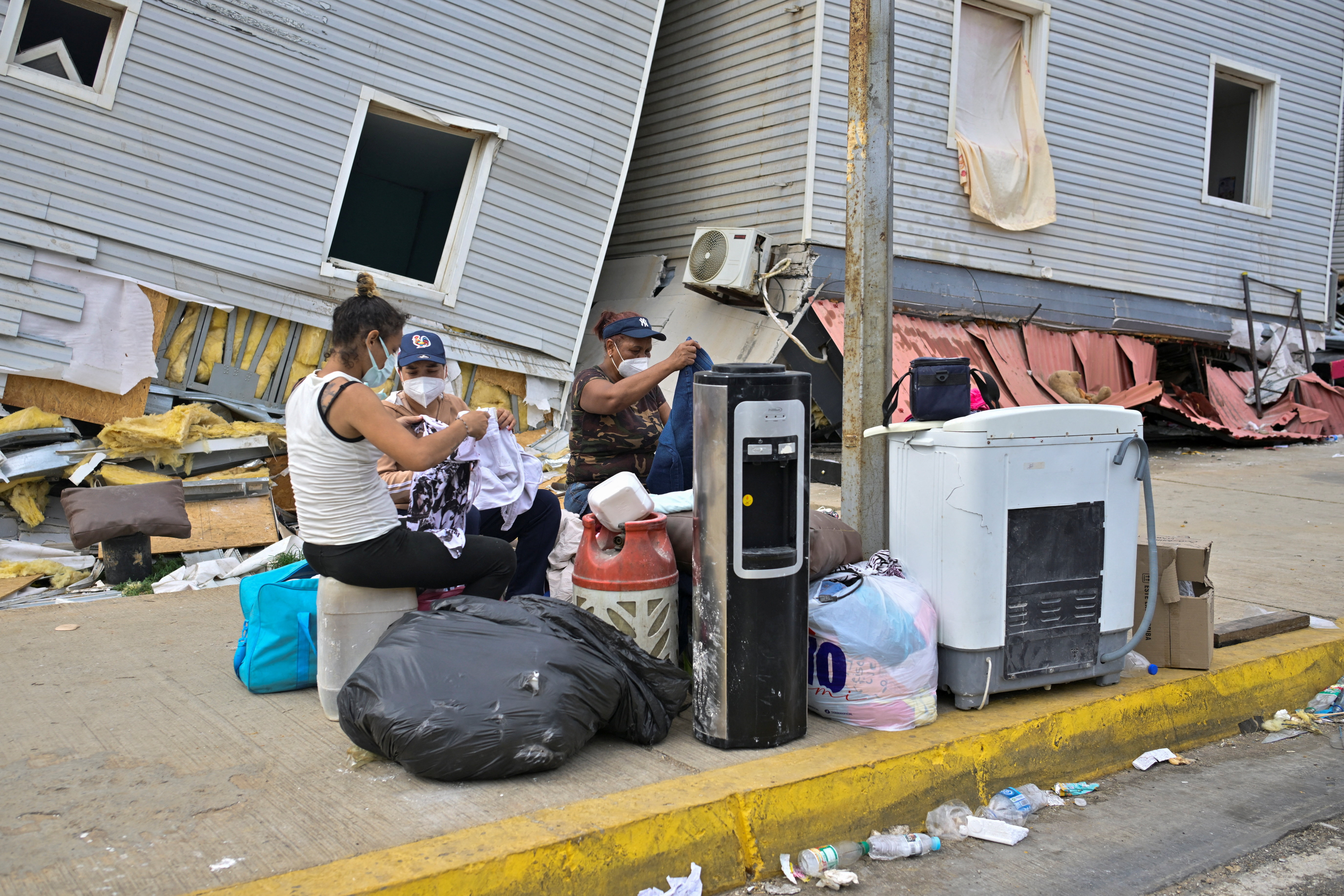
Bad things happen, and some of them are nobody’s fault. Big earthquakes in Venezuela are about a century apart (1812, 1902, 2026), so you can’t blame the planners and the politicians for not being well prepared for this one. How high a priority should they have given to an event that will kill a few thousand people once a century in a country of 28 million people?
Besides, the only thing you can do to ‘prepare’ for earthquakes is to reinforce your buildings and infrastructure, and Venezuela couldn’t afford to do that. Half the population lives below the poverty level. True, they are poor mainly because the regime is corrupt and incompetent, but even a better regime would spend its money on anti-poverty measures, not earthquakes.
So no shame there – but there’s plenty of blame to share for the regime’s failure to respond quickly and effectively to the aftermath of the twin earthquakes only one minute apart. The chief threat in earthquakes is always collapsing buildings, and anybody who is still trapped under the wreckage after three days is almost certainly dead.
In Venezuela that is probably several thousand people by now, and their bereaved relatives and friends will be keenly aware that in many devastated areas the state emergency services were conspicuously absent. Ambulances usually showed up, but there were no army teams with heavy machinery to dig out the trapped survivors. The regime has shown it is useless.
The country’s new US masters have not covered themselves with glory either. “It’ll be big, it’ll be fast, and it’ll be effective,” US Secretary of State Marco Rubio said of the forthcoming American aid, and Washington committed $150 million to the task of recovery and rebuilding, but most of the foreign crews arriving in Caracas were not American.
The US agency for International Development (USAID), once the biggest funding agency for humanitarian and development assistance across the world, would have had its workers in Venezuela within hours of the earthquakes, assessing the needs and setting the wheels in motion. But Trump dismantled USAID a year ago, and nothing has taken its place.
If Venezuela is now really a US protectorate, as President Donald Trump claims, then he is doing a very poor job of protecting it. The US government may have offered $150 million in aid for Venezuela in this emergency – but it has also sold at least $8 billion of Venezuelan oil since it took control of the country’s oil industry.
The only official statement about where that money ends up is Trump’s claim that it will be “used to benefit the people of Venezuela and the United States” – but not necessarily in that order. The money is certainly all passing through American hands – first to a bank in Qatar, then to who knows where? – and it would be surprising if a lot of it did not stick to those hands.
Venezuelans have grown cynical about their own sub-Marxist ‘Chavista’ regime over the years, and they have always been sceptical about the intentions of the United States, but so far they have tacitly accepted the weird collaboration between Trump and Acting President Delcy Rodríguez. After all, it could be worse.
For the nationalists, at least there are no American troops on the ground. For the quarter of the population who still support the regime, whether for ideological or selfish reasons, it is still in charge, even if obliged to respect Trump’s wishes and whims. And for everybody else, there is peace and the distant hope of a return to the country’s former democracy and prosperity.
But not under the current management. This is a forced and unhappy alliance between two hostile organisations neither of which cares about the welfare of ordinary Venezuelans, and each has shown that it cannot be trusted to act in their interests.
It is six months since the ‘abduction’ of President Nicolas Maduro by American troops (polite journalists do not use the word ‘kidnapping’), and the deal between Trump and Rodríguez has faced very little challenge from the population. Perhaps they still thought Trump might be a liberator. Perhaps they still feared the regime too much. But this disaster may change all that.
A popular movement against the regime that has so badly failed to cope with the aftermath of the earthquakes is a real possibility now, although by no means guaranteed. If that happens, the regime will have no option but to respond with force – and it is very hard to see Trump sending in US troops to save the Chavistas. There could yet be a free Venezuela.
Gwynne Dyer’s new book is ‘Intervention Earth: Life-Saving Ideas from the World’s Climate Engineers’. The previous book, ‘The Shortest History of War’, is also still available.

Click here to change your cookie preferences