
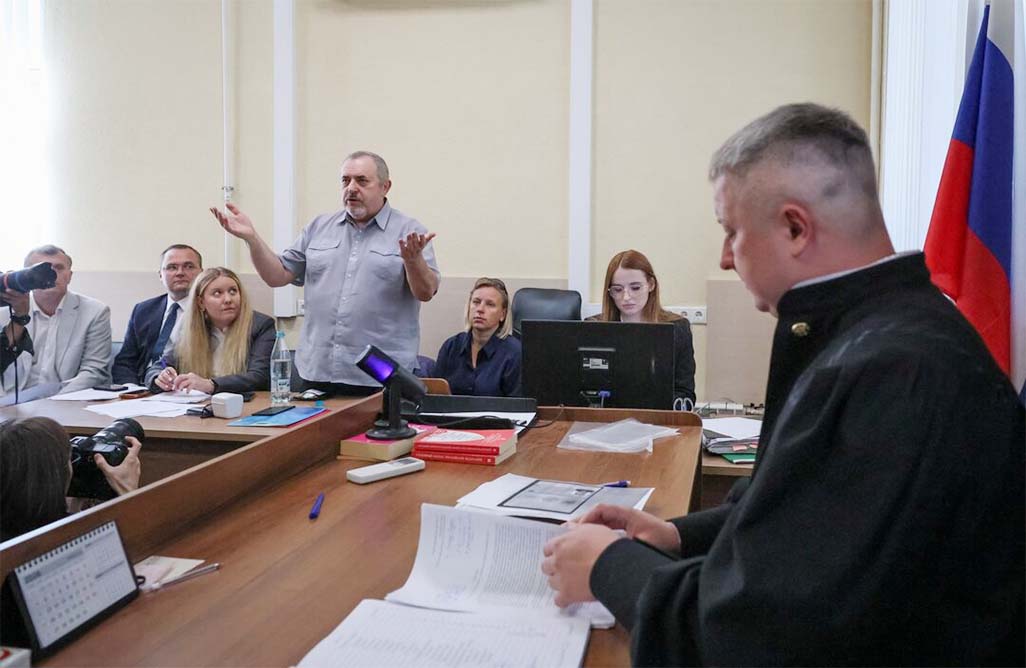
Russian authorities have detained a blogger who criticised President Vladimir Putin and the war in Ukraine and fined an anti-war politician, as Moscow sends a warning signal to critics of the Kremlin ahead of September’s parliamentary election.
Although Putin maintains a near-total grip on power, he and the dominant United Russia party are under pressure in the lead-up to the vote as Russia grapples with an economic slowdown and fuel shortages triggered by Ukrainian attacks on oil refineries.
The blogger, Ilya Remeslo, was detained on Friday on suspicion of the offence of spreading false information about the Russian army, the TASS state news agency reported.
REMESLO’S MANIFESTO ON ‘WHY I STOPPED SUPPORTING PUTIN’
Previously a pro-Kremlin figure, Remeslo published a manifesto that went viral on social media in March entitled “Five reasons why I stopped supporting Vladimir Putin”. He was admitted to a psychiatric hospital, where he spent about a month. TASS said he could receive 10 years in prison if convicted.
Separately, Boris Nadezhdin, a politician who attempted to run against Putin in the 2024 presidential election on an anti-war ticket, was fined 1,000 roubles ($13) for displaying “extremist symbols”.
While the amount was symbolic, the case was part of a series of steps against Nadezhdin that could signal more serious consequences if he continues to criticise the government on sensitive issues, including what he described this week as the “completely senseless fratricidal war”.
The 63-year-old, a liberal member of parliament from 1999 to 2003, was designated last Friday as a “foreign agent”, a Soviet-era label carrying connotations of spying that bars him from political office. He was detained and questioned on Monday, and later forbidden to leave Russia.
The Kremlin says strict censorship laws are needed to keep Russia united during what it calls an existential confrontation with the West.
Nadezhdin told Reuters this week that the authorities were acting to prevent him campaigning and airing critical views on topics such as internet restrictions, fuel shortages and the war.
His lawyer said the “extremist symbols” case stemmed from a social media post linking to a video that included a photo of the late opposition politician Alexei Navalny, whose Anti-Corruption Foundation is banned as an extremist movement. Nadezhdin called the case “ridiculous”.
The liberal Yabloko party, which opposes the war in Ukraine, has also had several members disqualified from elections. Last month, its deputy chair, Maxim Kruglov, was jailed for seven years, convicted of spreading “military fakes”.





Click here to change your cookie preferences