
The structural realities of Cyprus’ 1974 partition
Cyprus’ modern history is defined by missed diplomatic opportunities, ideological blindness and the cold calculations of regional powers. Since 1974, the events leading to the island’s partition have been clouded by revisionism. Political groups describe the division as either a sudden disaster, Turkish aggression or the failure of Archbishop Makarios. To understand Cyprus’ tragedy, 1960-1974 must be viewed as a connected process that ended in disaster.
The Famagusta breakthrough
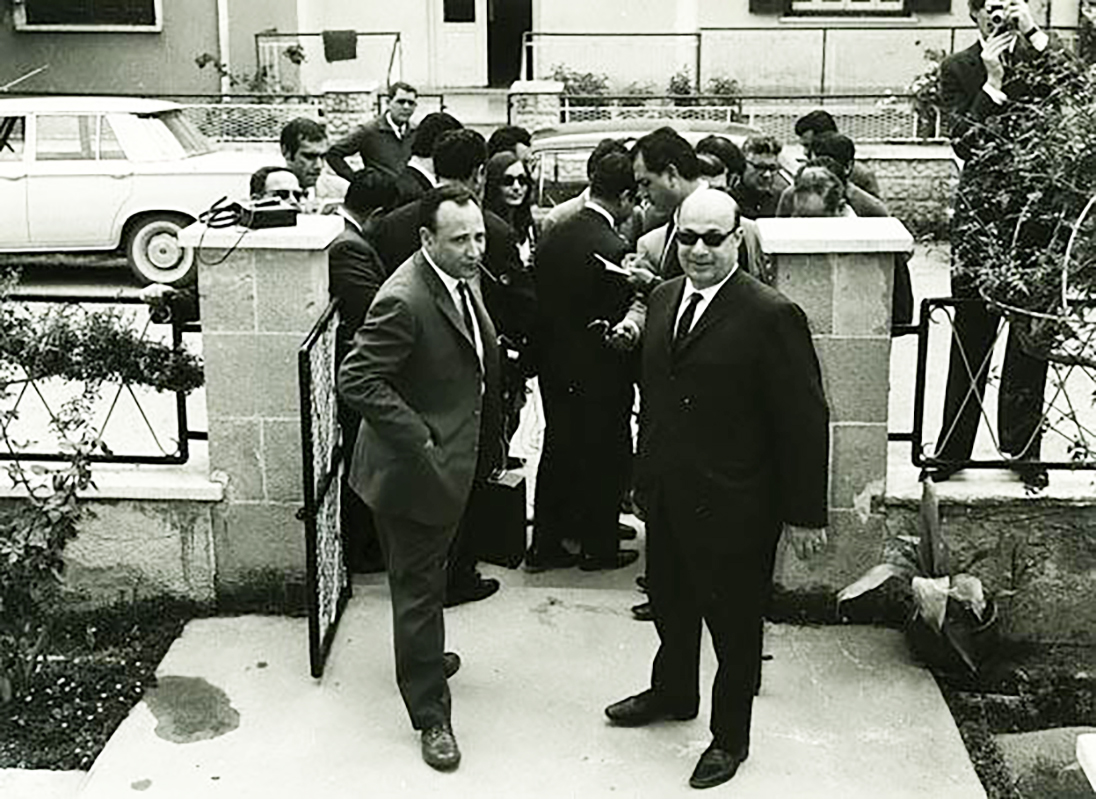
Despite the myth that Cyprus was doomed to conflict, local diplomacy nearly achieved a breakthrough. After years of violence, negotiators Glafcos Clerides and Rauf Denktash began talks in 1968, while constitutional law experts Michael Dekleris and Orhan Aldikacti, representing Greece and Turkey respectively, joined in 1972. Over two years, they resolved key issues, amending the 1960 Constitution, and on July 13, 1974, they finalised a draft agreement to end communal division and reintegrate Turkish Cypriots.
This was a binding constitutional revision, and had Archbishop Makarios’ approval. Clerides and Denktash were set to sign on July 16, but on July 15, the Greek Junta staged a coup to depose Makarios. The ultimate irony of the tragedy is that the coup occurred not because diplomacy had failed, but because an unprecedented constitutional resolution was on the verge of succeeding.
A sovereign second Greek state
The agreement replaced Turkish Cypriot federal vetoes with local autonomy, streamlining government into a majoritarian system. It removed the vice president’s veto, ended separate parliamentary majorities, and set civil service quotas at an 80-20 split. Turkish Cypriots gained self-administration in local affairs. This framework gave Greek Cypriots control over national institutions while securing Turkish Cypriots as a protected minority.
The success of this compromise remains disputed, however. Optimists point out that Turkey would have accepted it, since Ankara’s expert Aldikacti, in collaboration with Ankara, helped draft and approve the agreement. Simultaneously, the Greek junta and Eoka-B fully rejected the compromise, seeing an independent Cyprus with Turkish Cypriot autonomy as a betrayal of their wish for union with Greece.
Paranoia and geopolitical delusions: inside the July 15 coup
The Greek junta’s decision to overthrow Makarios on July 15, 1974 came from the geopolitical delusions and insecurities of leading junta figure Brigadier Dimitrios Ioannidis. The regime, consumed by anti-communist paranoia, viewed Makarios as a dangerous leftist rather than a pragmatic leader navigating a fragile state. This was worsened by misreading Cold War realpolitik. Ioannidis was convinced that the United States secretly supported the deposition of Makarios. As declassified State Department documents reveal, Washington’s weak, ambiguous diplomatic messaging in Athens was disastrously interpreted by the junta as tacit US acquiescence.
The coup was also a last-ditch effort to save a failing dictatorship facing internal collapse, inflation, isolation and public anger after the 1973 Polytechnic uprising. Ioannidis hoped unifying Cyprus with Greece would secure his legacy. Attempting to stop Makarios from finalising the Famagusta agreement, the junta acted on July 15, providing exactly the opening that Turkey had spent seven years preparing to exploit.
Internal democracy as an existential shield
The 1974 tragedy offers urgent lessons for the modern world. As Cyprus faces new challenges, history shows that internal democracy and clean institutions are vital to national security. The main risk for small states is the rise of radicals when the political centre weakens, as with Eoka-B exploiting a fragmented system. Today, the political centre is again collapsing, shown by the decline of centrist parties and the rise of the far-right Elam. This polarisation comes from years of corruption and state capture. Strong democratic institutions are the main defence, not a luxury.
The realist traps of ‘Fortress Cyprus’
The second lesson is the fatal danger of geopolitical romanticism. In 1974, Cyprus was devastated because the Greek junta prioritised historical myths over the realities of regional geography and Turkish naval power. Today, Cyprus risks repeating this mistake. By rapidly increasing defence spending with EU loans and forging close military ties with Israel, Nicosia risks falling for the illusion that the island can be transformed into a militarised fortress.
From a structural realist perspective, turning Cyprus into a forward military outpost creates a classic security dilemma rather than an effective deterrent. Turkey will predictably respond with aggressive countermeasures, further expanding its military presence in the north and moving closer to annexation.
Compromise as the protector of sovereignty
The most critical lesson of the 1974 disaster is that structured compromise is the ultimate protector of state sovereignty. Radical nationalists destroyed the political centre in 1974 by branding any constitutional concession to the Turkish Cypriots as an act of treason. Once geographic partition was enforced by the Turkish invasion, the baseline of international diplomacy shifted irreversibly away from a unitary model toward a bi-zonal, bi-communal federation.
Today’s political class frequently falls into the same pattern of easy rejectionism, dismissing the United Nations-backed federal framework as an inherent surrender of sovereignty. To avoid permanent partition, both sides must accept mutual compromises.
Survival in an anarchic neighbourhood
The 1974 Cyprus tragedy was a very profound and terrible crime of asymmetric hubris. It was conceived by a fanatical Athens regime that preferred destroying a democracy over accepting its independence, facilitated by an American superpower that treated the island as a disposable Cold War pawn, and brutally executed by a Turkish military exploiting the chaos that ensued.
To navigate an increasingly chaotic and anarchic global arena, the Republic must abandon both the romantic illusions of its past and the cynical corruption of its present. Ultimately, Cyprus’ true defence lies not in purchasing foreign military hardware but in the integrity of its democratic institutions, a pragmatically realist foreign policy, and the courage to secure a negotiated peace before the window for reunification closes forever.
Ioannis Tirkides is an economist and president of the Cyprus economic Society. This article is a reduced version of the original, found in the author’s substack https://ioannistirkides.substack.com/publish/posts/published





Click here to change your cookie preferences